
High-altitude environments pose unique challenges for industrial and consumer products. From extreme temperature fluctuations to reduced atmospheric pressure, equipment operating at elevated heights must withstand conditions that can compromise performance. One often-overlooked but critical component in these settings is the humble rubber plug. Designed to seal, protect, and insulate, these versatile tools play a vital role in ensuring reliability across industries like aerospace, telecommunications, and outdoor machinery. Let’s explore how rubber plugs address the demands of high-altitude applications and why they’re indispensable in such environments.
The Science Behind High-Altitude Challenges
At higher elevations, the air becomes thinner, and temperatures drop sharply. For example, a mountainous region at 10.000 feet might experience temperatures 30°F colder than at sea level. Additionally, reduced oxygen levels can affect material flexibility, while UV exposure intensifies due to thinner atmospheric filters. These factors create a harsh environment where standard components might fail. Rubber plugs, however, are engineered to adapt. Their composition—often a blend of synthetic or natural elastomers—is tailored to resist cracking, hardening, or degradation under such stressors. This ensures they maintain a tight seal even when exposed to subzero temperatures or intense sunlight.
Sealing Performance in Thin Air
A primary function of rubber plugs is to create airtight or watertight seals. In high-altitude applications, where pressure differentials are extreme, a compromised seal could lead to equipment failure. For instance, a telecommunications tower on a mountain peak relies on sealed connectors to prevent moisture ingress, which could disrupt signal transmission. Rubber plugs achieve this through precise molding and material selection. Silicone-based variants, for example, offer exceptional flexibility and thermal stability, making them ideal for applications where temperatures swing from -40°F to 200°F. Their ability to conform to irregular surfaces ensures a secure fit, even as materials expand or contract with altitude-induced temperature changes.
Durability Against UV and Ozone Exposure
High-altitude regions often receive higher levels of ultraviolet (UV) radiation due to the thinner ozone layer. Over time, UV rays can break down polymer chains in rubber, causing brittleness and loss of elasticity. Similarly, ozone generated by electrical equipment or natural atmospheric processes can accelerate degradation. To combat this, manufacturers incorporate UV stabilizers and antioxidants into rubber plug formulations. These additives create a protective barrier, extending the lifespan of plugs exposed to prolonged sunlight or ozone-rich environments. For outdoor installations, such as solar panel arrays or weather monitoring stations, this durability is non-negotiable.
Chemical Resistance for Harsh Environments
In addition to environmental stressors, high-altitude equipment may encounter chemicals like fuels, solvents, or cleaning agents. A rubber plug used in aviation fuel tanks, for example, must resist swelling or corrosion when exposed to jet fuel. Fluorocarbon-based elastomers (FKM) excel in such scenarios, offering superior resistance to oils, acids, and extreme temperatures. Their chemical inertness ensures that seals remain intact, preventing leaks that could compromise safety or performance. This makes them a preferred choice for aerospace applications, where reliability is paramount.
Lightweight Design for Portability
Weight is a critical consideration in high-altitude operations, particularly in aerospace and mountaineering gear. Every ounce saved translates to better fuel efficiency or easier transport. Rubber plugs are inherently lightweight, yet their strength-to-weight ratio allows them to handle significant pressure differentials without adding bulk. For example, a plug used in a drone’s battery compartment might weigh just a few grams but provide a hermetic seal to protect sensitive electronics. This balance of lightweight design and robust performance makes rubber plugs indispensable in industries where efficiency and reliability must coexist.
Ease of Installation and Maintenance
In remote or hard-to-reach locations, such as mountaintop research stations or satellite dishes, maintenance windows are limited. Rubber plugs simplify this process with their intuitive design. Many feature ergonomic grips or tapered shapes for easy insertion and removal, even when wearing gloves. Additionally, their self-sealing properties reduce the need for frequent adjustments. A plug that “snaps” into place with minimal force ensures quick assembly during manufacturing or field repairs. This user-friendly approach minimizes downtime and labor costs, a boon for industries operating in challenging terrains.
Versatility Across Industries
While high-altitude applications often bring to mind aerospace, rubber plugs serve a broader range of sectors. In renewable energy, they seal connections in wind turbines located on ridge lines. In telecommunications, they protect outdoor routers and antennas from dust and moisture. Even recreational gear, like portable oxygen systems for climbers, relies on rubber plugs to maintain pressure integrity. The adaptability of these components—available in various sizes, shapes, and materials—allows them to meet the specific needs of diverse industries, all while adhering to stringent safety standards.
Conclusion: The Unsung Hero of High-Altitude Reliability
From sealing fuel lines on aircraft to protecting scientific instruments on remote peaks, rubber plugs are the quiet workhorses of high-altitude environments. Their ability to withstand extreme temperatures, UV exposure, chemical corrosion, and pressure differentials makes them irreplaceable in settings where failure is not an option. By combining advanced material science with thoughtful design, these components ensure that equipment operates seamlessly, even in the most inhospitable conditions. As industries continue to push the boundaries of altitude and innovation, the role of rubber plugs will only grow more critical—proving that sometimes, the smallest parts make the biggest difference.
For professionals operating in high-altitude fields, investing in quality rubber plug solutions is not just a precaution; it’s a necessity. Whether safeguarding critical infrastructure or enabling groundbreaking research, these components provide the foundation for reliability in the skies and beyond.
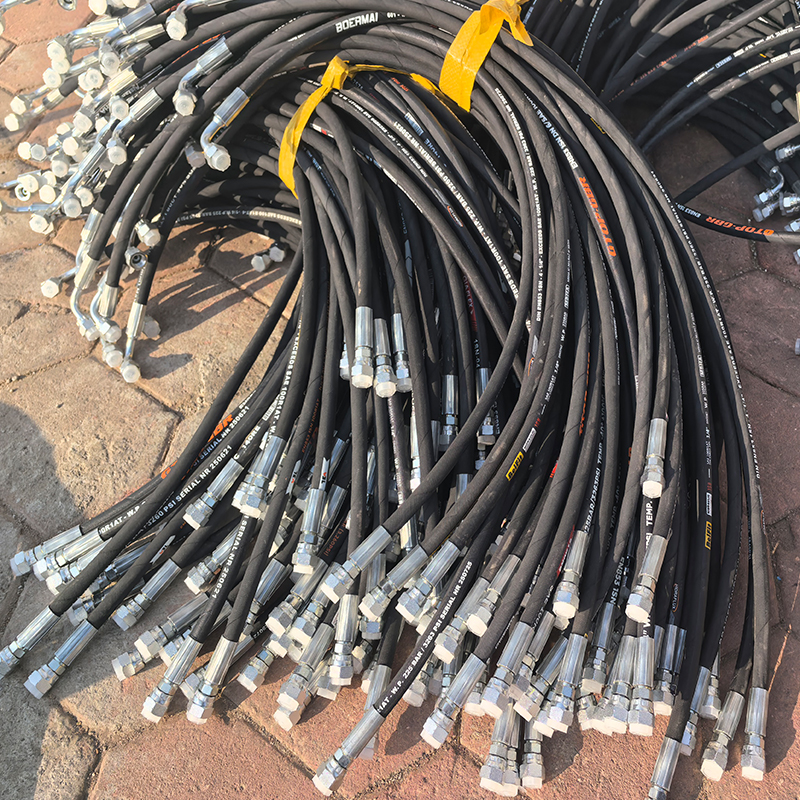 How to Create a Proactive Spiral Hydraulic Hose Replacement Plan That Prevents Downtime?
 Is Your Hydraulic System Overstressing? 5 Diagnostic Signs You Need to Upgrade to Spiral Hose
 Is Your Hydraulic System Pushing Limits? When to Specify Spiral Hose vs. Braided?
 Is Your Machinery Demanding More? Why Upgrade to a Spiral Hydraulic Hose?