
Rubber plugs, as a ubiquitous sealing tool, have demonstrated their indispensable significance across various industries. This article delves into the importance of rubber plug sealing in different sectors, shedding light on its multifaceted applications and benefits.
Applications in the Food Industry
In the food industry, rubber plugs are primarily utilized for sealing food packaging and wine barrels. For instance, in food packaging, rubber plugs are commonly employed in the plastic lids of containers holding milk powder, chocolates, candies, and other edibles. This ensures the safety and hygiene of the food products, safeguarding them from external contaminants. Similarly, in the winemaking process, rubber plugs are extensively used to seal wine barrels, preventing air and bacteria from entering and compromising the quality of the wine. The reliability of these plugs is crucial in maintaining the integrity and freshness of the stored items.
Applications in the Pharmaceutical Sector
The pharmaceutical industry relies heavily on rubber plugs for sealing medicinal vials and infusion devices. The stoppers for medicinal bottles must possess superior sealing properties and corrosion resistance to effectively shield the drugs from external pollution. In hospital settings, during intravenous infusions, rubber plugs serve as the entry points for needles, ensuring the safe delivery of medicinal fluids. They also act as airtight valves in infusion sets, preventing air from entering and affecting the treatment outcome. The precision and reliability of these plugs are vital in medical applications where even minute leaks can have severe consequences.
Applications in the Chemical Industry
In the petrochemical and fine chemical industries, rubber plugs are widely used for sealing equipment such as oil tankers and storage tanks, as well as the pipe connections on reaction vessels. These environments are often harsh, subjected to chemical substances and high temperatures. Therefore, rubber plugs must exhibit excellent corrosion resistance and high-temperature tolerance to withstand these conditions effectively. The durability and robustness of these plugs are critical in preventing leaks and ensuring the safe operation of chemical processes.
Applications in Other Sectors
Beyond the aforementioned industries, rubber plugs find extensive use in plumbing, automotive repair, and construction. In plumbing systems, rubber plugs act as seals at pipe joints, preventing water contamination. During automotive repairs, they serve as sealing gaskets for engines, fuel tank caps, and other components, protecting vital parts from external pollutants. In the construction industry, rubber plugs are employed as seals in waterproofing materials and coatings, enhancing the overall waterproof performance of buildings. Their versatility makes them an essential component in diverse applications.
The Significance of Sealing Technology
Sealing technology is a fundamental and indispensable technique across various industrial sectors. Its importance is manifested in several aspects:
Prevention of Resource Wastage: Seal failure can lead to the wastage of energy and resources, manifested as leaks and spills. This not only incurs additional costs but also contributes to environmental degradation.
Safety Assurance: Failed seals can cause operational failures and, in extreme cases, result in fires, explosions, environmental pollution, and other severe consequences that endanger human life.
Enhancement of Product Quality: In industries like pharmaceuticals and chemicals, good sealing ensures product quality by preventing contamination or leakage, which is crucial for maintaining customer trust and compliance with regulatory standards.
Improvement of Production Efficiency: Reliable sealing technology reduces downtime and maintenance costs in industrial production, thereby enhancing overall efficiency and productivity.
In summary, the sealing performance of rubber plugs is of paramount importance in ensuring product quality, boosting production efficiency, preventing resource wastage, and safeguarding safety. Therefore, when selecting and using rubber plugs, attention should be given to their sealing capabilities to ensure optimal performance in various application environments.
The Essence of Rubber Plug Sealing
The importance of rubber plugs in sealing is primarily reflected in their sealing performance, safety, and the breadth of their application scenarios.
Sealing Performance
The sealing performance of rubber plugs is one of their most critical characteristics. Rubber plugs, with their soft and elastic texture, can tightly fit container openings, effectively preventing the leakage of liquids or gases. This sealing capability ensures that the substances inside the containers do not leak out, while also blocking external impurities from entering, thus preserving the purity and stability of the contents.
Safety
The use of rubber plugs is particularly crucial in chemical experiments. They not only prevent volatile chemical reagents from evaporating, which could affect experimental results, but also avoid the leakage of hazardous substances, ensuring experimental safety. In automobile manufacturing, rubber plugs play a key safety role, such as door seals that prevent wind, dust, and water from entering the vehicle, protecting the interior environment and reducing noise and vibration, thereby enhancing driving comfort and safety.
Broad Application Scenarios
The application scenarios of rubber plugs are extensive, extending beyond chemical experiments and automobile manufacturing. They are vital in the pharmaceutical, food, and electronics industries. For example, in the pharmaceutical industry, rubber plugs are used to seal medicine bottles, preventing drug degradation; in the food industry, they seal packaging to maintain food freshness; and in the electronics industry, they seal electronic components to protect against moisture and contamination.
Material Selection and Maintenance
Choosing the appropriate rubber material is crucial for ensuring sealing effectiveness. Silicone material is widely used due to its excellent elasticity and corrosion resistance. However, the hardness of silicone is also important; excessive hardness can lead to poor resilience and easy deformation, while insufficient hardness can make assembly difficult. Therefore, selecting the right hardness is key to ensuring sealing effectiveness. Additionally, regularly inspecting and maintaining the condition of rubber plugs, and promptly replacing aged ones, are essential measures to ensure their sealing performance.
In conclusion, rubber plugs, with their versatile applications and critical sealing functions, play an indispensable role in numerous industries. Their ability to prevent leaks, protect products, and ensure safety makes them a vital component in modern industrial processes. As technology advances, the development of new rubber materials and sealing technologies will further enhance the performance and reliability of rubber plugs, contributing to more efficient and sustainable industrial operations.
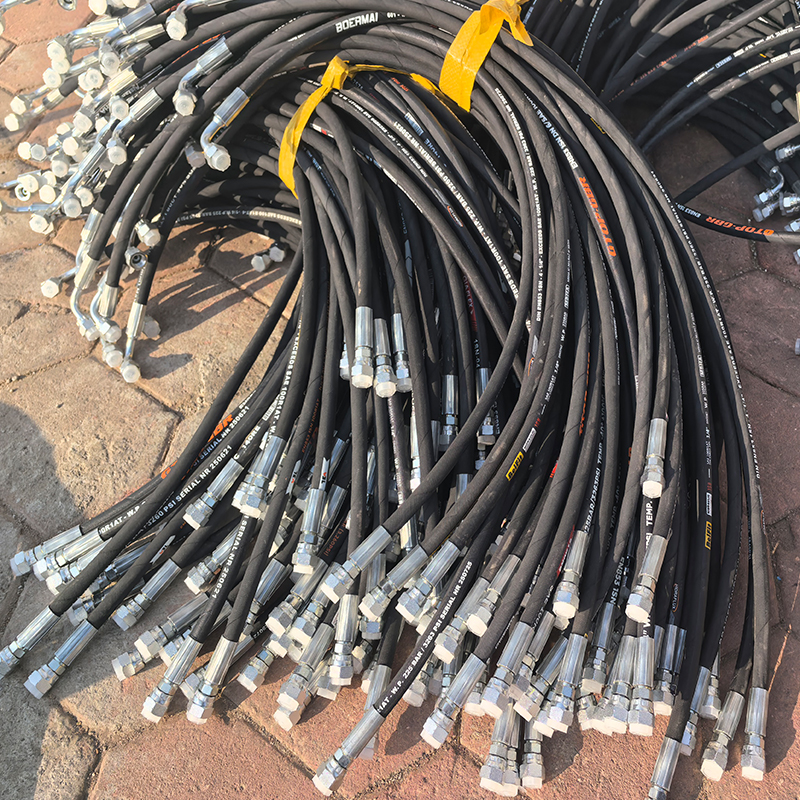 How to Create a Proactive Spiral Hydraulic Hose Replacement Plan That Prevents Downtime?
 Is Your Hydraulic System Overstressing? 5 Diagnostic Signs You Need to Upgrade to Spiral Hose
 Is Your Hydraulic System Pushing Limits? When to Specify Spiral Hose vs. Braided?
 Is Your Machinery Demanding More? Why Upgrade to a Spiral Hydraulic Hose?