
In the realm of industrial applications, the significance of lubricants cannot be overstated, particularly in their role of minimizing friction, preventing wear, and enhancing mechanical efficiency. This article delves into the intricate world of lubricants, with a special focus on their application and importance in conjunction with rubber plugs. By understanding the fundamental functions of lubricants, exploring their various types and characteristics, and examining their specific roles in the context of rubber plugs, we can appreciate the vital contribution they make to numerous industrial processes.
The Basic Functions of Lubricants
Lubricants play a pivotal role across a wide array of industrial applications. Their primary function revolves around the creation of a thin film between two surfaces that are in relative motion. This film serves as a barrier, reducing direct contact between the surfaces and, consequently, lowering the wear rate. By minimizing friction, lubricants enable machinery to operate more smoothly and efficiently, thereby enhancing overall performance. This is particularly crucial in environments where high loads and rapid movements are common, as the absence of proper lubrication could lead to accelerated wear, increased energy consumption, and potentially catastrophic failures.
Types of Lubricants and Their Characteristics
Lubricants come in various forms, each with its unique set of properties tailored to specific applications. One notable category is fully synthetic lubricants. These lubricants are engineered to exhibit higher drop points and superior lubricity, making them ideal for high-temperature and high-load environments. However, their advanced formulation comes at a cost, with prices typically ranging from two to three times that of mineral oils. Despite the higher expense, the enhanced performance and longevity they offer often justify the investment in demanding applications.
On the other hand, natural oils and greases present a more economically viable option. Their lower cost makes them attractive for applications where the operating conditions are less severe. However, it's important to note that under high temperatures and heavy loads, their performance may not be as consistent or reliable as that of fully synthetic lubricants. This makes the selection process crucial, as it must balance cost considerations against the specific demands of the application.
Applications of Lubricants in Rubber Plugs
Rubber plugs, often overlooked yet indispensable components in many mechanical systems, benefit significantly from the strategic use of lubricants. Their roles extend beyond mere sealing, impacting the overall efficiency and reliability of the equipment they are part of.
Enhancing Sealing Performance
In the design and utilization of rubber plugs, the incorporation of lubricants can dramatically improve their sealing capabilities. A well-chosen lubricant reduces the friction between the rubber plug and the container it seals, thereby mitigating the risk of leaks caused by frictional wear. Furthermore, the lubricant forms a protective barrier that shields the rubber plug from environmental factors such as moisture, chemicals, and temperature fluctuations. This dual action not only enhances the immediate sealing effectiveness but also extends the lifespan of the rubber plug, reducing the need for frequent replacements and associated downtime.
Boosting Mechanical Stability
Rubber plugs are often utilized as connectors or seals within mechanical assemblies. In such roles, they are subjected to vibrations and impacts that can compromise their structural integrity over time. The application of lubricants in these scenarios reinforces the mechanical stability of the rubber plugs. By acting as a cushioning agent, lubricants help absorb and dissipate the forces that would otherwise lead to deformation or damage. This contributes to a more robust and reliable mechanical system, capable of withstanding the rigors of continuous operation without compromising performance.
Selecting and Applying Lubricants: Key Considerations
The effectiveness of lubricants in enhancing the performance of rubber plugs hinges on careful selection and proper application. Several factors must be taken into account to ensure optimal results.
Choosing the Right Lubricant for the Job
The process of selecting a lubricant begins with a thorough assessment of the specific requirements of the application. Factors such as the chemical composition of the lubricant, its physical state (liquid, grease, or solid), and the operating environment play critical roles. For instance, deciding between a fully synthetic lubricant and a natural oil or grease involves weighing the operational conditions against the budget constraints. In high-stress environments where reliability is paramount, the superior properties of synthetic lubricants may outweigh their higher cost. Conversely, in less demanding applications, the cost-effectiveness of natural oils and greases may be the determining factor.
Proper Application Techniques
Once the appropriate lubricant has been selected, the next step is to apply it correctly. This involves ensuring that the lubricant is evenly distributed across the surface of the rubber plug, creating a continuous protective layer. Uneven application can lead to localized wear and potential failure points, negating the benefits of lubrication.
Equally important is the need for regular inspection and maintenance. Over time, lubricants can degrade or be washed away, leaving the rubber plugs unprotected. Periodic checks allow for the timely replenishment or replacement of lubricants, maintaining the integrity of the sealing and mechanical functions.
In conclusion, the strategic use of lubricants in conjunction with rubber plugs is a vital aspect of maintaining the efficiency, reliability, and longevity of mechanical systems. By understanding the diverse roles that lubricants play, from reducing friction and preventing wear to enhancing sealing performance and mechanical stability, we can make informed decisions that optimize the performance of these seemingly unassuming yet critical components. Through careful selection and proper application, lubricants become indispensable allies in the quest for operational excellence across a wide range of industrial applications.
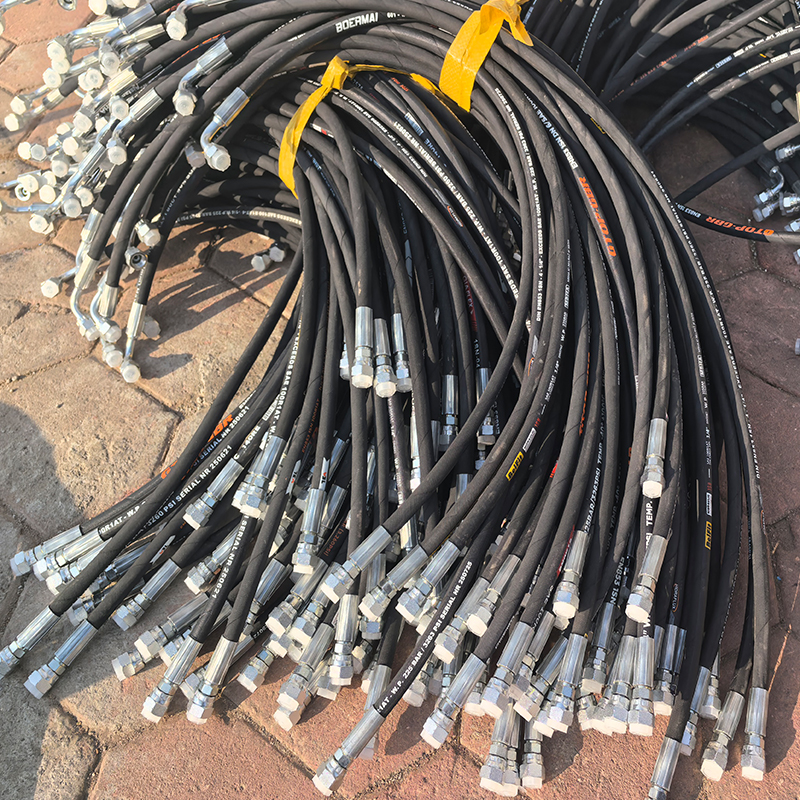 How to Create a Proactive Spiral Hydraulic Hose Replacement Plan That Prevents Downtime?
 Is Your Hydraulic System Overstressing? 5 Diagnostic Signs You Need to Upgrade to Spiral Hose
 Is Your Hydraulic System Pushing Limits? When to Specify Spiral Hose vs. Braided?
 Is Your Machinery Demanding More? Why Upgrade to a Spiral Hydraulic Hose?