
Nuclear power plants are marvels of modern engineering, designed to harness atomic energy safely and efficiently. At the heart of these facilities lie complex systems of pipes, valves, and machinery that work in unison to generate electricity. Among the unsung heroes of these systems are flexible pipe couplings—components that play a critical role in ensuring the reliability, safety, and longevity of nuclear infrastructure. This article explores the significance of flexible pipe couplings in nuclear power plants, their design principles, applications, and the challenges they address in high-stakes environments.
The Role of Piping Systems in Nuclear Power Generation
Piping networks in nuclear plants are the lifeblood of operations, transporting coolant, steam, and other fluids under extreme conditions. These systems must withstand high pressures, temperatures, and radiation exposure while maintaining structural integrity. Any failure in piping connections could lead to leaks, equipment damage, or even catastrophic accidents.
Flexible pipe couplings emerge as a solution to mitigate risks associated with thermal expansion, vibration, and misalignment. Unlike rigid joints, which can crack under stress, flexible couplings absorb movement and dampen vibrations, ensuring seamless fluid transfer and reducing wear on connected components.
Design Principles: Balancing Flexibility and Durability
The design of flexible couplings for nuclear applications is a meticulous process. Engineers must balance flexibility (to accommodate movement) with durability (to resist radiation, corrosion, and aging). Common materials include high-grade stainless steel, alloyed metals, and specialized polymers engineered for nuclear environments.
Key design features include:
Sealing Mechanisms: Advanced gaskets and seals prevent leaks, even under prolonged radiation exposure.
Modular Construction: Couplings are often modular, allowing for easy replacement or maintenance without dismantling entire systems.
Radiation Hardening: Materials are selected for their resistance to radiation-induced embrittlement or degradation.
Thermal Stability: Couplings must retain flexibility across a wide temperature range, from subzero cooling water to superheated steam.
These principles ensure couplings perform reliably over decades, a critical requirement given the 40–60-year lifespan of nuclear plants.
Applications in Reactor Coolant Systems
One of the most demanding applications for flexible couplings is in reactor coolant systems. These circuits circulate water or other fluids to transfer heat from the reactor core to steam generators. The pipes here endure extreme conditions:
High Pressures: Up to 150 bar (2.200 psi) in pressurized water reactors.
Elevated Temperatures: Water may reach 340°C (644°F) in some designs.
Radiation Fields: Piping near the core is exposed to neutron and gamma radiation.
Flexible couplings here serve multiple purposes:
Thermal Expansion Compensation: As pipes heat up, they expand; couplings absorb this movement without compromising seals.
Seismic Isolation: In earthquake-prone regions, couplings dampen vibrations to prevent pipe fractures.
Alignment Correction: During installation or over time, pipes may shift slightly; couplings accommodate minor misalignments.
Without these functions, the risk of leaks or pipe bursts would escalate, threatening both safety and efficiency.
Safety and Compliance: Meeting Stringent Standards
Nuclear safety is non-negotiable, and flexible couplings must adhere to rigorous standards set by organizations like the Nuclear Regulatory Commission (NRC) in the U.S. or the International Atomic Energy Agency (IAEA) globally. Compliance involves:
Qualification Testing: Couplings undergo simulated aging, radiation exposure, and pressure cycling to prove longevity.
Documentation: Manufacturers provide detailed records of materials, processes, and quality control measures.
Redundancy: Critical systems often use dual couplings or backup seals to eliminate single points of failure.
Failure to meet these standards can result in costly delays or even project cancellations, underscoring the importance of compliance.
Maintenance and Longevity: Extending Plant Lifecycles
Nuclear power plants are expensive to build but even costlier to decommission. Extending their operational life is a priority, and flexible couplings contribute by reducing maintenance needs.
Corrosion Resistance: Unlike older designs that used rubber or elastomers prone to degradation, modern couplings resist corrosion from coolant chemicals.
Inspection Ease: Some couplings feature transparent windows or non-destructive testing (NDT) ports to verify seal integrity without disassembly.
Predictive Maintenance: Advanced couplings may integrate sensors to monitor wear or leaks, enabling proactive repairs.
By minimizing downtime and extending component life, couplings help plants defer costly upgrades or replacements.
Challenges and Innovations in Flexible Coupling Technology
Despite their importance, flexible couplings face challenges:
Radiation Effects: Even "radiation-hardened" materials can degrade over decades. Researchers are exploring nanocoatings or self-healing polymers.
Extreme Temperatures: New reactor designs (e.g., small modular reactors, SMRs) may operate at higher temperatures, pushing coupling materials to their limits.
Cost: High-performance couplings are expensive, but plant operators justify the cost through safety and reliability gains.
Innovations include:
3D-Printed Components: Additive manufacturing allows for complex, lightweight designs that were previously impractical.
Smart Couplings: Embedded sensors could alert operators to leaks or misalignments in real time.
Biodegradable Seals (for Non-Critical Areas): In less radiated zones, eco-friendly materials might reduce waste.
Conclusion: The Silent Guardian of Nuclear Safety
Flexible pipe couplings are the unsung heroes of nuclear power plants, quietly ensuring that critical systems operate smoothly under conditions that would challenge most materials. Their role in safety, efficiency, and cost management cannot be overstated. As the nuclear industry evolves toward smaller reactors, longer lifespans, and stricter safety goals, the demand for innovative, reliable couplings will only grow.
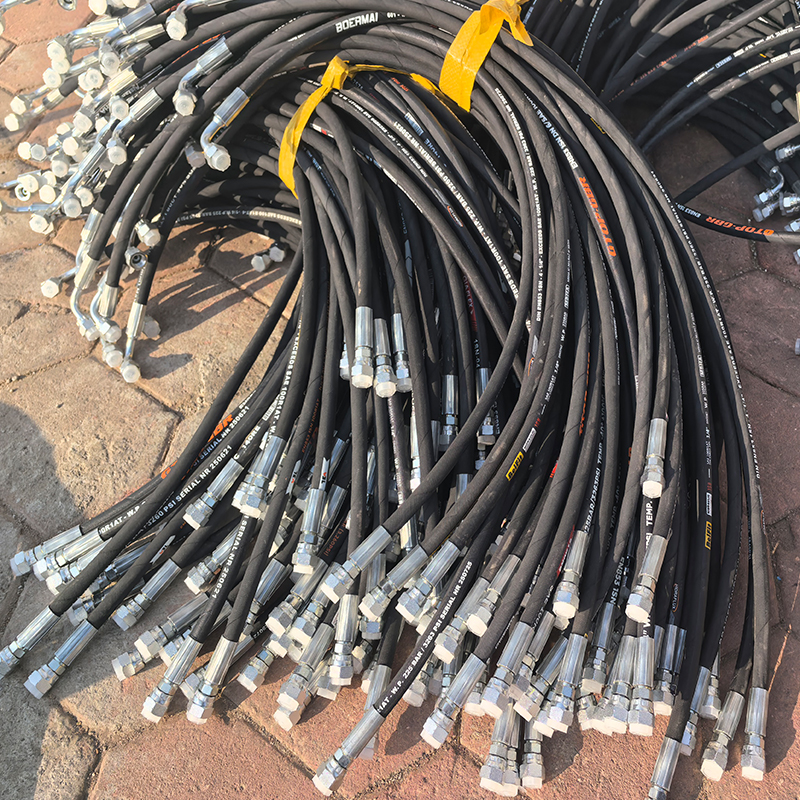 How to Create a Proactive Spiral Hydraulic Hose Replacement Plan That Prevents Downtime?
 Is Your Hydraulic System Overstressing? 5 Diagnostic Signs You Need to Upgrade to Spiral Hose
 Is Your Hydraulic System Pushing Limits? When to Specify Spiral Hose vs. Braided?
 Is Your Machinery Demanding More? Why Upgrade to a Spiral Hydraulic Hose?