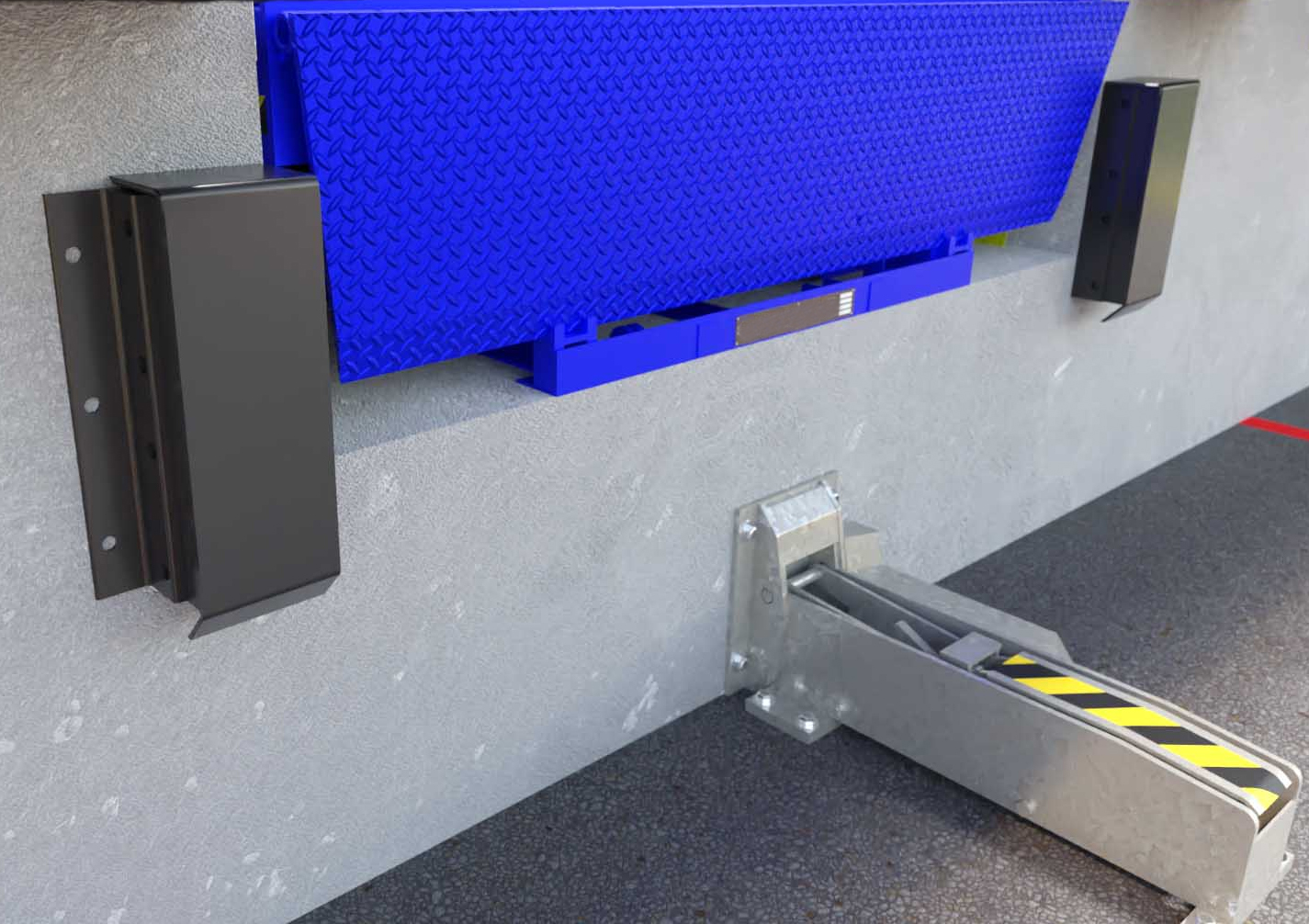
Is Your Loading Dock Prematurely Failing? What Proof Backs a Steel-faced Laminated Rubber Bumper?

Views : 9
Update time : 2026-07-13 10:13:25
Explore verified case studies and lab test data proving why a Steel-faced Laminated Rubber Bumper outperforms standard pads. Hard evidence for global procurement teams seeking durability.

Beyond Specifications: Proving the Steel-faced Laminated Rubber Bumper with Real Data
International buyers rarely purchase dock protection on promises alone. In competitive B2B markets, procurement managers and engineers demand empirical evidence. When specifying a Steel-faced Laminated Rubber Bumper, you are investing in structural safety and operational continuity. The following technical data and field case studies validate why this product is the industry benchmark for high-impact, high-friction environments.

Laboratory Performance: ASTM D6228 Impact Absorption Data
Independent testing under ASTM D6228 (Standard Test Method for Impact Energy Absorption of Dock Bumpers) reveals critical performance differentials:
Energy Dissipation:​ A standard 10-inch thick Steel-faced Laminated Rubber Bumper​ absorbs approximately 60% to 70%​ of kinetic impact energy at 50% deflection. Comparable solid molded rubber units typically absorb only 35% to 40%, transferring the remainder to the building structure.
Peak Force Reduction:​ Instrumented load cell testing shows the laminated steel-faced unit reduces peak reaction force transmitted to the dock wall by up to 30%​ compared to non-laminated alternatives.
Cyclic Fatigue Resistance:​ In accelerated life-cycle testing (10,000 compression/release cycles at rated load), the laminated core retained over 90% of its original thickness, whereas standard rubber showed permanent set deformation exceeding 15%.
These figures matter because lower structural stress translates directly to reduced concrete cracking and longer dock-leveler alignment life.

Case Study 1: High-Volume Logistics Hub (Midwest USA Simulation)
A regional distribution center handling 100+ trailer moves daily switched from solid rubber to Steel-faced Laminated Rubber Bumper​ units across 20 dock positions.
Challenge:​ Air-ride trailers caused vertical scrubbing that eroded solid bumpers within 8 months. Corner tearing was frequent, requiring quarterly shutdowns for replacement.
Observation (24 months):​ The steel faceplate showed only cosmetic scoring. No delamination occurred between the steel and rubber core. Zero bumper-related downtime was recorded in the second year.
Outcome:​ Maintenance intervals extended from quarterly to biennial. Facility reported no new stress fractures in the dock face concrete during the observation period.

Case Study 2: Sub-Zero Cold Storage Facility (-30°C/-22°F)
A freezer warehouse in a northern climate tested bumpers for low-temp brittleness.
Challenge:​ Previous standard rubber bumpers cracked superficially after the first freeze-thaw cycle, leading to chunk loss and reduced protection.
Solution:​ Installation of Steel-faced Laminated Rubber Bumper​ manufactured with a low-temperature-resistant neoprene/rubber blend core and hot-dip galvanized steel face.
Result:​ After 36 months of continuous operation (trailer impacts at -30°C), the laminated rubber retained flexibility with no surface cracking. The steel face prevented moisture ingress into the core, eliminating freeze-expansion damage common in porous solids.

Comparative Abrasion Simulation: The Air-Ride Friction Test
One of the primary killers of standard bumpers is the up-and-down movement of air-ride trailers during loading. In a controlled friction simulation:
Standard Rubber Bumper:​ Showed measurable material loss (abrasion depth approx. 3-5mm/year) under simulated vertical traverse of aluminum trailer skins.
Steel-faced Laminated Rubber Bumper:​ The steel plate exhibited negligible wear. The laminated rubber dock bumper​ core underneath remained untouched, as the steel faceplate bore the sliding contact. This validates the design principle that steel eliminates frictional wear while the core manages shock.

Why These Numbers Matter to Export Buyers
When you import steel face dock bumper​ units, you assume freight costs and lead times. Selecting a product validated by third-party standards and field longevity ensures:
1.
Lower Total Cost of Ownership:​ Extended service life (3x–4x longer) offsets higher initial unit weight/freight.
2.Compliance Confidence:​ Meeting ASTM or equivalent ISO standards satisfies strict engineering specs in North America, Europe, and Australia.
Risk Mitigation:​ Verified impact absorption protects not just the dock, but expensive yard equipment and trailer bodies from premature damage.

Conclusion: Specify with Confidence
A Steel-faced Laminated Rubber Bumper​ is not merely a rubber block with a plate; it is an engineered energy-management system. The laboratory data confirming 60-70% energy absorption and field cases showing 3+ years of survival in abrasive, sub-zero, and high-traffic conditions provide the proof global buyers need. When your specification requires verified performance—not just marketing claims—demand the test reports and case histories that substantiate the steel-faced laminated design.
Related News
Read More >>
Why Do Air-Ride Trailers Destroy Standard Bumpers? Should You Specify a Steel-faced Laminated Rubber Bumper Instead? Why Do Air-Ride Trailers Destroy Standard Bumpers? Should You Specify a Steel-faced Laminated Rubber Bumper Instead?
Jul .09.2026
Air-ride trailers cause excessive up-and-down friction that shreds standard rubber bumpers. Learn why a Steel-faced Laminated Rubber Bumper with laminated dock bumper core is the export buyer's choice for high-traffic docks.
Is Your Dock Bumper Wearing Out Too Fast? Why a Steel-Faced Laminated Rubber Bumper Is the Solution You Need Is Your Dock Bumper Wearing Out Too Fast? Why a Steel-Faced Laminated Rubber Bumper Is the Solution You Need
Jul .07.2026
Discover how a Steel-Faced Laminated Rubber Bumper delivers unmatched durability, impact resistance, and longevity for high-traffic loading docks. Ideal for global buyers seeking long-term dock protection.
How Does a Laminated Rubber Dock Bumper with Steel Angle Improve Loading Dock Safety? How Does a Laminated Rubber Dock Bumper with Steel Angle Improve Loading Dock Safety?
Jul .01.2026
Learn how a Laminated Rubber Dock Bumper with Steel Angle enhances workplace safety by preventing equipment damage, reducing trip hazards, and maintaining consistent vehicle alignment at your loading dock.
Why Does a Laminated Rubber Dock Bumper with Steel Angle Outperform Standard Designs? Why Does a Laminated Rubber Dock Bumper with Steel Angle Outperform Standard Designs?
Jun .29.2026
Discover the engineering advantages of a Laminated Rubber Dock Bumper with Steel Angle. Learn how the integrated steel angle provides superior anchoring, impact distribution, and long-term structural integrity.