
In the quest for sustainable development, every industry is being scrutinized for its environmental impact and potential for innovation. One often-overlooked yet crucial component in various sectors is the humble rubber plug. These unassuming devices play a vital role in sealing, protecting, and maintaining the integrity of systems ranging from automotive engines to plumbing networks and even in sophisticated industrial machinery. As the world shifts towards more eco-friendly practices, rubber plug innovations are emerging as a significant contributor to sustainability efforts.
Rubber plugs, traditionally made from natural or synthetic rubber materials, have long been used to prevent leakage, contamination, and damage. However, the modern-day challenges of climate change, resource scarcity, and waste management necessitate a rethinking of how these seemingly simple items are designed, produced, and disposed of. Innovations in rubber plug technology are not just about enhancing their functionality but also about minimizing their ecological footprint throughout their lifecycle.
One of the primary areas of innovation lies in the materials used. Traditional rubber compounds, while effective, often contain chemicals that can be harmful to the environment during production or after disposal. The development of bio-based and biodegradable rubbers is a game-changer. These materials are derived from renewable sources such as vegetable oils, corn starch, or other plant-based ingredients. They offer similar performance characteristics to conventional rubbers but with the added advantage of breaking down naturally once discarded, reducing landfill waste and pollution.
Manufacturers are increasingly investing in research to create rubber compounds that are not only biodegradable but also recyclable. This involves engineering rubbers that can be easily separated from other materials and reprocessed without losing their properties. The challenge here is to balance durability—essential for a rubber plug's sealing capabilities—with the ability to decompose or recycle efficiently. Advances in material science are making this balance achievable, paving the way for more sustainable rubber plug products.
Another innovation frontier is in the design and functionality of rubber plugs. Traditional designs often focus solely on sealing effectiveness. However, contemporary designs incorporate features that enhance energy efficiency and reduce resource consumption. For instance, some rubber plugs are now engineered with thermal insulation properties, minimizing heat loss or gain in systems they seal. This can lead to significant energy savings, especially in applications where temperature control is critical, such as in HVAC systems or industrial cooling processes.
Furthermore, the integration of smart technologies into rubber plugs is transforming their role from passive components to active contributors to system efficiency. Sensors embedded within rubber plugs can monitor pressure, temperature, and fluid levels, providing real-time data that can be used to optimize system performance. Predictive maintenance, enabled by these smart plugs, reduces the likelihood of unexpected failures, thereby cutting down on repair costs and resource use associated with frequent replacements.
The production process of rubber plugs is also undergoing a revolution to align with sustainable development goals. Traditional manufacturing methods can be energy-intensive and generate considerable waste. Adoption of lean manufacturing principles, along with advanced production techniques like injection molding and 3D printing, is reducing material waste and energy consumption. Injection molding, in particular, allows for precise control over the shape and size of rubber plugs, minimizing excess material and improving production efficiency.
3D printing, or additive manufacturing, offers even greater potential for customization and waste reduction. It enables the production of complex geometries that are difficult or impossible to achieve with conventional methods. This means rubber plugs can be tailored exactly to the specifications of the application, reducing the need for multiple designs and inventory. Moreover, 3D printing can use recycled rubber materials, further enhancing sustainability.
End-of-life management is another critical aspect of sustainable rubber plug innovation. Traditionally, rubber plugs end up in landfills or are incinerated, contributing to environmental pollution. Efforts are now underway to develop take-back programs and recycling initiatives specifically for rubber products. Manufacturers are being encouraged to design rubber plugs with ease of disassembly and recycling in mind, ensuring that at the end of their useful life, they can be processed into new materials or products.
Consumer awareness and demand are driving these changes. As people become more conscious of their environmental impact, they are seeking out products that align with their values. This shift in consumer behavior is prompting manufacturers to prioritize sustainability in their product development cycles. Rubber plug manufacturers that can demonstrate a commitment to eco-friendly materials, efficient production processes, and responsible end-of-life management are likely to gain a competitive edge in the market.
In addition to environmental benefits, sustainable rubber plug innovations can also contribute to economic development. By reducing material and energy costs, improving production efficiency, and extending product lifespan through smart technologies, businesses can achieve cost savings that can be reinvested in further innovation or passed on to consumers. This creates a virtuous cycle of sustainability, where environmental responsibility and economic growth reinforce each other.
Government policies and regulations also play a pivotal role in promoting sustainable rubber plug innovations. Incentives such as tax breaks, grants, and subsidies for companies that adopt eco-friendly practices can accelerate the transition to more sustainable production methods. Stringent regulations on waste management and emissions can drive out less environmentally conscious manufacturers, making room for those committed to sustainability.
In conclusion, rubber plug innovations are a vital yet often-overlooked aspect of sustainable development. From biodegradable materials and smart technologies to lean manufacturing and responsible end-of-life management, the evolution of rubber plugs is a testament to the potential for even the most mundane components to contribute significantly to environmental and economic sustainability. As the world continues to grapple with the challenges of climate change and resource scarcity, the humble rubber plug stands as a symbol of how innovation at the micro level can have macro impacts, driving us closer to a more sustainable future.
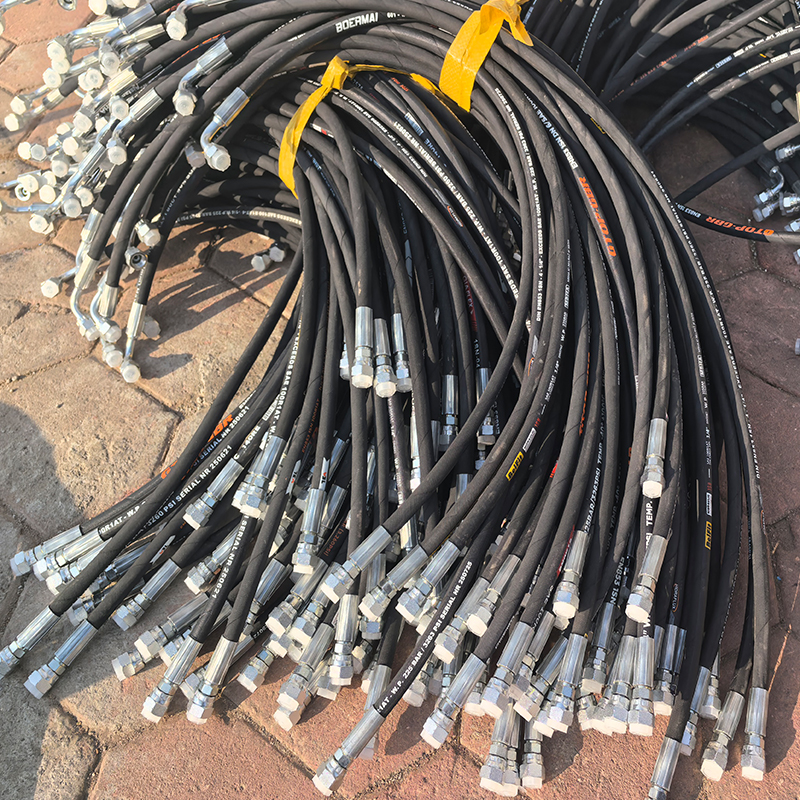 How to Create a Proactive Spiral Hydraulic Hose Replacement Plan That Prevents Downtime?
 Is Your Hydraulic System Overstressing? 5 Diagnostic Signs You Need to Upgrade to Spiral Hose
 Is Your Hydraulic System Pushing Limits? When to Specify Spiral Hose vs. Braided?
 Is Your Machinery Demanding More? Why Upgrade to a Spiral Hydraulic Hose?