
Rubber plugs serve as indispensable elements in fluid systems, owing to their remarkable sealing properties and adaptability across a myriad of applications. These unassuming yet highly effective devices are pivotal in safeguarding the integrity and safety of fluid systems by effectively preventing leaks, maintaining pressure levels, and shielding against contamination.
Sealing and Regulating Fluid Flow
A primary function of rubber plugs is their ability to seal and regulate fluid flow within pipes and conduits. During maintenance, repair, or cleaning procedures, rubber plugs can efficiently halt the movement of fluids, ensuring that tasks can be executed safely without the risk of spills or contamination. Their capacity to create a watertight seal renders them indispensable in situations where maintaining pressure and preventing leaks is of paramount importance.
For instance, in hydraulic systems, rubber plugs are often utilized to temporarily seal off sections of piping during maintenance work. This prevents hydraulic fluid from escaping and causing potential hazards or environmental damage. Similarly, in plumbing systems, rubber plugs can be employed to block water flow in pipes while repairs or modifications are being carried out.
Diverse Applications Across Industries
Food and Beverage Sector
Within the food and beverage industry, rubber plugs are extensively used for sealing containers and packaging. They play a crucial role in ensuring that products such as beverages, sauces, and other liquid foods remain uncontaminated and retain their freshness. For example, rubber plugs are commonly found in the caps of bottles and jars, serving as a vital barrier against external contaminants like dust, dirt, and microorganisms.
In addition, rubber plugs are utilized in food processing equipment to seal off valves and connections, preventing the ingress of food particles and ensuring hygienic operation. This is particularly important in environments where strict food safety standards must be adhered to.
Pharmaceutical Field
In the pharmaceutical industry, rubber plugs are essential for sealing vials and bottles containing medications. The rigorous requirements for sterility and purity in pharmaceutical manufacturing make rubber plugs, especially those crafted from high-quality materials such as silicone or fluoroelastomers, highly suitable for this application. These plugs help maintain the efficacy and safety of drugs by preventing exposure to air, moisture, and contaminants.
Furthermore, rubber plugs are employed in pharmaceutical processing equipment to seal off connections and prevent cross-contamination between different batches of medications. This is crucial in ensuring the integrity and quality of the final products.
Chemical Industry
The chemical industry relies heavily on rubber plugs for sealing pipelines, storage tanks, and various other equipment. Given the harsh conditions often encountered in chemical processing, such as exposure to corrosive substances and extreme temperatures, rubber plugs must be manufactured from specialized materials like fluorinated elastomers (e.g., Viton) or silicone to withstand these challenges.
For example, in chemical plants, rubber plugs are used to seal off valves and connections in pipelines transporting corrosive chemicals. These plugs must be able to resist the corrosive effects of the chemicals and maintain a tight seal to prevent leaks and spills.
Advantages of Rubber Plugs
Superior Sealing Capabilities
Rubber plugs are renowned for their exceptional sealing capabilities. They can form a tight seal under a wide range of conditions, making them suitable for use in high-pressure environments and systems that require strict containment of fluids. This is particularly important in applications where even minor leaks can have severe consequences, such as in hydraulic systems or chemical processing plants.
Robustness and Longevity
Due to their sturdy construction and material properties, rubber plugs exhibit excellent wear resistance and durability. This ensures long-term reliability and reduces the need for frequent replacements, which is especially advantageous in industrial settings where downtime can result in significant costs. For instance, in a manufacturing plant, the failure of a rubber plug could lead to production stoppages, equipment damage, and even safety hazards.
Temperature Resistance
High-performance rubber plugs, particularly those made from materials like silicone or fluoroelastomers, can withstand extreme temperatures. This characteristic is vital in applications involving thermal cycling or exposure to high temperatures, such as in automotive or aerospace industries. In these sectors, rubber plugs must be able to maintain their sealing properties and structural integrity even when subjected to significant temperature fluctuations.
For example, in automotive engines, rubber plugs are used to seal off various components that are exposed to high temperatures. These plugs must be able to withstand the heat generated by the engine without degrading or losing their sealing capabilities.
Chemical Resistance
Rubber plugs are highly resistant to a broad spectrum of chemicals, including oils, solvents, and fuels. This resistance makes them suitable for use in environments where they may come into contact with aggressive substances, ensuring that they do not degrade or compromise the integrity of the system. In the chemical industry, where various corrosive and reactive substances are handled, the chemical resistance of rubber plugs is of utmost importance.
Moreover, in the oil and gas industry, rubber plugs are used to seal off valves and connections in pipelines transporting crude oil, natural gas, and refined petroleum products. These plugs must be able to resist the corrosive and abrasive effects of these substances to maintain a tight seal and prevent leaks.
Additional Benefits
Apart from the aforementioned advantages, rubber plugs offer several other benefits. They are relatively inexpensive and easy to install, making them a cost-effective solution for sealing fluid systems. Additionally, they are available in various sizes, shapes, and materials, allowing for customization to meet the specific requirements of different applications.
Furthermore, rubber plugs are lightweight and compact, which makes them easy to handle and store. This is particularly advantageous in situations where space is limited, or where the plugs need to be transported to different locations.
In conclusion, rubber plugs are fundamental components in fluid systems, providing reliable sealing solutions across a wide range of industries. Their ability to prevent leaks, maintain pressure, and protect against contamination makes them invaluable in applications spanning from food and beverage packaging to pharmaceutical production and chemical processing.
With their superior sealing performance, durability, temperature resistance, and chemical resistance, rubber plugs continue to play a vital role in ensuring the efficiency and safety of fluid systems. As technology advances and new materials are developed, the capabilities and applications of rubber plugs are likely to expand, further solidifying their importance in various industries.
Whether it is in the food and beverage industry, where maintaining product freshness and safety is crucial, or in the chemical industry, where resisting harsh conditions is essential, rubber plugs remain a trusted and reliable solution for sealing fluid systems. Their versatility, combined with their excellent performance characteristics, ensures that they will continue to be a staple in fluid system design and operation for years to come.
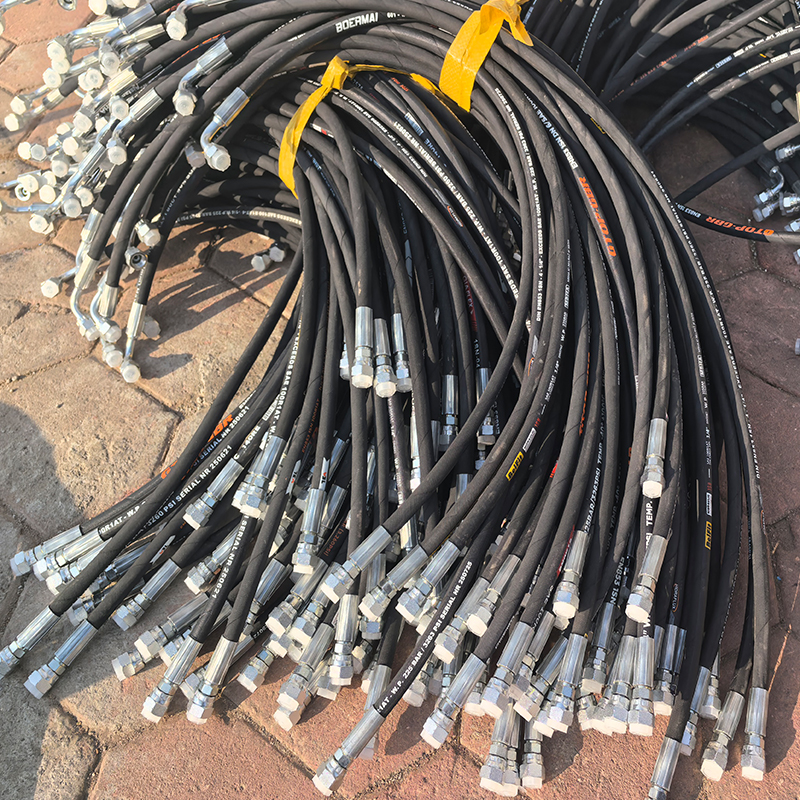 How to Create a Proactive Spiral Hydraulic Hose Replacement Plan That Prevents Downtime?
 Is Your Hydraulic System Overstressing? 5 Diagnostic Signs You Need to Upgrade to Spiral Hose
 Is Your Hydraulic System Pushing Limits? When to Specify Spiral Hose vs. Braided?
 Is Your Machinery Demanding More? Why Upgrade to a Spiral Hydraulic Hose?