
Rubber waterstops are essential components in construction projects designed to prevent water leakage through concrete joints. These flexible strips are embedded in structures like dams, tunnels, reservoirs, and underground facilities to ensure long-term watertightness. Their effectiveness relies heavily on their material composition, manufacturing processes, and adaptability to environmental conditions.
Core Materials: Natural and Synthetic Rubber
The foundation of rubber waterstops lies in rubber polymers. Natural rubber, derived from latex, provides excellent elasticity and resilience, making it ideal for joints requiring flexibility. However, its susceptibility to degradation in harsh chemical environments limits its use in certain applications.
To address these limitations, synthetic rubbers are widely adopted:
Styrene-Butadiene Rubber (SBR): Known for high tensile strength and resistance to wear, SBR is commonly used in water containment projects.
Chloroprene (Neoprene): Offers superior resistance to oils, sewage, and chemicals, making it suitable for wastewater treatment plants.
Ethylene Propylene Diene Monomer (EPDM): Excels in weathering resistance and is often used in outdoor structures exposed to UV radiation.
Nitrile Rubber: Provides exceptional resistance to petroleum-based fluids, ideal for industrial settings.
These materials are blended with additives to enhance performance, such as plasticizers for flexibility and carbon black for UV protection.
Additives and Reinforcements
Beyond base polymers, rubber waterstops incorporate specialized additives:
Hydrophilic Agents: Enable expansion upon water contact, sealing gaps dynamically. Bentonite clay or water-swelling rubber compounds are often added for this purpose.
Fillers: Silica, calcium carbonate, or clay improve durability and reduce production costs.
Vulcanizing Agents: Sulfur or peroxides create cross-linking bonds during curing, boosting heat and chemical resistance.
Anti-Aging Compounds: Antioxidants and ozone-resistant additives prolong service life in extreme conditions.
Manufacturing Processes
Production involves multiple precision stages:
Mixing: Raw rubber is combined with additives using intensive kneading machines to ensure homogeneity.
Extrusion or Molding: The compound is shaped into profiles (e.g., dumbbell, center-bulb) through extrusion presses or vulcanization molds.
Vulcanization: Heated to 140–160°C, the rubber undergoes sulfur-based curing to achieve final elasticity and strength.
Quality Control: Tensile strength, elongation rates, and hardness are tested per standards like ASTM D412 or GB/T 18173.
Performance Advantages
The material science behind rubber waterstops delivers critical benefits:
Adaptability: Accommodates concrete shrinkage/expansion without losing seal integrity.
Chemical Resistance: Synthetic variants withstand aggressive environments like sewage systems.
Longevity: Properly formulated products last over 30 years, even in submerged conditions.
Ease of Installation: Pre-molded joints and cold/hot vulcanization methods simplify on-site assembly.
Applications Across Industries
Rubber waterstops are indispensable in:
Hydraulic Engineering: Dams, canals, and reservoirs rely on SBR or EPDM variants for leak-proof joints.
Urban Infrastructure: Subway tunnels and parking garages use neoprene to resist groundwater infiltration.
Waste Management: Chloroprene-based strips handle corrosive fluids in treatment plants.
Architectural Projects: Expansion joints in high-rise buildings employ EPDM for weather resistance.
Future Trends in Material Innovation
Emerging developments focus on sustainability and smart functionality:
Recycled Rubber: Incorporating reclaimed rubber reduces environmental impact while maintaining performance.
Self-Healing Polymers: Materials that autonomously repair minor cracks are under research.
Sensor-Embedded Waterstops: Integration of microsensors to monitor joint integrity in real time.
Conclusion
Rubber waterstops are marvels of material engineering, combining natural and synthetic polymers with advanced additives to solve complex waterproofing challenges. Their composition directly dictates their suitability for environments ranging from tranquil reservoirs to corrosive industrial sites. As construction demands evolve, ongoing innovations in rubber technology promise even more durable and adaptive solutions for global infrastructure needs.
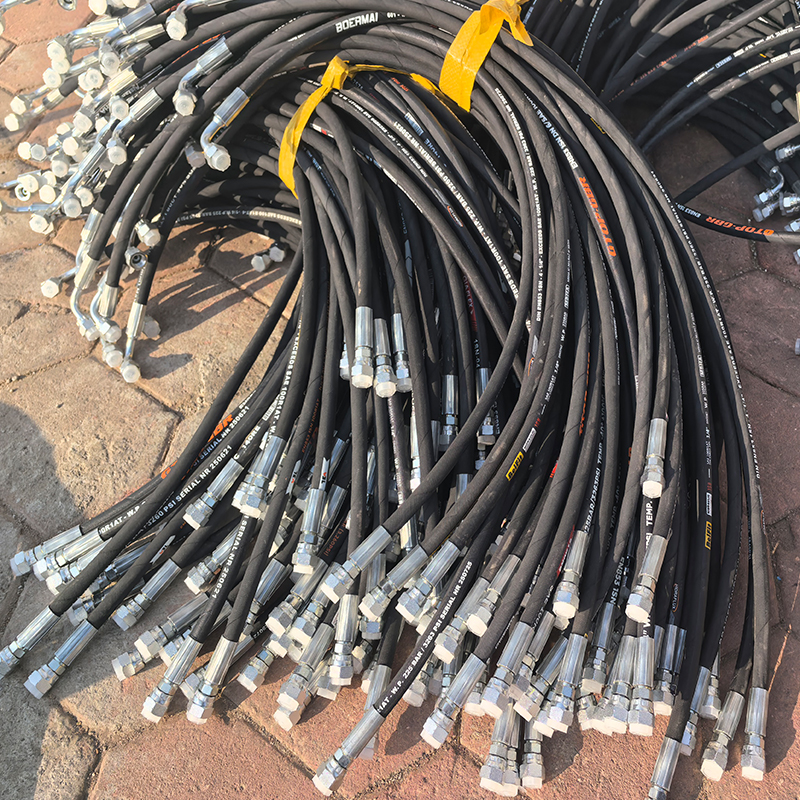 How to Create a Proactive Spiral Hydraulic Hose Replacement Plan That Prevents Downtime?
 Is Your Hydraulic System Overstressing? 5 Diagnostic Signs You Need to Upgrade to Spiral Hose
 Is Your Hydraulic System Pushing Limits? When to Specify Spiral Hose vs. Braided?
 Is Your Machinery Demanding More? Why Upgrade to a Spiral Hydraulic Hose?