
When it comes to industrial and marine applications, rubber inflatable airbag have become indispensable tools. These versatile devices are used for a wide range of purposes, from ship launching and lifting heavy objects to providing cushioning and support in various engineering projects. But have you ever wondered what exactly goes into making these robust and reliable airbags? In this article, we'll take a closer look at the key materials that make up rubber inflatable airbags, exploring their properties and the reasons for their selection.
The Core: High-Strength Rubber Compounds
At the heart of every rubber inflatable airbag lies a specially formulated rubber compound. This isn't your ordinary rubber; it's a high-performance material designed to withstand extreme conditions. The base rubber is typically a blend of natural and synthetic rubbers, chosen for their complementary properties. Natural rubber offers excellent elasticity and tear resistance, while synthetic rubbers, such as styrene-butadiene rubber (SBR) or chloroprene rubber (CR), enhance durability and resistance to chemicals, oils, and weathering.
The rubber compound is further reinforced with additives to improve its performance. Carbon black, for instance, is commonly added to increase strength and abrasion resistance. It acts as a reinforcing filler, creating a stronger bond between the rubber molecules and enhancing the overall structural integrity of the airbag. Other additives may include antioxidants to prevent premature aging, antiozonants to protect against ozone damage, and plasticizers to improve flexibility and ease of processing.
The Backbone: Reinforcing Fibers
While rubber provides the flexibility and elasticity needed for inflation and deflation, it's the reinforcing fibers that give pipeline blocking airbag their incredible strength and shape retention. These fibers are woven into layers within the rubber, creating a composite structure that can withstand high internal pressures without deforming or bursting.
One of the most commonly used reinforcing materials is high-tensile synthetic fibers, such as polyester or nylon. These fibers are known for their exceptional strength-to-weight ratio, meaning they can support heavy loads without adding excessive bulk to the rubber inflatable airbag. The fibers are typically arranged in a crisscross pattern, creating a multi-layer structure that distributes stress evenly across the surface of the airbag. This design ensures that the inflatable airbag can maintain its shape even under extreme pressure, making it ideal for applications where stability and reliability are critical.
The Protective Layer: Outer Coating
To protect the inner rubber and reinforcing fibers from external damage, pipeline blocking airbags are often coated with a durable outer layer. This coating serves several purposes: it acts as a barrier against abrasion, chemicals, and UV radiation; it enhances the inflatable airbag's resistance to punctures and tears; and it provides a smooth, non-slip surface that improves handling and safety.
The outer coating is typically made from a high-performance polymer, such as polyurethane or neoprene. These materials are chosen for their excellent durability and resistance to environmental factors. Polyurethane, for example, is known for its abrasion resistance and flexibility, making it ideal for applications where the inflatable airbag will be subjected to frequent movement or contact with rough surfaces. Neoprene, on the other hand, offers superior resistance to oils, chemicals, and weathering, making it a popular choice for marine and industrial applications.
The Valve System: Precision Engineering
While the materials used in the construction of rubber inflatable airbags are crucial, the valve system is equally important. The valve is responsible for controlling the flow of air into and out of the inflatable airbag, allowing it to be inflated and deflated quickly and efficiently. A well-designed valve system ensures that the airbag can be operated safely and reliably, even in demanding conditions.
Most pipeline blocking airbags feature a high-quality brass or stainless steel valve, chosen for its durability and resistance to corrosion. The valve is typically equipped with a safety mechanism, such as a pressure relief valve, to prevent over-inflation and potential damage to the airbag. Some valves also incorporate a quick-connect coupling, making it easy to attach and detach the inflatable airbag from an air compressor or other inflation device.
The Manufacturing Process: Quality Control at Every Step
The materials used in rubber inflatable airbags are only part of the equation; the manufacturing process itself plays a critical role in ensuring the quality and reliability of the final product. From the selection of raw materials to the final inspection, every step of the process is carefully monitored to ensure that the inflatable airbags meet the highest standards of performance and safety.
During manufacturing, the rubber compound is mixed and processed using advanced equipment to ensure uniformity and consistency. The reinforcing fibers are then incorporated into the rubber, either by hand or using automated machinery, to create the multi-layer structure. The outer coating is applied using a specialized process, such as dipping or spraying, to ensure complete coverage and adhesion. Finally, the valve system is installed, and the pipeline blocking airbag is subjected to rigorous testing to verify its performance under various conditions.
Environmental Considerations: Sustainable Materials and Practices
In today's world, environmental sustainability is a growing concern, and the manufacturers of rubber inflatable airbags are no exception. Many companies are now using eco-friendly materials and manufacturing processes to reduce their environmental impact. For example, some manufacturers are exploring the use of recycled rubber in their products, reducing the demand for virgin materials and diverting waste from landfills.
Additionally, manufacturers are implementing energy-efficient production methods and reducing the use of harmful chemicals in their processes. By adopting sustainable practices, they're not only helping to protect the environment but also enhancing their reputation as responsible and forward-thinking companies.
In conclusion, rubber inflatable airbags are complex devices that rely on a carefully selected combination of materials to deliver exceptional performance and reliability. From high-strength rubber compounds and reinforcing fibers to durable outer coatings and precision-engineered valve systems, every component plays a crucial role in ensuring that these pipeline blocking airbags can withstand the rigors of industrial and marine applications. By understanding the materials and manufacturing processes involved, consumers can make informed decisions when selecting rubber inflatable airbags for their specific needs.
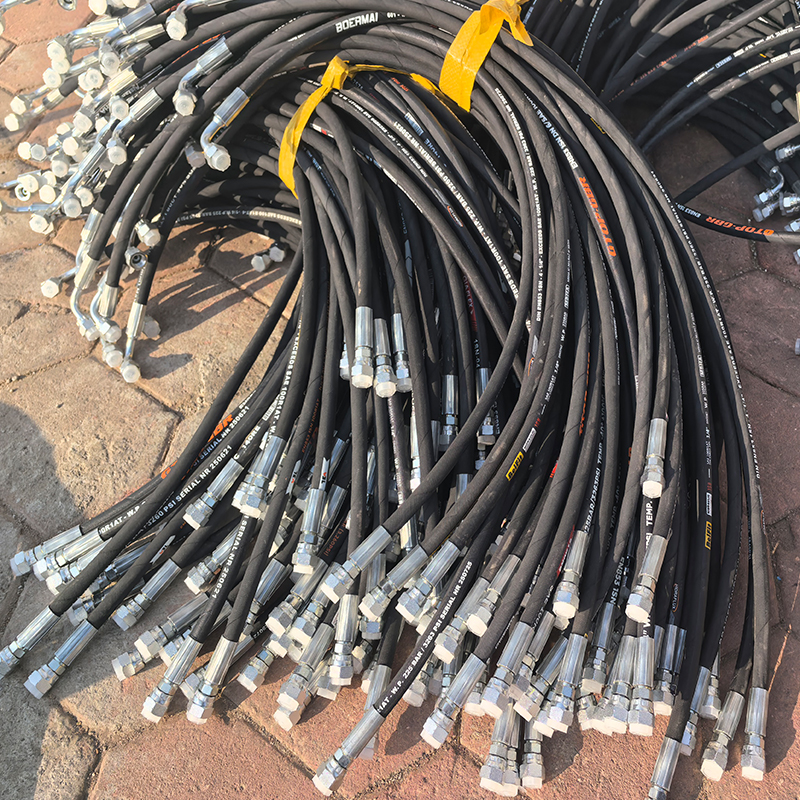 How to Create a Proactive Spiral Hydraulic Hose Replacement Plan That Prevents Downtime?
 Is Your Hydraulic System Overstressing? 5 Diagnostic Signs You Need to Upgrade to Spiral Hose
 Is Your Hydraulic System Pushing Limits? When to Specify Spiral Hose vs. Braided?
 Is Your Machinery Demanding More? Why Upgrade to a Spiral Hydraulic Hose?