
Rubber waterstops are critical components in construction projects, designed to prevent water ingress in concrete joints. Their flexibility is a defining characteristic, enabling them to adapt to structural movements and environmental stresses. This article explores the flexibility range of rubber waterstops, focusing on their material composition, structural design, and real-world applications.
Material Composition and Elasticity
Rubber waterstops are primarily made from natural rubber, synthetic polymers (like EPDM or neoprene), and additives that enhance elasticity and durability. These materials provide high tensile strength (up to 3.500 psi) and elongation capacities (450–500%), allowing the product to stretch and compress without permanent deformation. The inclusion of hydrophilic strips in some variants further enhances flexibility by enabling controlled expansion upon water contact. This adaptability ensures the waterstop maintains a tight seal even as concrete structures shift due to thermal expansion, settling, or seismic activity.
Structural Design for Dynamic Movement
The flexibility of rubber waterstops is also influenced by their structural engineering. Many designs feature unequal thickness zones, such as high-strength areas for load-bearing and waterproof zones for sealing. For example, telescopic holes and mounting holes in installation areas distribute stress evenly, preventing localized wear. Steel-reinforced edges in some models add rigidity while preserving the rubber’s ability to flex, making them suitable for heavy-load environments like dams or tunnels. These design elements ensure the waterstop can accommodate vertical and horizontal joint movements of up to 15–20 mm, depending on the application.
Performance Under Environmental Stress
The flexibility range is tested under extreme conditions. Accelerated aging studies reveal that rubber waterstops retain 80% of their tensile strength and elongation after prolonged UV exposure, simulating high-altitude environments. Compression set tests (30–40% deflection after 70°C exposure) confirm their resilience to thermal cycles. In water immersion scenarios, hydrophilic variants expand by 100–300%, filling gaps caused by concrete shrinkage or cracks. This dual behavior—elastic recovery and controlled swelling—ensures long-term waterproofing even as environmental factors challenge the material’s limits.
Applications Highlighting Flexibility
Rubber waterstops are used in diverse infrastructure projects where flexibility is non-negotiable:
Subways and tunnels: Accommodate ground settlement and vibration.
Dams and reservoirs: Withstand hydraulic pressure and seasonal temperature fluctuations.
Swimming pools and sewage plants: Resist chemical corrosion while sealing expansion joints.
Their ability to handle shear forces, hydrostatic pressure (up to 1.2 MPa), and multi-directional movement makes them indispensable in modern engineering.
Installation Practices to Preserve Flexibility
Improper installation can compromise flexibility. Key guidelines include:
Avoiding perforations: Drilling holes through the waterstop weakens its structure.
Proper compaction: Concrete must fully envelop the waterstop to eliminate voids.
Vulcanized joints: Hot or cold vulcanization ensures seamless connections without rigidity.
Storage conditions also matter; keeping waterstops covered and away from UV exposure preserves their elastic properties until installation.
Long-Term Durability and Maintenance
While rubber waterstops are designed for 36-month shelf life and decades of service, periodic inspections are recommended. Signs of aging—cracks, reduced elasticity, or surface oxidation—indicate the need for replacement. In projects with high seismic risk or extreme temperatures, selecting waterstops with enhanced additives (e.g., carbon black for UV resistance) extends their functional lifespan.
Conclusion
The flexibility of rubber waterstops is a synergy of advanced materials, intelligent design, and rigorous testing. From accommodating millimeter-scale movements in concrete joints to resisting environmental degradation, their adaptability ensures reliable waterproofing in critical infrastructure. As construction demands evolve, so too does the engineering behind these versatile components, balancing elasticity with endurance.
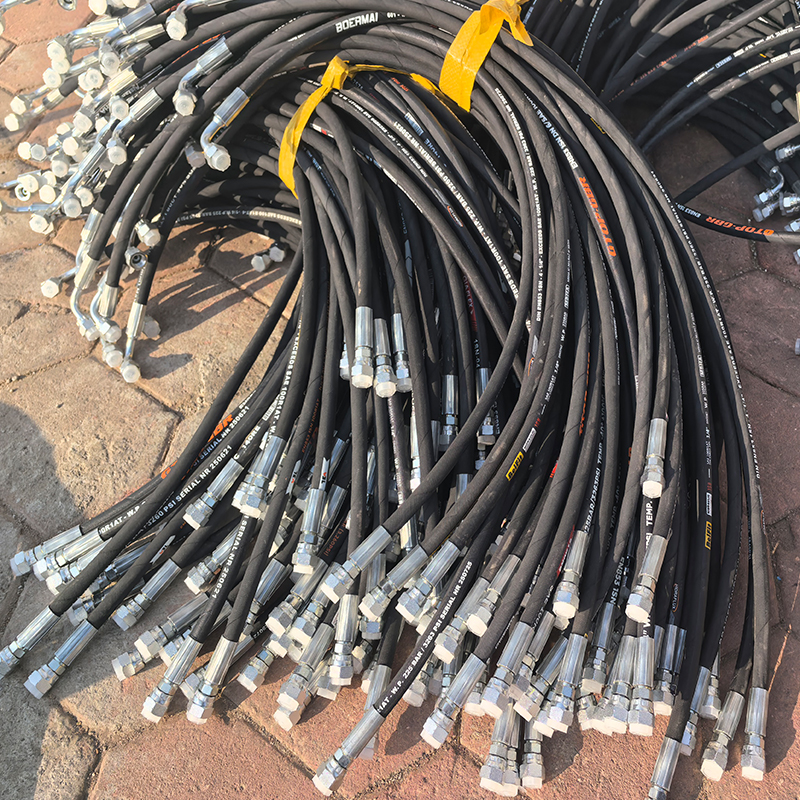 How to Create a Proactive Spiral Hydraulic Hose Replacement Plan That Prevents Downtime?
 Is Your Hydraulic System Overstressing? 5 Diagnostic Signs You Need to Upgrade to Spiral Hose
 Is Your Hydraulic System Pushing Limits? When to Specify Spiral Hose vs. Braided?
 Is Your Machinery Demanding More? Why Upgrade to a Spiral Hydraulic Hose?