
In the realm of engineering and industrial applications, sealing solutions play a critical role in ensuring the integrity, safety, and efficiency of various systems. From plumbing and automotive to aerospace and marine industries, the choice of sealing material and design can significantly impact performance, longevity, and maintenance requirements. Among the myriad of sealing options available, rubber plugs stand as a versatile and widely-used choice, often compared to other sealing solutions such as gaskets, O-rings, and mechanical seals. This article delves into the characteristics, advantages, and limitations of rubber plugs in comparison to these alternatives, aiming to provide a comprehensive understanding for engineers and industry professionals.
Rubber Plugs: An Overview
Rubber plugs are simple yet effective sealing devices typically made from elastomeric materials such as natural rubber, nitrile, neoprene, or silicone. Their design varies depending on the application but generally features a cylindrical or conical body with a lip or flange that creates a tight seal when inserted into an opening. Rubber plugs are favored for their flexibility, ease of installation, and ability to conform to irregular surfaces, making them ideal for temporary or permanent sealing tasks.
One of the primary advantages of rubber plugs is their cost-effectiveness. They are relatively inexpensive to manufacture and require minimal maintenance, contributing to overall cost savings. Additionally, rubber plugs offer good resistance to water, oils, and some chemicals, making them suitable for diverse environments. Their elastic nature allows for some degree of compression and expansion, accommodating minor size variations and tolerances in mating parts.
However, rubber plugs also have limitations. They may not withstand extreme temperatures or pressures as effectively as some other sealing solutions. Over time, exposure to certain chemicals or UV light can cause degradation, leading to reduced sealing performance. Furthermore, rubber plugs may not provide the same level of precision sealing as more sophisticated alternatives, particularly in high-pressure or critical systems.
Gaskets: A Staple in Static Sealing
Gaskets are thin, flat materials placed between two surfaces to prevent leakage. They are commonly made from rubber, cork, felt, metal, or a combination of materials, each tailored to specific application requirements. Gaskets are extensively used in static sealing applications, such as pipe flanges, engine heads, and heat exchangers.
The primary advantage of gaskets lies in their ability to provide a reliable seal over a large surface area. They can be custom-cut to fit complex shapes and sizes, ensuring a tight seal even in uneven or damaged surfaces. Gaskets made from metallic materials can withstand high temperatures and pressures, making them suitable for demanding industrial applications.
Nevertheless, gaskets have their drawbacks. They require precise installation to avoid leaks, which can be time-consuming and labor-intensive. In addition, gaskets may degrade over time due to exposure to heat, pressure, or corrosive substances, necessitating regular inspection and replacement. The cost of specialized gaskets, particularly those made from exotic materials, can also be relatively high.
O-Rings: Versatile and Widely-Used
O-rings are circular, cross-sectioned seals made from elastomeric materials. They are designed to fit into grooves and create a seal by compressing between two mating surfaces. O-rings are ubiquitous in a wide range of applications, including hydraulic systems, pneumatic cylinders, and valves, due to their simplicity, versatility, and effectiveness.
One of the key strengths of O-rings is their ability to provide a reliable seal with minimal friction, allowing for smooth operation of moving parts. They can withstand a broad range of temperatures and pressures, depending on the material used. O-rings are also relatively inexpensive and easy to install, contributing to their widespread adoption.
However, O-rings are not without their limitations. They require precise groove dimensions and tolerances to function correctly, and improper installation can lead to leaks or seal failure. O-rings made from certain materials may be susceptible to chemical attack or swelling, reducing their effectiveness. In high-pressure or high-temperature applications, O-rings may extrude or deform, compromising the seal.
Mechanical Seals: Precision and Durability
Mechanical seals are sophisticated sealing devices used primarily in rotating equipment, such as pumps, compressors, and mixers. They consist of two main components: a stationary ring and a rotating ring, which are held together by a spring or bellows. The faces of these rings are finished to a high degree of flatness and smoothness, ensuring a tight seal as they slide against each other.
The primary advantage of mechanical seals is their ability to provide a precise and durable seal in demanding applications. They can withstand high pressures, temperatures, and abrasive media, making them ideal for harsh environments. Mechanical seals also require less maintenance and have a longer lifespan compared to other sealing solutions, reducing downtime and maintenance costs.
Despite their benefits, mechanical seals have some drawbacks. They are more complex and expensive to manufacture and install than simpler sealing solutions like rubber plugs or O-rings. They also require precise alignment and lubrication to function correctly, and any misalignment or contamination can lead to premature failure. Furthermore, mechanical seals may generate heat due to friction between the rotating and stationary rings, necessitating cooling systems in some applications.
When comparing rubber plugs to other sealing solutions, it becomes evident that the choice of sealing material and design depends on several factors, including application requirements, environmental conditions, and cost considerations. Rubber plugs offer a cost-effective, versatile, and easy-to-install sealing solution suitable for various applications. However, they may not provide the same level of precision, durability, or resistance to extreme conditions as gaskets, O-rings, or mechanical seals.
Gaskets are ideal for static sealing applications where a reliable seal over a large surface area is required. They can be custom-cut to fit complex shapes and sizes, and metallic gaskets can withstand high temperatures and pressures. O-rings, on the other hand, are versatile and widely-used seals that provide a reliable seal with minimal friction, making them suitable for moving parts. However, they require precise groove dimensions and tolerances for optimal performance.
Mechanical seals are the preferred choice for demanding applications in rotating equipment, offering precision and durability in harsh environments. They have a longer lifespan and require less maintenance than other sealing solutions but are more complex and expensive to manufacture and install.
Ultimately, the choice of sealing solution should be based on a thorough understanding of the application requirements, environmental conditions, and cost considerations. Engineers and industry professionals must weigh the advantages and limitations of each sealing option to select the most appropriate solution for their specific needs. By doing so, they can ensure the integrity, safety, and efficiency of their systems, contributing to the overall success of their projects.
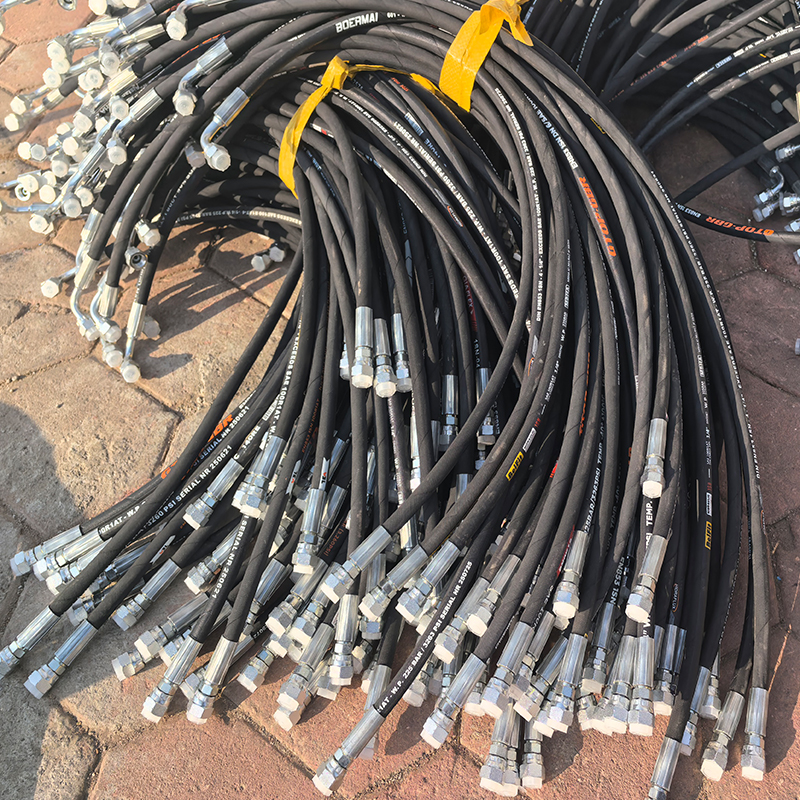 How to Create a Proactive Spiral Hydraulic Hose Replacement Plan That Prevents Downtime?
 Is Your Hydraulic System Overstressing? 5 Diagnostic Signs You Need to Upgrade to Spiral Hose
 Is Your Hydraulic System Pushing Limits? When to Specify Spiral Hose vs. Braided?
 Is Your Machinery Demanding More? Why Upgrade to a Spiral Hydraulic Hose?