
Rubber plugs, often utilized in a myriad of applications ranging from sealing pipelines to acting as stoppers in various mechanical systems, play a crucial role in maintaining the integrity and functionality of numerous devices. One of the key properties that determines the effectiveness and longevity of these rubber plugs is their compression set. This essential characteristic is a measure of how a rubber material permanently deforms when subjected to a constant compressive stress over a prolonged period. Understanding compression set is vital for ensuring that rubber plugs perform reliably under the specific conditions they are designed for.
To delve deeper into the concept of compression set, it is important to first grasp the fundamentals of rubber material science. Rubber, as a viscoelastic material, exhibits both viscous and elastic properties. This unique combination allows rubber to deform under stress and then recover to its original shape once the stress is removed, to a certain extent. However, when subjected to prolonged compression, rubber materials can undergo permanent deformation, known as compression set.
Compression set is typically evaluated through standardized testing procedures. These tests involve compressing a rubber sample to a specified deformation level and maintaining this compression for a set period, often at elevated temperatures. After the compression period, the sample is allowed to recover, and the permanent deformation is measured as a percentage of the original deformation. This percentage serves as an indicator of the rubber's resistance to permanent deformation under sustained load.
Several factors influence the compression set of rubber plugs. The first and foremost is the choice of rubber compound. Different rubber materials, such as natural rubber, styrene-butadiene rubber (SBR), nitrile rubber (NBR), and ethylene-propylene-diene monomer rubber (EPDM), exhibit varying levels of compression set resistance. The chemical composition and cross-linking density of the rubber significantly impact its ability to withstand prolonged compression without permanent deformation.
The cross-linking process is particularly critical. Cross-linking involves the formation of chemical bonds between rubber molecules, which enhances the material's mechanical properties, including its resistance to compression set. However, an excessive number of cross-links can make the rubber brittle, while too few cross-links can result in poor elastic recovery and high compression set. Therefore, achieving the optimal cross-linking density is crucial for balancing the rubber's properties.
Temperature is another significant factor influencing compression set. Rubber materials tend to become softer and more prone to permanent deformation at elevated temperatures. This is due to the increased molecular motion and reduced cross-link efficiency at higher temperatures. Consequently, rubber plugs intended for high-temperature applications must be specifically formulated to maintain their shape and performance under these conditions.
The duration of compression also plays a pivotal role. The longer the rubber plug is subjected to compressive stress, the greater the likelihood of permanent deformation. This is particularly relevant in applications where the rubber plug is continuously compressed, such as in sealing mechanisms that experience constant pressure.
Furthermore, the shape and design of the rubber plug can affect its compression set. Complex shapes with uneven stress distributions may experience higher localized compression set. Designers must carefully consider the stress concentrations and ensure that the plug's design minimizes areas prone to excessive deformation.
The importance of understanding and controlling compression set in rubber plugs cannot be overstated. In hydraulic systems, for instance, a rubber plug with high compression set may fail to maintain a tight seal over time, leading to leaks and potential system failures. Similarly, in automotive applications, rubber plugs used in suspension systems or engine components must retain their shape to ensure proper functioning and safety.
To mitigate compression set, several strategies can be employed. Firstly, selecting the appropriate rubber compound for the specific application is paramount. Engineers must consider the operating temperature, duration of compression, and required mechanical properties when choosing the rubber material. Secondly, optimizing the cross-linking process to achieve the desired balance of elasticity and strength is crucial. This may involve adjusting the cross-linking agent, cure temperature, and cure time.
Additionally, incorporating reinforcing agents, such as carbon black or silica, can enhance the rubber's resistance to compression set. These additives improve the rubber's mechanical properties and dimensional stability. Moreover, designing the rubber plug with consideration for stress distributions and minimizing areas of high localized stress can help reduce compression set.
Testing and quality control are also vital components in ensuring that rubber plugs meet the required compression set specifications. Manufacturers must adhere to standardized testing procedures to accurately assess the compression set of their products. Regular quality control checks can help identify any deviations from the expected performance and allow for timely adjustments in the manufacturing process.
In conclusion, the compression set of rubber plugs is a critical property that determines their effectiveness and longevity in various applications. Understanding the factors that influence compression set, such as rubber compound, cross-linking density, temperature, duration of compression, and plug design, is essential for developing rubber plugs that can withstand prolonged compressive stresses without permanent deformation. By carefully selecting materials, optimizing the cross-linking process, incorporating reinforcing agents, and implementing rigorous testing and quality control measures, manufacturers can produce rubber plugs that meet the demanding requirements of modern applications, ensuring reliability, safety, and performance.
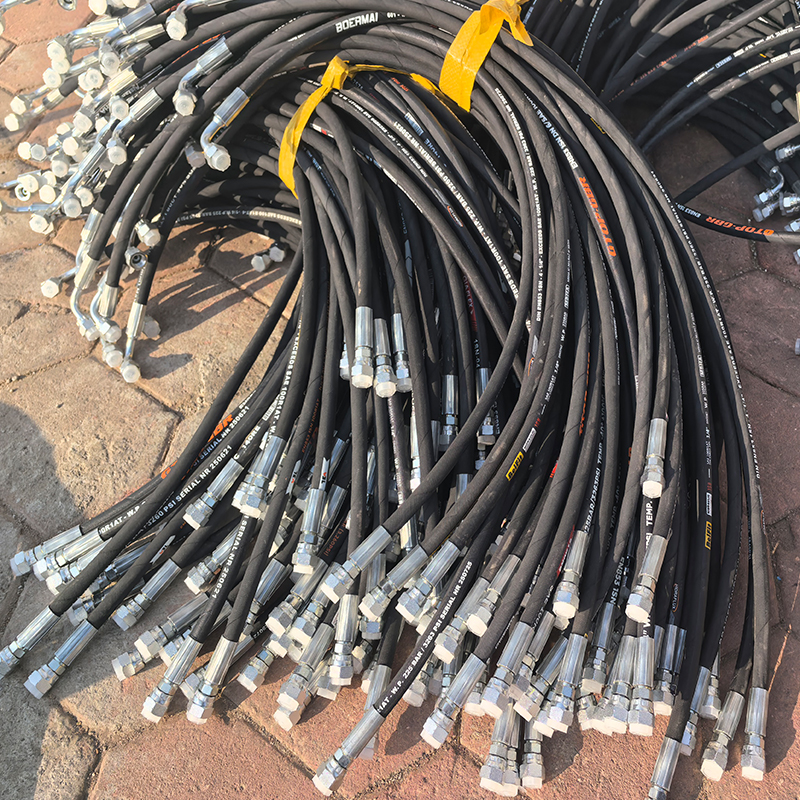 How to Create a Proactive Spiral Hydraulic Hose Replacement Plan That Prevents Downtime?
 Is Your Hydraulic System Overstressing? 5 Diagnostic Signs You Need to Upgrade to Spiral Hose
 Is Your Hydraulic System Pushing Limits? When to Specify Spiral Hose vs. Braided?
 Is Your Machinery Demanding More? Why Upgrade to a Spiral Hydraulic Hose?