A review of how
bridge bearing pad specifications evolved from simple rubber blocks to engineered laminated components. What changed in ASTM D4014, AASHTO, and EN 1337, and what buyers must update now.
 The 2005 Specification Would Not Pass Today's Review
If you pull a bridge bearing specification from a project designed in the early 2000s, you will notice something striking: it is short. A typical document from that era specified a bridge bearing pad by plan dimensions, total thickness, and a Shore A hardness range. Sometimes it mentioned "neoprene." Rarely did it reference a test standard with a year. Almost never did it require batch-level material testing.
That approach produced thousands of bridges that are still standing. It also produced a documented trail of early failures — ozone cracking, shim corrosion, bond separation — that drove the industry to rewrite its standards. Understanding what changed and why is essential for anyone writing a specification today.
The Three Standards That Govern Bridge Bearings
Three documents define the current state of practice:
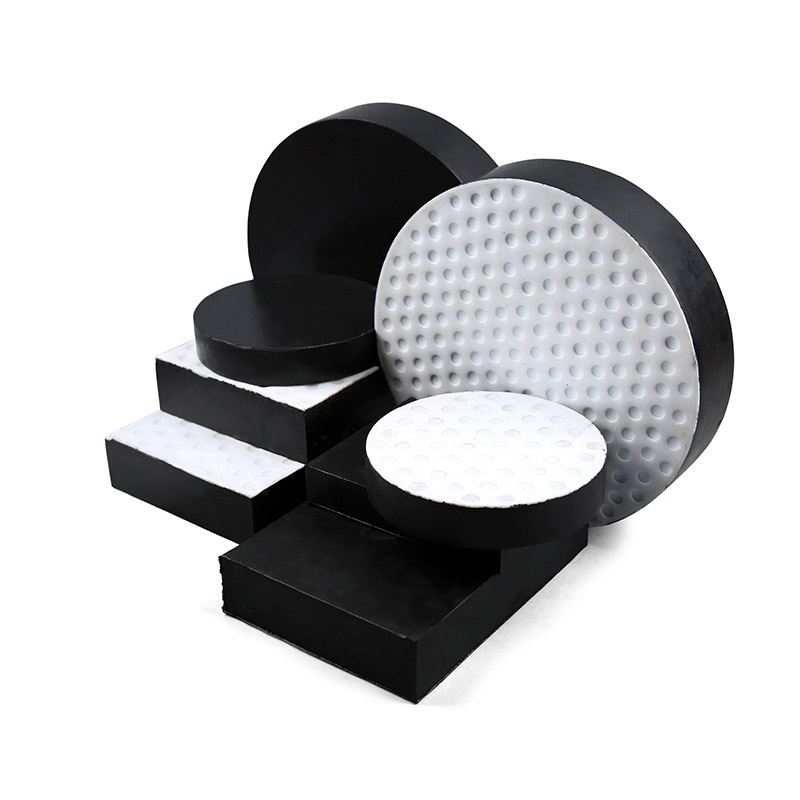
ASTM D4014 — The American standard for plain and steel-laminated elastomeric bearings. The 2023 edition is the current reference.
AASHTO M251 — The bridge construction specification adopted by US state DOTs. It incorporates ASTM D4014 by reference and adds bridge-specific requirements.
EN 1337-3 — The European standard for elastomeric bearings. It uses a different design philosophy based on partial safety factors rather than allowable stress.
Each has evolved significantly over the past two decades.
What Changed in ASTM D4014
The most significant revisions to ASTM D4014 over the past 20 years include:
1. Rubber Grade Definitions Were Tightened.
The old standard allowed a single "neoprene" designation with broad property ranges. The current edition defines Grade 0, 3, and 5 based on low-temperature stiffness behavior. This forces the specifier to consider the actual climate at the installation site rather than defaulting to a generic compound.
2. Ozone Resistance Became a Mandatory Qualification Test.
In earlier editions, ozone testing was optional or left to the manufacturer's discretion. The current standard requires ozone chamber testing per ASTM D1149 for all outdoor grades. This was a direct response to the wave of ozone cracking failures in natural rubber bearings during the 1990s and 2000s.
3. Bond Strength Requirements Were Formalized.
Peel testing between rubber and steel shims was not consistently required in early editions. The current standard specifies a minimum peel strength of 10 kN/m and requires it as a batch-level test, not a one-time qualification.
4. Steel Shim Finish Requirements Expanded.
Older specifications often accepted bare steel shims relying on rubber encapsulation for protection. The current standard and its referenced materials documents require galvanized shims for outdoor service, reflecting the documented corrosion failures in coastal and deicing-salt environments.
What Changed in AASHTO M251
AASHTO M251 has moved in parallel with ASTM D4014 but with bridge-specific additions:
1. Shape Factor Minimums Were Clarified.
The current edition explicitly states a minimum shape factor of 4 for laminated bearings, with a recommendation of 6 or higher for highway applications. Earlier editions left shape factor to the designer's discretion, which led to underspecified pads in practice.
2. Rotation and Movement Limits Were Quantified.
The standard now provides explicit allowable values for shear strain (0.5 service, 0.7 ultimate) and rotation capacity based on pad geometry. This replaced the older approach of "verify by calculation" without defined limits.
3. Installation Temperature Requirements Were Added.
The current edition requires the installer to account for the ambient temperature at installation when positioning the pad relative to the girder. This addresses the documented failure mode where pads installed in winter were pushed beyond their movement capacity by summer thermal expansion.
How EN 1337-3 Differs
European practice takes a different philosophical approach:
Partial safety factors: EN 1337-3 applies separate safety factors to loads, material properties, and geometric tolerances. The result is a more conservative design for heavily loaded bearings but also a more complex calculation procedure.
Hardness-based design: The European standard uses rubber hardness as the primary material property, with shear modulus derived from hardness rather than measured directly. This simplifies procurement but can introduce error for compounds with non-standard hardness-to-modulus relationships.
Mandatory type testing: EN 1337-3 requires type testing of each bearing design before production. This is a more rigorous up-front requirement than the US batch-testing approach.
For international projects, the choice of standard is often dictated by the funding source or the engineer of record. World Bank projects typically accept ASTM or EN. ADB projects often reference AASHTO. The key is to specify the standard explicitly with its year and not leave it to the supplier's discretion.
What a Modern Specification Must Include
Based on the evolution of these standards, a current-day Bridge Bearing Pad specification should contain at least the following elements:
1. Standard and Year
"Steel-laminated elastomeric bearing pads per ASTM D4014-23 and AASHTO M251, latest edition." Do not write "per industry standards" or "per manufacturer's recommendations."
2. Rubber Type and Grade
"Chloroprene (neoprene), Grade 3 per ASTM D4014, Shore A hardness 60±5." This single line eliminates the ambiguity that caused most of the early failures documented in the previous two decades.
3. Shape Factor Requirement
"Minimum shape factor S = 6, calculated per AASHTO M251, based on the girder reactions and rotation requirements shown in the contract drawings."
4. Steel Shim Specification
"Internal shims: ASTM A36 or A1011, minimum 1.9 mm thickness, hot-dip galvanized per ASTM A123. External shims: minimum 2.6 mm, same material and finish."
5. Testing Requirements
"Each production lot shall be accompanied by: tensile strength, elongation at break, compression set, Shore A hardness, peel bond strength (minimum 10 kN/m), and ozone chamber test per ASTM D1149 for Grade 3 or higher."
6. Marking and Traceability
"Each pad shall be permanently marked with rubber type, grade, batch number, manufacturer name, and date of manufacture. Batch traceability records shall be maintained for a minimum of 10 years."
7. Installation Requirements
"Installation shall account for ambient temperature at the time of placement. Shim offset shall be adjusted to the mean design temperature. Sole plate shall be level within 0.002 radians."
The Cost of Not Updating
The gap between an outdated specification and a current one is not a matter of paperwork. It is the difference between a bearing that fails at year seven and one that serves for 30 years.
The failures documented in the previous two decades — ozone cracking, shim corrosion, bond separation, underspecified shape factor — all trace back to specification documents that lacked one or more of the elements listed above. The standards were updated because the failures were real, repeated, and expensive.What to SpecA bridge bearing pad specification written today must reference the current standard editions, define the rubber grade for the site climate, require a minimum shape factor, specify galvanized shims, and mandate batch-level testing. Anything less repeats the mistakes of the early 2000s. The standards have caught up with the failure modes. Your specification should too.

 Plain vs. Steel-Laminated Bridge Bearing Pad: Which One Belongs on Your Structure?
 Specifying a Bridge Bearing Pad for 50 Years of Service: Rubber Grade, Shape Factor, and the Temperature Chart Most Buyers Skip
 We Replaced Our Bridge Bearing Pad Twice in Ten Years. The Third Time, We Changed the Spec Instead.
 How Do You Verify a Bridge Bearing Pad Will Perform for 30 Years Before Installation?