A side-by-side engineering comparison of plain and steel-laminated bridge bearing pad designs. Load limits, rotation capacity, movement tolerance, and when each type is the correct choice.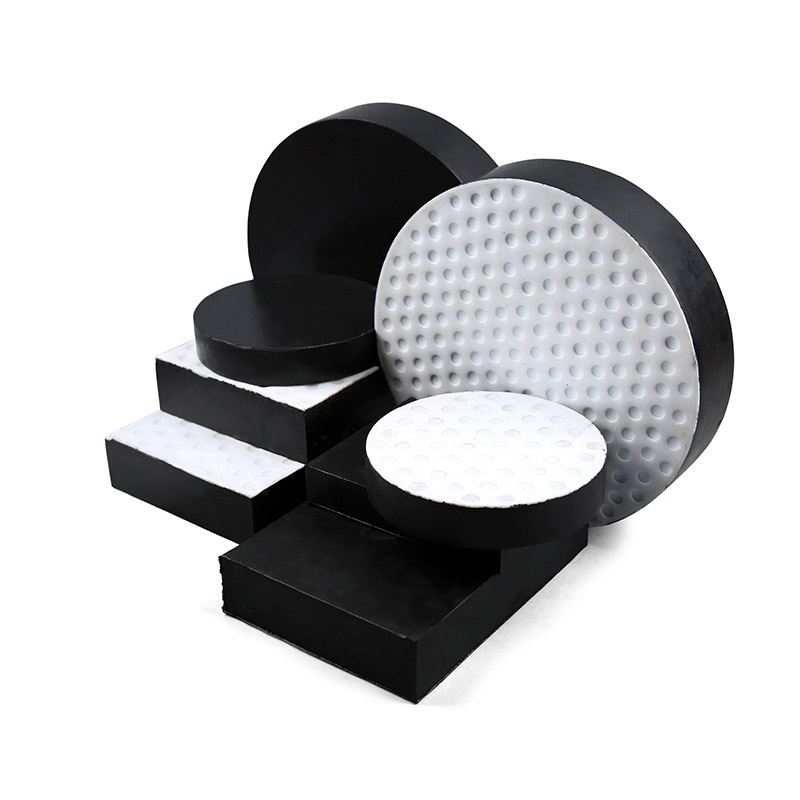 Two Products, Same Name, Different Load Paths
If you ask five suppliers for a bridge bearing pad, you will receive quotes for two fundamentally different products. One is a solid block of rubber. The other contains internal steel shims. They look similar from the outside. Both are rectangular. Both are black. Both are installed under girders. But they carry load in completely different ways, and specifying the wrong one is a structural error, not a procurement preference.
This article compares the two designs across the five decisions that matter: vertical load capacity, rotation accommodation, horizontal movement, long-term stability, and cost of ownership.
How Each Design Carries Load
Plain rubber pad (unreinforced):
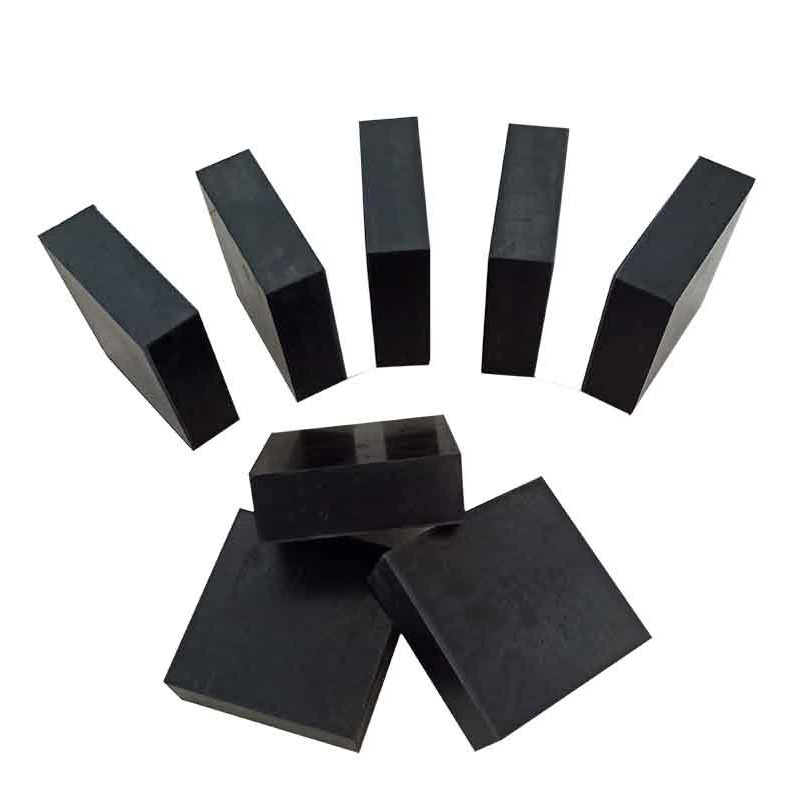
A solid elastomer block. Under vertical compression, the rubber tries to expand sideways. Since there is no internal restraint, the pad bulges laterally. The load capacity is limited by the tensile strength of the rubber at the bulging edges.Steel-laminated pad:
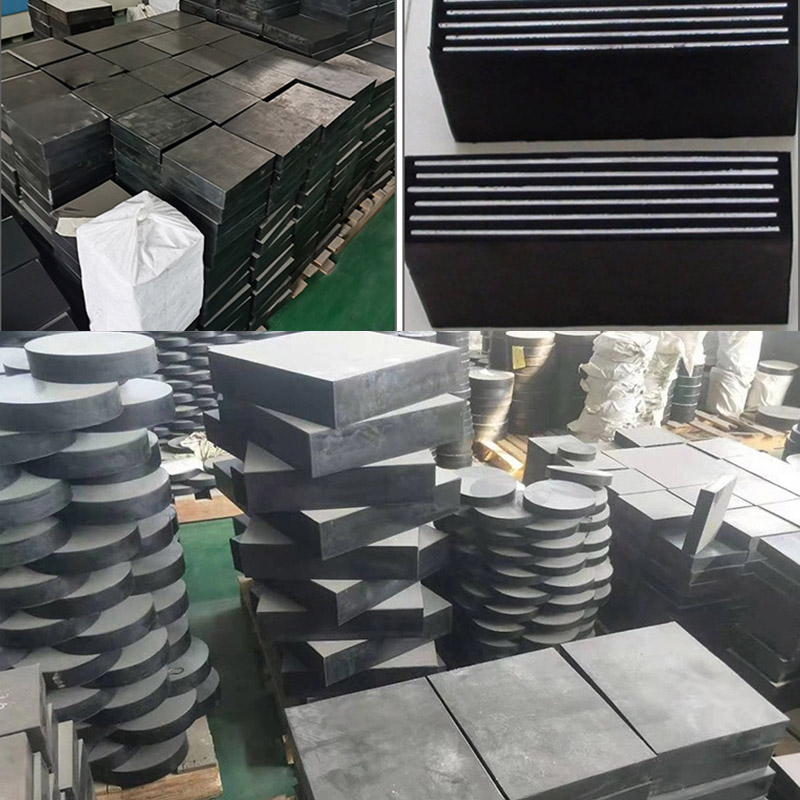
Thin steel shims are bonded between rubber layers. The shims prevent lateral bulging. The rubber compresses vertically without significant side deformation. This allows much higher load per unit area.
The difference is not marginal. A plain pad typically handles 5.5 MPa maximum compressive stress. A steel-laminated pad of the same plan area handles 7 to 10 MPa depending on shape factor. For a girder delivering 800 kN, a plain pad needs roughly 145,000 mm² of plan area. A steel-laminated pad needs only 100,000 mm² at 8 MPa.
Decision 1: Vertical Load
| Design |
Allowable Compressive Stress |
Typical Application |
| Plain rubber pad |
5.5 MPa max per AASHTO M251 |
Pedestrian bridges, light timber spans, temporary supports |
| Steel-laminated pad |
7–10 MPa depending on shape factor |
Highway girders, railway bridges, heavy industrial structures |
If your girder reaction exceeds 500 kN, the plain pad becomes impractically large. A 600 mm × 800 mm plain pad carrying 5.5 MPa handles 2,640 kN — but the edge bulging at that stress level accelerates rubber fatigue. Most engineers cap plain pads at 4 MPa for permanent installations.
Decision 2: Rotation Accommodation
Beam ends rotate under load. The rotation comes from live load deflection, camber, and creep in concrete girders. The bearing must accommodate this rotation without losing uniform contact.
Plain pad: The entire rubber block deforms in shear and compression to accommodate rotation. This works well for small rotations up to approximately 0.01 radians.
Steel-laminated pad: Rotation is accommodated by differential compression of individual rubber layers. The shims do not prevent rotation; they distribute it across multiple layers.For rotations above 0.02 radians, both designs struggle. At that point, a pot bearing or spherical bearing is the correct choice, not an elastomeric pad.
Decision 3: Horizontal Movement
Thermal expansion and contraction move the girder end horizontally. The bearing accommodates this through shear deformation.
Plain pad: The entire rubber thickness is available for shear. A 25 mm thick plain pad can accommodate approximately 12 mm of horizontal movement at 0.5 shear strain.
Steel-laminated pad: Only the total rubber thickness (excluding shims) contributes to shear flexibility. A 50 mm thick laminated pad with 35 mm of rubber layers accommodates approximately 17 mm of movement.
The steel-laminated pad is thicker for the same vertical load capacity, which means more total rubber thickness and more movement capacity. This is one of the main reasons laminated pads dominate highway applications where thermal movement exceeds 10 mm.
Decision 4: Long-Term Stability
Plain pad failure modes:
Edge bulging leads to surface cracking
Permanent compression set reduces thickness over time
No internal barrier to crack propagation — a surface crack can grow through the entire pad
Steel-laminated pad failure modes:
Bond failure between rubber and shim (if adhesive is poor)
Shim corrosion (if encapsulation is incomplete)
Ozone cracking of the outer rubber layer (same as plain, but confined to the cover layers)In practice, steel-laminated pads fail less catastrophically because the shims arrest crack propagation. A surface crack in a laminated pad stops at the first shim interface. A surface crack in a plain pad continues through the full thickness.
Decision 5: Cost of Ownership
The initial price of a steel-laminated pad is higher than a plain pad of the same plan area. But the comparison is misleading because the plan areas differ for the same load.
A more meaningful comparison:
| Girder Reaction |
Plain Pad Size |
Steel-Laminated Pad Size |
Service Life (Typical) |
| 400 kN |
450 × 500 × 25 mm |
350 × 400 × 39 mm |
Plain: 10–15 years / Laminated: 30+ years |
| 800 kN |
600 × 700 × 30 mm |
450 × 500 × 51 mm |
Plain: 8–12 years / Laminated: 30+ years |
| 1,500 kN |
Not practical |
500 × 600 × 69 mm |
Laminated: 30+ years |
The laminated pad costs more per unit. It also lasts two to three times longer and requires a smaller sole plate. Over a 30-year analysis period, the laminated pad is almost always the lower total cost option.When a Plain Pad Is Actually the Right ChoiceThere are legitimate applications for plain rubber pads:
Temporary structures: Falsework, shoring, and construction staging where the bearing will be removed within 12 months.
Pedestrian bridges: Light loads below 200 kN per bearing with minimal rotation.
Timber bridges: Where the flexibility of a thick plain pad accommodates both rotation and movement without the stiffness of shims.
Seismic isolation (limited): Some low-rise buildings use plain rubber pads as simple isolation elements, though this is outside bridge bearing practice.For any permanent bridge structure carrying vehicles, the steel-laminated design is the defensible choice. The plain pad is a temporary solution or a light-duty product, not a substitute for proper bearing engineering.What to SpecA bridge bearing pad for a permanent highway or railway structure should be steel-laminated, with a shape factor calculated for the actual girder reaction and rotation. Specify the rubber grade from the site's low-temperature record, require galvanized shims, and verify the bond strength with peel test certificates. Use plain rubber pads only for temporary works or pedestrian-scale loads. The design life of the bridge depends on this distinction more than any other bearing decision.

 Two Products, Same Name, Different Load Paths
 How Bridge Bearing Pad Standards Have Changed in 20 Years — and What Your Next Specification Must Include
 Specifying a Bridge Bearing Pad for 50 Years of Service: Rubber Grade, Shape Factor, and the Temperature Chart Most Buyers Skip
 We Replaced Our Bridge Bearing Pad Twice in Ten Years. The Third Time, We Changed the Spec Instead.
 How Do You Verify a Bridge Bearing Pad Will Perform for 30 Years Before Installation?