
When it comes to preventing leaks, controlling contamination, or maintaining pressure in systems handling liquids and gases, rubber plugs play a quiet yet critical role. These versatile components are designed to create airtight or watertight seals in pipes, tanks, machinery, and even household appliances. But how exactly do they manage to seal such a wide range of fluids—from water and oil to chemicals and gases—without failing? Let’s explore the science, design, and applications behind these unsung heroes of fluid management.
The Role of Material Chemistry in Sealing Performance
The effectiveness of a rubber plug begins with its material composition. Not all rubbers are created equal; each type is engineered with specific chemical properties to resist degradation when exposed to certain fluids. For example, natural rubber excels in sealing water-based liquids but may struggle with oils or solvents. On the other hand, synthetic rubbers like nitrile (NBR) or neoprene are formulated to withstand petroleum products, acids, or even extreme temperatures.
The secret lies in molecular structure. Rubber polymers are cross-linked during manufacturing to create a flexible yet durable matrix. This structure allows the plug to deform under pressure, filling gaps and irregularities in the mating surface. When exposed to a fluid, the material’s chemical resistance prevents swelling, cracking, or hardening, ensuring a long-lasting seal. Manufacturers often tailor rubber blends to meet industry-specific demands, such as food-grade silicone for potable water systems or fluorocarbon (FKM) rubber for aggressive chemicals.
Designing for Compatibility: Shape and Fit Matter
A rubber plug’s geometry is as crucial as its material. The shape must align with the application’s requirements, whether it’s a simple cylindrical stopper for a test tube or a complex multi-part plug for industrial machinery. Key design considerations include:
Compression: The plug must compress enough to form a tight seal without overstressing the material.
Surface Contact: A conical or tapered design often improves grip by increasing friction against the walls of a hole.
Tolerance: Precision in dimensions ensures the plug fits snugly without requiring excessive force to insert or remove.
For instance, a plug sealing a automotive coolant system might feature a ribbed exterior to enhance grip and prevent leakage under vibrations. In contrast, a plug for a medical device could prioritize a smooth, easy-to-clean surface to meet hygiene standards. The goal is always the same: create a barrier that fluid cannot penetrate, even under varying pressures or temperatures.
Handling Pressure: From Vacuum Seals to High-Pressure Systems
Rubber plugs are tested in environments where pressure fluctuations could compromise integrity. In vacuum systems, for example, the plug must resist being sucked inward while maintaining a seal. Conversely, in hydraulic systems, it must withstand outward pressure without deforming permanently.
The solution lies in balancing elasticity and tensile strength. A plug that’s too soft may collapse under vacuum, while one that’s too rigid could crack under compression. Advanced designs incorporate reinforcing layers or variable hardness zones to distribute stress evenly. Some plugs even feature pressure-relief valves or flexible lips that adjust to changes in pressure, ensuring reliability across diverse conditions.
Temperature Resistance: From Freezing Cold to Scorching Heat
Fluids aren’t just about chemistry—they also come with temperature challenges. A rubber plug sealing a refrigeration unit must remain pliable at sub-zero temperatures, while one in an engine block might face heat exceeding 300°F. Extreme temperatures can cause rubber to lose elasticity, become brittle, or even melt.
To combat this, manufacturers select rubber compounds with specific thermal stability. Silicone rubber, for instance, retains flexibility at -60°F to 400°F, making it ideal for both freezers and ovens. Ethylene propylene diene monomer (EPDM) rubber excels in hot water applications, such as dishwashers or solar heating systems. The key is matching the rubber’s thermal limits to the application’s operating range to prevent seal failure.
Chemical Resistance: Protecting Against Corrosive Substances
Not all fluids are benign. Acids, solvents, and fuels can eat away at lesser materials, but specialized rubber compounds rise to the challenge. For example, butyl rubber is prized for its impermeability to gases and resistance to oxidizing chemicals, making it a go-to choice for inner liners in fuel tanks.
In industrial settings, plugs might seal containers holding hydrochloric acid or sodium hydroxide. Here, materials like Viton® (FKM) or Kalrez® (perfluoroelastomer) offer superior resistance, though the blog avoids brand names. The takeaway is clear: the right rubber compound can mean the difference between a reliable seal and a costly leak.
Environmental and Regulatory Considerations
Beyond performance, rubber plugs must meet environmental and safety standards. In the U.S., regulations like the FDA’s 21 CFR Part 177 govern materials in contact with food or drinking water. Plugs used in outdoor equipment might need UV resistance to prevent degradation from sunlight. Meanwhile, automotive plugs must comply with emissions standards to minimize chemical runoff.
Sustainability is also a growing concern. Manufacturers are developing eco-friendly rubber compounds using recycled materials or bio-based polymers. These innovations reduce environmental impact without sacrificing performance, aligning with consumer demand for greener solutions.
Real-World Applications: From Everyday Items to Industrial Systems
Rubber plugs are everywhere. In households, they seal detergent bottles, garden hoses, and aquariums. In industries, they’re vital in automotive cooling systems, chemical processing plants, and aerospace fuel lines. Even in healthcare, they ensure sterile environments by sealing medical devices or laboratory containers.
Consider a car’s radiator: a rubber plug here must withstand coolant, vibrations, and temperature swings. In a factory, a plug might seal a tank holding corrosive chemicals, requiring both chemical resistance and pressure tolerance. Each application demands a tailored approach, proving that rubber plugs are far from one-size-fits-all.
Conclusion: The Unsung Heroes of Fluid Management
Rubber plugs may seem simple, but their ability to seal diverse fluids under varying conditions is a testament to advanced material science and engineering. By selecting the right rubber compound, designing for compatibility, and accounting for pressure, temperature, and chemicals, these components ensure systems run smoothly and safely. Whether in a kitchen sink or a rocket engine, the humble rubber plug keeps our world from leaking—one seal at a time.
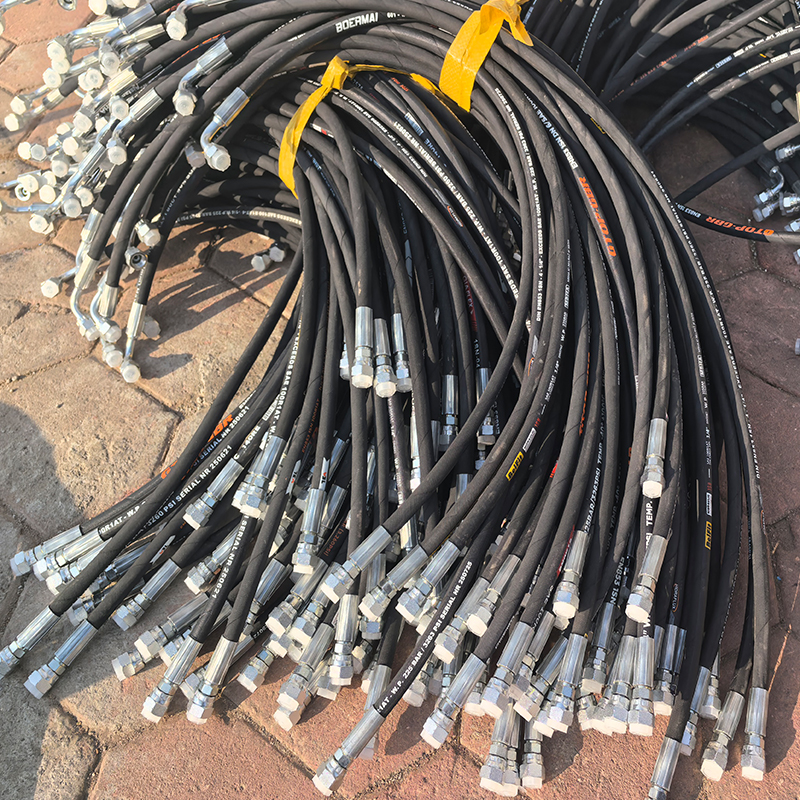 How to Create a Proactive Spiral Hydraulic Hose Replacement Plan That Prevents Downtime?
 Is Your Hydraulic System Overstressing? 5 Diagnostic Signs You Need to Upgrade to Spiral Hose
 Is Your Hydraulic System Pushing Limits? When to Specify Spiral Hose vs. Braided?
 Is Your Machinery Demanding More? Why Upgrade to a Spiral Hydraulic Hose?