
Selecting the correct hardness for a rubber service plug is a critical decision that impacts performance, durability, and safety. Whether used in automotive, industrial, or household applications, these plugs must balance flexibility and strength to create reliable seals, prevent leaks, or protect components during maintenance. This guide explores the factors influencing hardness selection and offers practical insights for professionals and DIY enthusiasts alike.
Understanding Rubber Hardness Basics
Rubber hardness is measured using the Shore A scale, which ranges from 0 (extremely soft) to 100 (very hard). Softer materials (e.g., 30–50 Shore A) are pliable and conform easily to irregular surfaces, while harder materials (e.g., 70–90 Shore A) resist deformation and withstand pressure. The choice depends on the plug’s purpose: a soft plug might seal a delicate opening, whereas a hard plug could endure high-pressure environments.
Key Takeaway: Hardness is not a one-size-fits-all metric. It must align with the plug’s intended function, environmental conditions, and the materials it interacts with.
Assessing the Application Environment
The operating environment dictates hardness requirements. For example:
Temperature Extremes: High heat can soften rubber, reducing its ability to seal. A harder compound may be necessary for hot environments, while colder climates might require a softer material to maintain flexibility.
Chemical Exposure: Oil, fuel, or solvents can degrade certain rubbers. Harder plugs with chemical-resistant properties may perform better in such settings.
UV and Ozone Exposure: Outdoor applications demand materials resistant to UV rays and ozone, which can crack or harden rubber over time.
Real-World Example: A plug used in an automotive engine compartment must withstand heat, oil, and vibration. A harder, heat-resistant rubber would outperform a softer alternative in this scenario.
Matching Hardness to Pressure and Seal Requirements
The pressure a plug must endure is a defining factor. High-pressure systems, such as hydraulic lines or industrial machinery, require harder plugs to prevent blowouts. Conversely, low-pressure applications, like sealing a water pipe during repairs, may only need a soft, malleable plug.
Pro Tip: Consider the plug’s role in the system. If it acts as a temporary seal, a softer material might suffice. For permanent installations, durability trumps flexibility.
Compatibility with Mating Surfaces
The plug’s hardness must complement the surface it seals. Soft rubbers excel at filling gaps in rough or uneven textures, creating airtight seals. Harder plugs, however, work best with smooth, precision-machined surfaces where a tight fit is critical.
Case Study: A manufacturer using plugs to seal threaded holes in metal parts found that a 70 Shore A rubber provided the perfect balance: firm enough to resist pressure but soft enough to conform to minor imperfections.
Evaluating Durability and Longevity
Harder rubbers generally last longer in abrasive or high-wear environments. However, over-hardening can lead to brittleness, causing cracks under stress. Soft rubbers, while prone to wear, absorb impacts better and resist tearing.
Industry Insight: In applications requiring frequent insertion and removal, such as testing ports, a medium-hardness rubber (60–70 Shore A) often offers the best compromise between longevity and ease of use.
Regulatory and Safety Considerations
Certain industries, like aerospace or medical devices, impose strict material standards. Plugs used in these fields must meet flame resistance, toxicity, or biocompatibility requirements. Hardness alone isn’t enough—the rubber must also comply with regulatory guidelines.
Did You Know? The U.S. Environmental Protection Agency (EPA) regulates chemicals used in rubber manufacturing. Opting for certified materials ensures compliance and avoids legal pitfalls.
Practical Testing and Validation
Before finalizing a hardness level, conduct real-world testing. Simulate the plug’s operating conditions by exposing it to temperature fluctuations, pressure cycles, or chemical exposure. Monitor for signs of wear, leakage, or deformation.
Step-by-Step Approach:
Create a prototype with the target hardness.
Test it in a controlled environment mimicking actual use.
Document performance and adjust hardness as needed.
Success Story: A plumbing company reduced product returns by 40% after testing plugs in real-world pipe systems, revealing that a 50 Shore A rubber performed optimally in most residential applications.
Balancing Cost and Performance
Harder rubbers often cost more due to specialized compounds or manufacturing processes. However, cutting corners on hardness can lead to premature failures, increasing long-term costs. Evaluate the total lifecycle value rather than upfront expenses.
Cost-Benefit Analysis: A harder plug might cost 20% more but last twice as long in high-stress environments, making it the economical choice over time.
Final Thoughts: The Art of Compromise
Choosing the right hardness is rarely about finding the “perfect” material. Instead, it’s about striking a balance between competing demands: flexibility vs. rigidity, cost vs. durability, and compliance vs. performance. By carefully evaluating application-specific factors and testing rigorously, professionals can select plugs that deliver reliability without compromise.
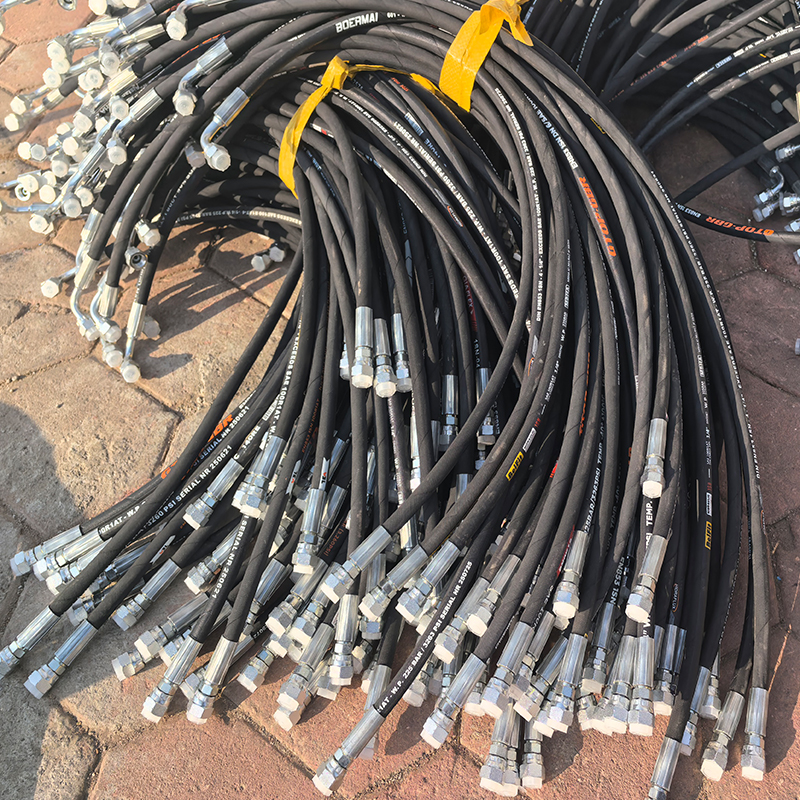 How to Create a Proactive Spiral Hydraulic Hose Replacement Plan That Prevents Downtime?
 Is Your Hydraulic System Overstressing? 5 Diagnostic Signs You Need to Upgrade to Spiral Hose
 Is Your Hydraulic System Pushing Limits? When to Specify Spiral Hose vs. Braided?
 Is Your Machinery Demanding More? Why Upgrade to a Spiral Hydraulic Hose?