
When it comes to industrial, or heavy-duty applications, the ability of materials to endure extreme conditions is non-negotiable. Among these materials, rubber inflatable airbags have emerged as a versatile solution for tasks ranging from ship launching to construction projects. But a common question arises: Can these airbags truly withstand high-pressure environments without compromising safety or performance? This blog explores the science, design, and real-world applications of rubber inflatable airbags to answer this critical question.
The Science Behind Rubber’s Strength
Rubber, in its natural or synthetic form, is inherently elastic and resilient. These properties make it ideal for applications requiring flexibility and durability. When engineered into inflatable airbags, rubber undergoes a specialized manufacturing process to enhance its strength. Multi-layered designs, reinforced with high-tensile fibers like nylon or polyester, create a composite structure capable of distributing pressure evenly. This layering prevents localized stress points, ensuring the rubber inflatable airbag maintains its integrity even under intense force.
The chemical composition of rubber also plays a role. Synthetic variants, such as natural rubber, are often chosen for their resistance to oils, chemicals, and temperature extremes. These materials are formulated to resist degradation, which is crucial when exposed to high-pressure cycles over time. By combining elasticity with structural reinforcement, rubber inflatable airbags achieve a balance between flexibility and robustness.
Design Innovations for High-Pressure Resistance
Not all inflatable rubber bladders are created equal. Modern designs incorporate advanced features to optimize performance in high-pressure scenarios. For instance, some airbags use a “radial” or “circumferential” reinforcement pattern, where fibers are arranged to align with the direction of pressure. This minimizes stretching and reduces the risk of bursting. Others employ a “drop-stitch” core, a technology borrowed from high-pressure inflatable boats, which uses thousands of fine threads to maintain shape under load.
Valve systems are another critical component. High-pressure inflatable airbags require valves that can withstand rapid inflation and deflation without leaking. Some models use brass or stainless steel fittings, which are both durable and corrosion-resistant—a necessity for marine or industrial settings. Additionally, pressure-relief mechanisms are often integrated to prevent overinflation, a safeguard that protects both the airbag and the surrounding environment.
Real-World Applications Under Pressure
The true test of any material is its performance in the field. Rubber inflatable airbags are trusted in industries where failure is not an option. In shipbuilding and repair, for example, airbags are used to launch vessels weighing hundreds of tons. These inflatable rubber bladders must endure the weight of the ship while being inflated to precise pressures, often in tidal or uneven conditions. Similarly, in construction, inflatable airbags lift heavy concrete segments or stabilize structures during earthquakes, requiring them to maintain stability under fluctuating loads.
Another notable application is in pipeline engineering. Inflatable airbags are inserted into pipelines to block flow during maintenance or testing. These scenarios demand airbags that can withstand internal pressures from fluids while resisting external forces from soil or machinery. The ability to customize rubber inflatable airbag dimensions and pressure ratings ensures they meet the unique demands of each project.
Safety Certifications and Industry Standards
To operate in high-stakes environments, rubber inflatable airbags must adhere to rigorous safety standards. Organizations like the American Bureau of Shipping (ABS) and the International Organization for Standardization (ISO) set guidelines for material quality, manufacturing processes, and pressure testing. Certifications such as ABS Type Approval or ISO 9001 signal that an airbag has undergone independent verification for performance and reliability.
Testing protocols often include hydrostatic pressure tests, where inflatable rubber bladders are filled with water and subjected to pressures far exceeding their rated capacity. This simulates worst-case scenarios, ensuring the inflatable airbag won’t fail unexpectedly. Additionally, cyclic pressure tests evaluate long-term durability by repeatedly inflating and deflating the airbag to mimic real-world usage patterns.
Maintenance Tips to Prolong Lifespan
Even the most durable inflatable airbags require proper care to perform optimally. Regular inspections for cuts, abrasions, or UV damage are essential, as these can weaken the rubber over time. Storing airbags in a cool, dry place away from direct sunlight prevents premature aging. When not in use, airbags should be deflated and rolled loosely to avoid creating permanent creases, which could become stress points under pressure.
Lubricating valves and fittings periodically ensures smooth operation, while avoiding harsh chemicals or solvents that might degrade the rubber. Following the manufacturer’s guidelines for inflation pressure is also critical; overinflating can strain the material, while underinflating may reduce the airbag’s effectiveness.
Environmental Considerations in High-Pressure Use
Sustainability is increasingly important in industrial materials, and rubber inflatable airbags are no exception. Many manufacturers now produce inflatable airbags using recycled rubber or biodegradable compounds without sacrificing performance. Additionally, the reusability of airbags reduces waste compared to single-use alternatives like wooden cribbing or foam blocks.
Conclusion: A Resilient Solution for Modern Challenges
Rubber inflatable airbags are more than just flexible bladders; they are engineered marvels designed to thrive under pressure. Through advancements in material science, thoughtful design, and adherence to safety standards, these airbags provide reliable performance in industries where precision and strength are paramount. Whether stabilizing a bridge, or blocking a pipeline, their ability to withstand high pressure makes them indispensable tools in the modern world.
For professionals seeking a cost-effective, durable, and safe solution, rubber inflatable airbags offer a proven track record—backed by science, certified by experts, and trusted in the toughest environments.
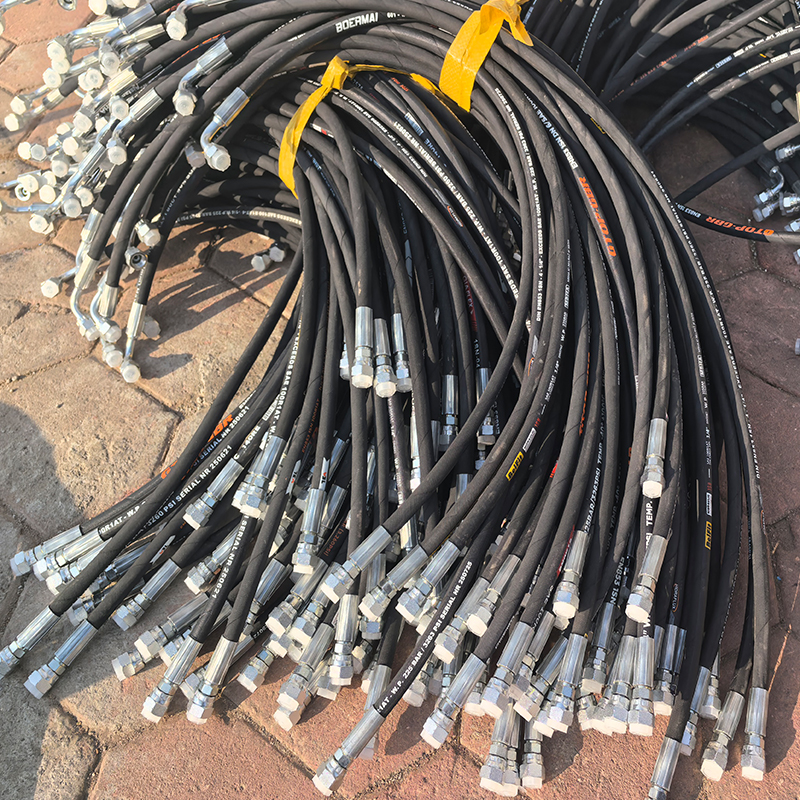 How to Create a Proactive Spiral Hydraulic Hose Replacement Plan That Prevents Downtime?
 Is Your Hydraulic System Overstressing? 5 Diagnostic Signs You Need to Upgrade to Spiral Hose
 Is Your Hydraulic System Pushing Limits? When to Specify Spiral Hose vs. Braided?
 Is Your Machinery Demanding More? Why Upgrade to a Spiral Hydraulic Hose?