
In the realm of sealing solutions, rubber plugs play a pivotal role in various industries, ranging from automotive and aerospace to plumbing and marine applications. These unassuming yet crucial components are designed to fit into openings, preventing the leakage of fluids or gases and ensuring the integrity of systems. Rubber plugs are available in two primary categories: natural rubber and synthetic rubber. Each type has its unique properties, advantages, and disadvantages, making them suitable for different applications. This article delves into the characteristics of natural and synthetic rubber plugs, exploring their differences and helping you make an informed decision when selecting the right type for your needs.
Natural Rubber Plugs: A Timeless Choice
Natural rubber, derived from the latex of rubber trees, particularly the Hevea brasiliensis, has been in use for centuries. Its elasticity, durability, and resistance to water make it an ideal material for rubber plugs. One of the standout features of natural rubber is its excellent tear strength and abrasion resistance. This means that natural rubber plugs can withstand significant wear and tear, making them suitable for applications where the plug may experience frequent insertion and removal or come into contact with abrasive materials.
Another advantage of natural rubber plugs is their superior elastic recovery. When stretched or compressed, natural rubber can return to its original shape and size more effectively than many synthetic materials. This property is particularly important in applications where the plug needs to maintain a tight seal over time, such as in plumbing systems or engine components.
Furthermore, natural rubber exhibits good resistance to a wide range of chemicals, including acids, alkalis, and some solvents. However, it's essential to note that it is not entirely impervious to all chemicals, and exposure to certain substances, such as oils and greases, can cause degradation over time. Therefore, when selecting a natural rubber plug, it's crucial to consider the specific chemicals it will be exposed to in its intended application.
The environmental impact of natural rubber is also worth mentioning. As a renewable resource, rubber trees can be sustainably cultivated, making natural rubber a more eco-friendly option compared to synthetic materials derived from non-renewable resources. Additionally, natural rubber is biodegradable, reducing the environmental footprint of products made from this material.
Despite its many advantages, natural rubber has some limitations. It is susceptible to temperature extremes, with performance degrading at both very high and very low temperatures. In extremely hot environments, natural rubber can soften and lose its shape, while in cold conditions, it may become brittle and crack. These temperature limitations can restrict the use of natural rubber plugs in certain applications.
Synthetic Rubber Plugs: A Versatile Alternative
Synthetic rubber, on the other hand, encompasses a wide range of materials that are artificially produced through chemical processes. The versatility of synthetic rubber allows manufacturers to tailor the properties of the material to meet specific application requirements. This means that synthetic rubber plugs can be designed to exhibit enhanced resistance to temperature extremes, chemicals, oils, and other environmental factors.
One of the key advantages of synthetic rubber plugs is their superior temperature resistance. Many synthetic rubbers, such as silicone and fluoroelastomers, can maintain their properties over a broader temperature range than natural rubber. This makes synthetic rubber plugs suitable for applications where exposure to high or low temperatures is inevitable, such as in automotive engines or aerospace components.
In terms of chemical resistance, synthetic rubbers often outperform natural rubber. For example, nitrile rubber (NBR) is highly resistant to oils and greases, making it an ideal choice for applications in the automotive and industrial sectors. Similarly, ethylene propylene diene monomer (EPDM) rubber exhibits excellent resistance to ozone, UV radiation, and weathering, making it suitable for outdoor applications.
Synthetic rubber plugs can also be engineered to have specific mechanical properties. For instance, neoprene rubber offers a good balance of tensile strength, elongation, and tear resistance, making it suitable for general-purpose sealing applications. Additionally, polyurethane rubber provides high abrasion resistance and can be formulated to be either rigid or flexible, depending on the application needs.
The design flexibility of synthetic rubber allows for the creation of plugs with complex shapes and features that may be difficult or impossible to achieve with natural rubber. This can be particularly advantageous in applications where the plug needs to fit into intricate or irregularly shaped openings.
However, synthetic rubber does have some drawbacks. The production process of synthetic rubber can be more energy-intensive and environmentally impactful than the cultivation of natural rubber trees. Additionally, some synthetic rubbers may not be as biodegradable as natural rubber, contributing to waste accumulation.
Making the Right Choice
When deciding between natural and synthetic rubber plugs, several factors must be considered. The intended application, operating conditions, and environmental impact are all critical aspects that can influence your choice.
For applications where temperature extremes, chemical exposure, or specific mechanical properties are concerns, synthetic rubber plugs may be the better option. Their versatility and tailored properties make them well-suited to handle a wide range of challenging environments.
On the other hand, if you're looking for a cost-effective, eco-friendly, and durable solution for less demanding applications, natural rubber plugs may be the way to go. Their excellent elastic recovery, tear strength, and abrasion resistance make them a reliable choice for many sealing tasks.
It's also essential to consider the long-term implications of your choice. While synthetic rubber may offer superior performance in certain applications, its environmental impact and potential for waste accumulation should not be overlooked. Conversely, natural rubber, with its renewable and biodegradable properties, may be a more sustainable option in the long run.
In conclusion, both natural and synthetic rubber plugs have their unique advantages and disadvantages. The key to making the right choice lies in understanding the specific requirements of your application and weighing the pros and cons of each material. By doing so, you can ensure that you select the most suitable rubber plug for your needs, ultimately contributing to the reliability and efficiency of your system.
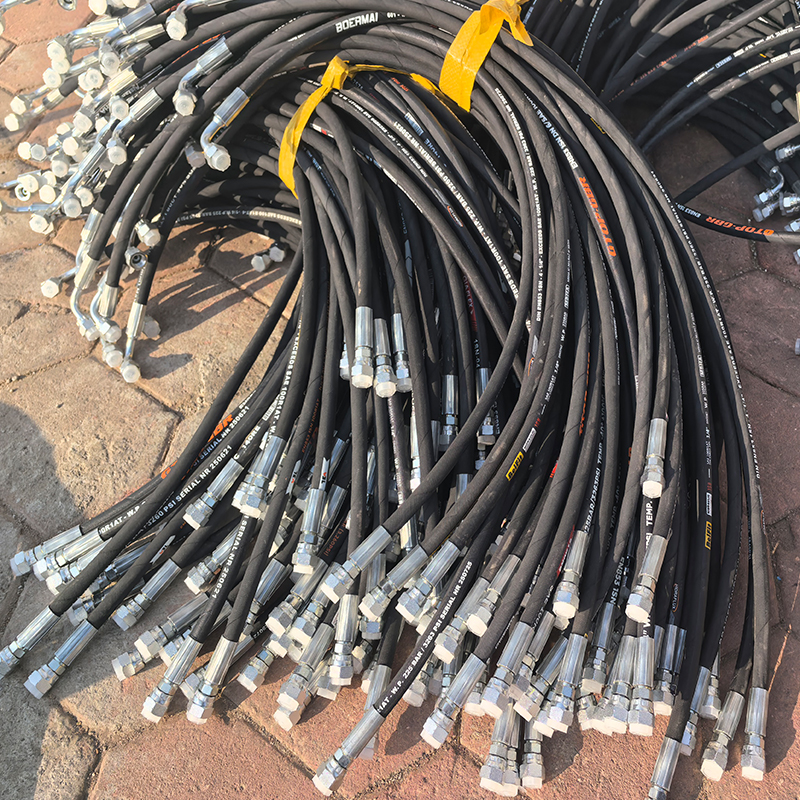 How to Create a Proactive Spiral Hydraulic Hose Replacement Plan That Prevents Downtime?
 Is Your Hydraulic System Overstressing? 5 Diagnostic Signs You Need to Upgrade to Spiral Hose
 Is Your Hydraulic System Pushing Limits? When to Specify Spiral Hose vs. Braided?
 Is Your Machinery Demanding More? Why Upgrade to a Spiral Hydraulic Hose?