
The demand for reliable infrastructure in extreme environments continues to grow across industries such as energy, aerospace, and medical technology. Cryogenic applications, which involve handling materials at temperatures below -150°C (-238°F), present unique challenges for piping systems. Traditional rigid couplings often fail under these conditions due to thermal contraction, material brittleness, and mechanical stress. Flexible pipe couplings have emerged as a critical solution, offering adaptability, durability, and safety in low-temperature environments. This article explores the role of flexible couplings in cryogenic systems, their design advantages, and real-world applications.
Understanding Cryogenic Challenges
Cryogenic environments subject materials to extreme stressors that compromise structural integrity. At temperatures near absolute zero, metals and polymers contract, become brittle, and lose elasticity. This phenomenon, known as thermal contraction, can cause rigid couplings to crack, leak, or detach entirely. Additionally, the pressure differentials in cryogenic systems—such as those in liquid nitrogen or helium storage—exacerbate mechanical strain.
For example, a pipeline transporting supercooled gases must account for a 3-5% reduction in length due to contraction. Rigid couplings lack the give to absorb this movement, leading to catastrophic failures. Flexible couplings, however, are engineered to flex, bend, and compensate for dimensional changes without compromising performance.
The Science Behind Flexible Couplings
Flexible couplings are designed to balance rigidity and adaptability. They typically consist of multiple components: a metallic bellows or corrugated sleeve, end fittings, and sometimes a protective casing. The bellows, often made from stainless steel or nickel alloys, provides the core flexibility. Its accordion-like structure allows it to expand, contract, and twist under thermal stress while maintaining a seal.
Engineers optimize coupling designs through finite element analysis (FEA) to simulate cryogenic conditions. This ensures the material retains its tensile strength and fatigue resistance at ultra-low temperatures. For instance, austenitic stainless steel, which remains ductile below -196°C (-321°F), is a common choice for bellows construction.
Key Advantages in Cryogenic Systems
Thermal Expansion Compensation: Flexible couplings absorb contraction and expansion, preventing pipe misalignment and leaks.
Vibration Dampening: Cryogenic pumps and compressors generate vibrations that can loosen rigid connections. Flexible couplings mitigate this risk.
Reduced Installation Stress: Unlike rigid couplings, flexible variants do not require precise alignment, simplifying installation in tight spaces.
Longevity: Their ability to endure repeated thermal cycling extends the lifespan of piping systems, reducing maintenance costs.
A case study from a liquefied natural gas (LNG) terminal highlighted a 40% reduction in coupling replacements after switching to flexible designs. The facility also reported zero unplanned downtime due to coupling failures over three years.
Industries Leveraging Flexible Couplings
Energy Sector: LNG plants, hydrogen storage facilities, and helium recovery systems rely on flexible couplings to maintain pipeline integrity during transfer and storage.
Aerospace: Rocket propellant lines and cryogenic fuel tanks demand couplings that withstand launch vibrations and extreme cold.
Medical Research: Superconducting magnets in MRI machines and particle accelerators use flexible couplings to connect cooling lines without introducing leaks.
Food Processing: Cryogenic freezing tunnels for perishables utilize flexible couplings to prevent contamination from failed rigid joints.
In each of these applications, the coupling’s ability to adapt to temperature fluctuations and mechanical stress is non-negotiable.
Material Selection for Cryogenic Flexibility
Not all materials perform equally in cryogenic conditions. Engineers prioritize those with low thermal conductivity, high ductility, and corrosion resistance. Common choices include:
316L Stainless Steel: Offers excellent weldability and resistance to brittle fracture.
Inconel Alloys: Ideal for high-pressure applications due to their superior strength at low temperatures.
PTFE Linings: Used in non-metallic couplings to prevent chemical interactions with cryogenic fluids.
The selection process also considers compatibility with the transported medium. For example, oxygen-rich environments require couplings free of hydrocarbon residues to avoid combustion risks.
Maintenance and Longevity Considerations
While flexible couplings reduce maintenance needs, periodic inspections are essential. Operators should check for:
Corrosion: Especially in saltwater or humid environments.
Mechanical Wear: Signs of fretting or fatigue at the bellows creases.
Leakage: Visual or pressure tests to detect seal degradation.
Proactive maintenance schedules can extend coupling life by up to 15 years. For instance, a Midwest LNG terminal implemented annual ultrasonic testing and replaced couplings preemptively, avoiding $2 million in potential losses from a single failure.
Future Trends in Cryogenic Coupling Technology
Advancements in materials science and additive manufacturing are pushing the boundaries of flexible coupling design. Researchers are exploring:
Shape-Memory Alloys: These materials could enable self-repairing couplings that revert to their original shape after deformation.
Nanocoatings: Ultra-thin protective layers to enhance corrosion resistance without adding bulk.
Smart Couplings: Embedded sensors to monitor stress, temperature, and leakage in real time.
The integration of Industry 4.0 technologies, such as IoT-enabled predictive maintenance, will further optimize coupling performance in cryogenic systems.
Conclusion
Flexible pipe couplings have revolutionized cryogenic applications by addressing the inherent challenges of ultra-low temperatures. Their ability to adapt to thermal contraction, dampen vibrations, and reduce installation complexity makes them indispensable in industries ranging from energy to healthcare. As technology evolves, these couplings will continue to play a pivotal role in ensuring the safety, efficiency, and reliability of cryogenic infrastructure. For engineers and operators, investing in flexible coupling solutions is not just a matter of compliance—it’s a strategic decision to safeguard operations in the harshest environments.
 Looking for Dock Bumpers that Last? How Do Steel-Cornered Pads Cut Your Repair Costs?
 Need Maximum Durability? Why Choose a Rubber Laminated Bumper with Reinforced Steel Corners?
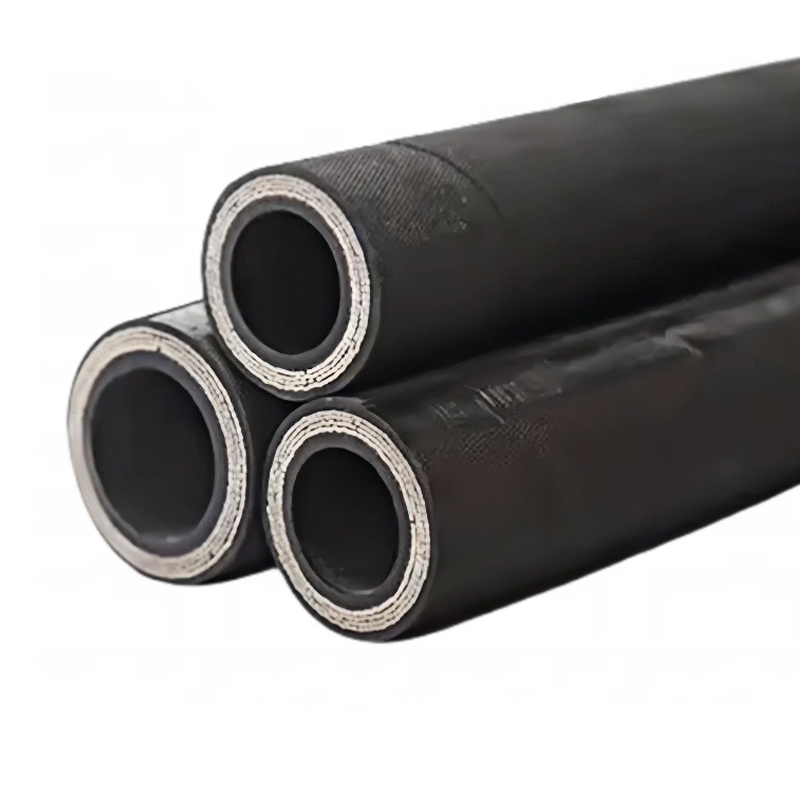 What's the True ROI of Upgrading to Spiral Hydraulic Hose? A Cost-Benefit Analysis
 Spiral Hydraulic Hose Case Studies: Real-World Reliability in Mining, Steel & Offshore