
Explore steel-cornered rubber dock bumpers. We cover their hybrid design, superior protection for loading docks, and how they reduce long-term maintenance costs vs. standard pads. Get specs & installation tips.
The Hybrid Protector: How Rubber Bumpers with Steel Corners Revolutionize Dock and Industrial Safety
In the high-impact world of loading docks, warehouses, and industrial facilities, protecting your infrastructure is a direct investment in operational continuity and cost control. Standard rubber dock bumpers absorb shock but often fail prematurely at the edges due to tearing and abrasion. The Rubber Laminated Bumper with Reinforced Steel Corners solves this exact problem, offering a next-generation solution that combines resilience with rugged, localized armor.
Beyond Basic Protection: The Problem with Standard Dock Pads
Traditional rubber or polymer bumpers are designed for direct, perpendicular impacts. However, in real-world material handling, collisions are often glancing and angular. Forklift masts, pallet corners, and trailer edges scrape against the bumper, gradually shredding its vulnerable corners. This leads to:
**Frequent, costly replacements.
**Exposed structural steel or concrete, risking damage to buildings and equipment.
**Unplanned downtime for repairs.
Engineered Solution: The Steel-Corner Advantage
This product is specifically engineered to address this failure mode. It consists of a high-density rubber core, laminated for consistent performance, permanently bonded to form-fitting steel corner plates.
1.Targeted Armor: The steel plates act as a sacrificial shield, taking the abrasive wear from metal-on-metal contact that would otherwise destroy rubber. The steel can be galvanized or powder-coated for corrosion resistance.
2.Core Absorption: The robust rubber core handles the energy dissipation, cushioning the impact force to protect both the colliding vehicle and the building structure.
3.Secure Integration: The steel plates come with pre-drilled holes, allowing for secure bolting directly to dock faces, steel columns, or concrete walls. This creates a permanent, rigid installation that won't shift or deform.
Tangible Benefits for Facility Managers
Dramatically Extended Service Life: By eliminating the primary failure point (corner wear), these bumpers can last 3-5 times longer than standard pads in high-traffic areas, offering a superior return on investment.
Reduced Structural Damage: Effective energy absorption minimizes shock transfer to building foundations, preventing cracks in concrete and misalignment of dock doors.
Lower Total Cost of Ownership: While the initial unit cost is higher, the drastic reduction in replacement frequency, labor costs, and structural repair bills results in significant long-term savings.
Improved Safety & Professional Appearance: Maintains a clean, intact protective barrier, preventing hazardous exposed bolts or jagged rubber, and projects a professional, well-maintained facility image.
Key Applications: Where to Install for Maximum Impact
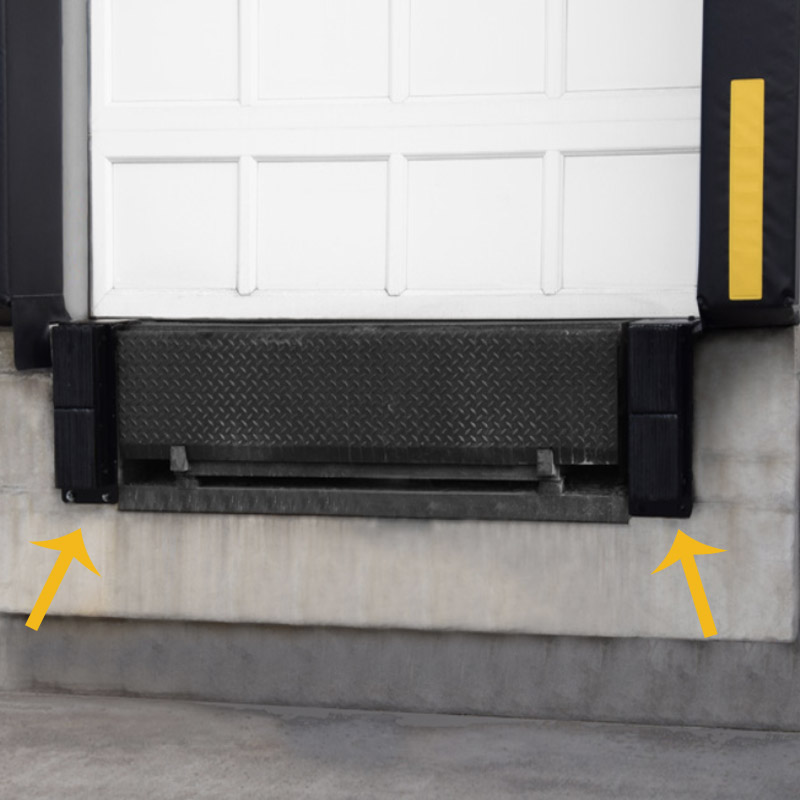
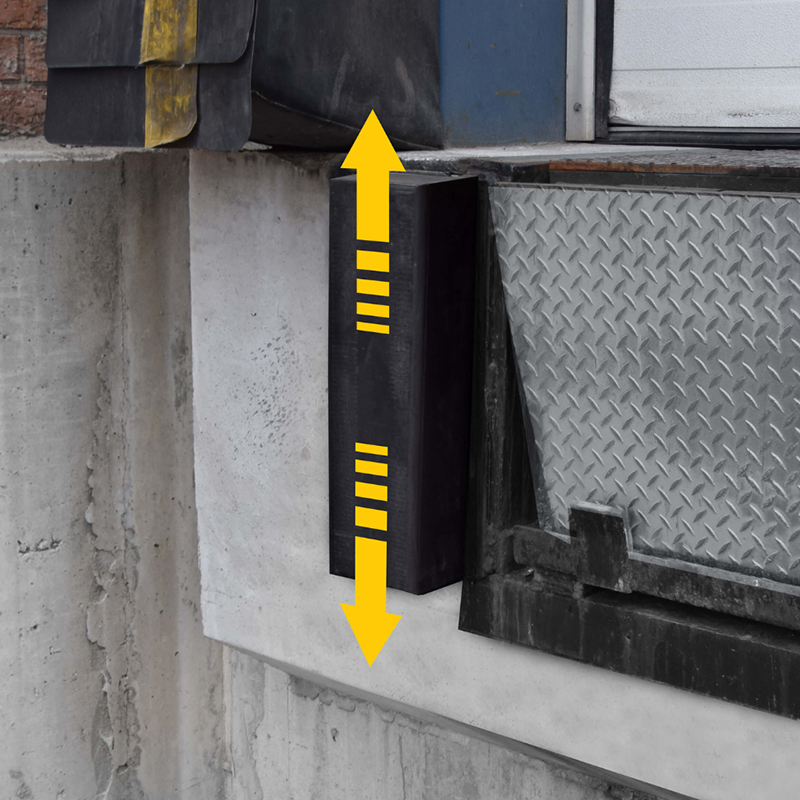
Loading Dock Corners & Doors: Essential for protecting the vulnerable corners of dock levelers and door frames from trailer impact.
Warehouse Corner Columns: Shields structural columns at aisle ends and tight turns from forklift mast damage.
Truck Maneuvering Areas: Installed on light poles, fence posts, and building corners in yards where trucks make tight turns.
Manufacturing & Assembly Bays: Protects stationary equipment, robotic cell frames, and assembly stations from accidental impacts by mobile equipment.
Installation and Specification Checklist
For optimal performance, follow these guidelines:
Select the Right Size: Match the bumper's thickness and surface area to the expected impact energy (vehicle weight and speed).
Prioritize High-Risk Zones: Install them at locations with a history of impacts or in blind-spot areas. Standard pads may suffice for low-risk, straight-on approaches.
Use Proper Hardware: Secure with high-grade, corrosion-resistant bolts, lock washers, and mounting plates as needed. For concrete, use appropriate mechanical anchors.
Regular Inspection: Include bumper checks in your preventive maintenance routine. Look for loose bolts, excessive wear on the steel plates, or any deformation of the rubber core.
Conclusion: A Strategic Upgrade for Critical Infrastructure
Choosing a Rubber Laminated Dock Bumper with Steel Corners is a strategic decision for proactive facility management. It moves beyond simple cushioning to providing intelligent, armored protection where it is needed most. This hybrid design directly tackles the leading cause of bumper failure, transforming a recurring maintenance expense into a long-term asset. For operations focused on minimizing downtime and maximizing infrastructure lifespan, this product is not just an accessory—it's an essential component of a resilient and cost-effective facility.
 How Much Load Can a Bridge Bearing Pad Actually Carry? Engineering Data for Safe Girder Support
 Is Your Bridge Bearing Pad Specified for the Wrong Rubber Grade? Why Elastomeric Bridge Bearing Pad Selection Decides 50-Year Deck Life
 Can a Loading Dock Bumper Survive -30°C Winters and +50°C Summers? Here Is the Extreme-Weather Data
 Are Your Dock Bumpers Specified for the Wrong Impact Profile? Why a Loading Dock Bumper with a Steel Face Outperforms in Real Traffic