A procurement-grade breakdown of the Elastomeric Bridge Bearing Pad: ASTM D4014/AASHTO M251 specs, steel-laminate mechanics, load-deflection data, and where plain pads fail. For civil engineers and infrastructure buyers.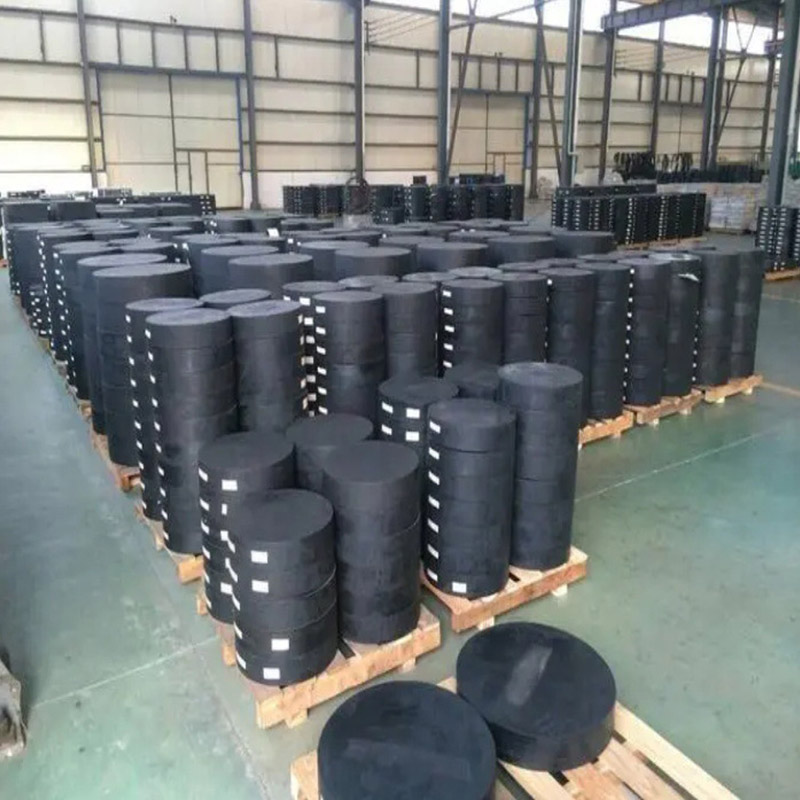
The Bearing Pad Is the Joint of the Bridge — Most RFQs Underspec It
A Bridge Bearing Pad is not a rubber block sitting under a girder. It is the controlled deformation joint between superstructure and substructure: it transfers dead and live load downward, accommodates thermal translation, absorbs beam-end rotation, and in seismic zones dissipates energy. When the pad is wrong, the deck cracks, the abutment spalls, and the girder walks off its seat.
Yet a large share of international RFQs still read: “rubber bearing pad, 300×400×52, neoprene.” No shape factor, no rubber grade, no AASHTO/EN clause, no steel shim thickness. That is how a 30-year structure gets fitted with a 7-year component.What an Elastomeric Bridge Bearing Pad Actually IsA steel-laminated elastomeric pad is built from alternating plies of:Elastomer — natural rubber (NR) or chloroprene (CR/neoprene), occasionally EPDM for specific chemical environments
Reinforcing steel shims — ASTM A36 or A1011, typically 14-gauge (1.9 mm) internal, 12-gauge external, bonded under vulcanization
The steel shims restrain lateral bulging of each rubber layer. This raises vertical compressive stiffness (Ec ≈ 1000–2000 MPa for typical shape factors) while leaving the total elastomer thickness free to act in shear for horizontal movement and rotation.
Plain (unreinforced) pads exist, but per AASHTO M251 they are limited to low compressive stress (≈5.5 MPa max) and small rotations. Anything carrying a highway girder belongs in the laminated family.
The Two Numbers That Decide Everything: Shape Factor and Rubber Grade
Shape factor S = loaded area ÷ perimeter-free area of one rubber layer. S controls the trade-off:
Low S (wide thin layers): soft in compression, large rotation capacity, low vertical load
High S (narrow thick layers): stiff vertically, limited rotation, high loadMost highway simply-supported spans run S = 4 to 15 depending on movement demand.Rubber grade decides climate survival:
Grade 0 (≥+5°C): tropical only
Grade 3 (down to -25°C short-term): temperate winter
Grade 5 (continuous -40°C): prairie, Nordic, high-altitude — mandatory CR compound or low-temp NR blend per ASTM D4014-23Neoprene (CR) beats natural rubber on ozone, UV, oil, and salt — the reason coastal and urban viaducts default to CR even though NR has higher tensile (25–30 MPa vs 17–20 MPa) and better low-temp flexibility.Hard Numbers from ASTM D4014 / AASHTO M251For a steel-laminated neoprene pad, Grade 3–5, Shore A 60±5:
| Property |
Requirement (ASTM D4014-23 / AASHTO M251) |
Why it matters |
| Tensile strength |
≥ 15.0 MPa (CR), ≥ 15.2 MPa (EPDM) |
Resists tear at edge stress |
| Elongation at break |
≥ 350% (CR), ≥ 400% (NR) |
Survives cyclic shear without fracture |
| Compression set (70°C×22h) |
≤ 35% (CR) |
Limits permanent height loss under sustained load |
| Shore A hardness |
50–70 |
Below 50 → walks; above 70 → transmits shock |
| Ozone (50 pphm, 100h) |
No cracks |
CR passes; NR needs wax/antiozonant package |
| Bond to steel |
Peel ≥ 10 kN/m |
Prevents shim delamination |
| 1.5× design load |
No delamination, no rupture |
Safety margin on overload/highway convoy |
Shear modulus G runs 0.8–1.2 MPa; rotation capacity 0.005–0.02 rad; horizontal displacement typically 1–2 inches (25–50 mm) for plain laminated, up to 200 mm with PTFE sliding variant.
Where Plain Pads and Wrong-Grade Rubber Fail
Plain pad under 8 MPa: bulges at edges within 6 months, girder seat pressure redistributes, concrete sole plate cracks.
NR pad in Gulf coast yard: ozone checking within 2 years, surface fissures reach steel shim, shim rusts, bond line opens.
Grade 3 pad in Manitoba: at -30°C the NR blend stiffens, instantaneous deflection drops ~22%, thermal contraction force spikes into abutment.
No shape-factor calc: pad too soft → permanent set >10% in 5 years; pad too stiff → thermal movement transfers to pier, causing shear keys to crack.
Field Case: Two Span Types, Two OutcomesCase A — Municipal overpass, temperate climate, NR laminated pad, S≈6, Grade 312-year inspection: compression set 6%, no face cracks, rotation within 0.004 rad. Scheduled replacement at 30 years.Case B — Coastal highway bridge, CR pad specified but supplier substituted SBR-blend “neoprene-type”4-year inspection: 2-mm surface ozone cracks, one corner shim rust stain, bond-line bulge on south face. Full replacement at year 5, plus abutment patch.Root cause: no MTR check, no ASTM D1149 ozone test in acceptance.The delta between Case A and Case B is not price — it is specification enforcement.Procurement Checklist for Export Buyers
State standard explicitly: ASTM D4014-23 (US/ADB/World Bank), AASHTO M251, EN 1337-3 (EU), IRC:83 (India), JT/T 4 (China) — and the clause year.
Call out rubber type and grade: “Neoprene per ASTM D4014, Grade 5, Shore A 60±5” — not “weatherproof rubber.”
Require shape factor calculation in the supplier’s submittal, tied to your girder rotation and thermal movement.
Steel shim: ASTM A36 or A1011, min 14 ga internal, 12 ga external, galvanized if exposed edge.
Demand batch test reports: tensile, elongation, compression set, ozone, bond peel, and full-pad compression load-deflection curve at +20°C and -20°C.
PTFE sliding type: virgin PTFE ≥ 3 mm, μ ≤ 0.03 greased vs SS 304 — not recycled PTFE sheet.
Marking: pad must carry rubber type, grade, batch, standard, and manufacturer stamp. Unmarked pads = reject on arrival.Installation Notes That Protect the SpecA correct pad installed wrong fails early. Field QC:
Sole plate level within 0.002 rad, no laitance, no projecting aggregate
No gap > 0.05 mm between pad and girder plate (feeler gauge check)
Long axis of rectangular pad parallel to girder transverse axis so shear aligns with longitudinal thermal expansion
Ambient temp at placement logged; shim offset adjusted to mean design temperature
Anchor bolts must not touch pad edge or restrain shearWhat to SpecA Bridge Bearing Pad is a 50-year component on a 100-year structure. Write the spec around shape factor, rubber grade, and bonded shim detail — not thickness and color. Laminated elastomeric with CR Grade 5 and certified ASTM D4014 MTRs is the default for any export bridge seeing freeze-thaw, coastal air, or seismic demand. Plain pads stay in the pedestrian-footbridge budget only.

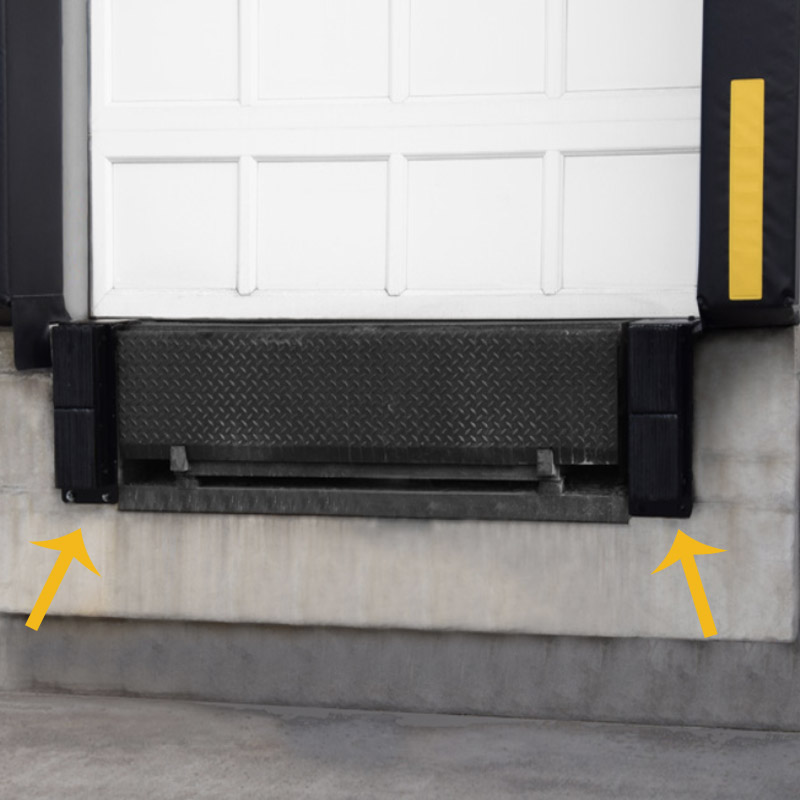 Can a Loading Dock Bumper Survive -30°C Winters and +50°C Summers? Here Is the Extreme-Weather Data
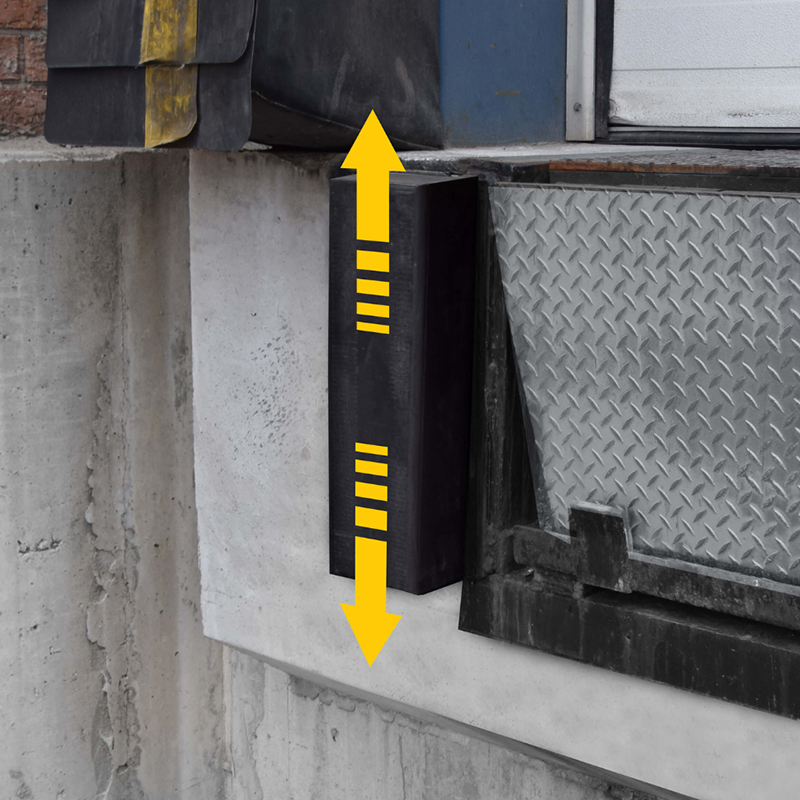 Are Your Dock Bumpers Specified for the Wrong Impact Profile? Why a Loading Dock Bumper with a Steel Face Outperforms in Real Traffic
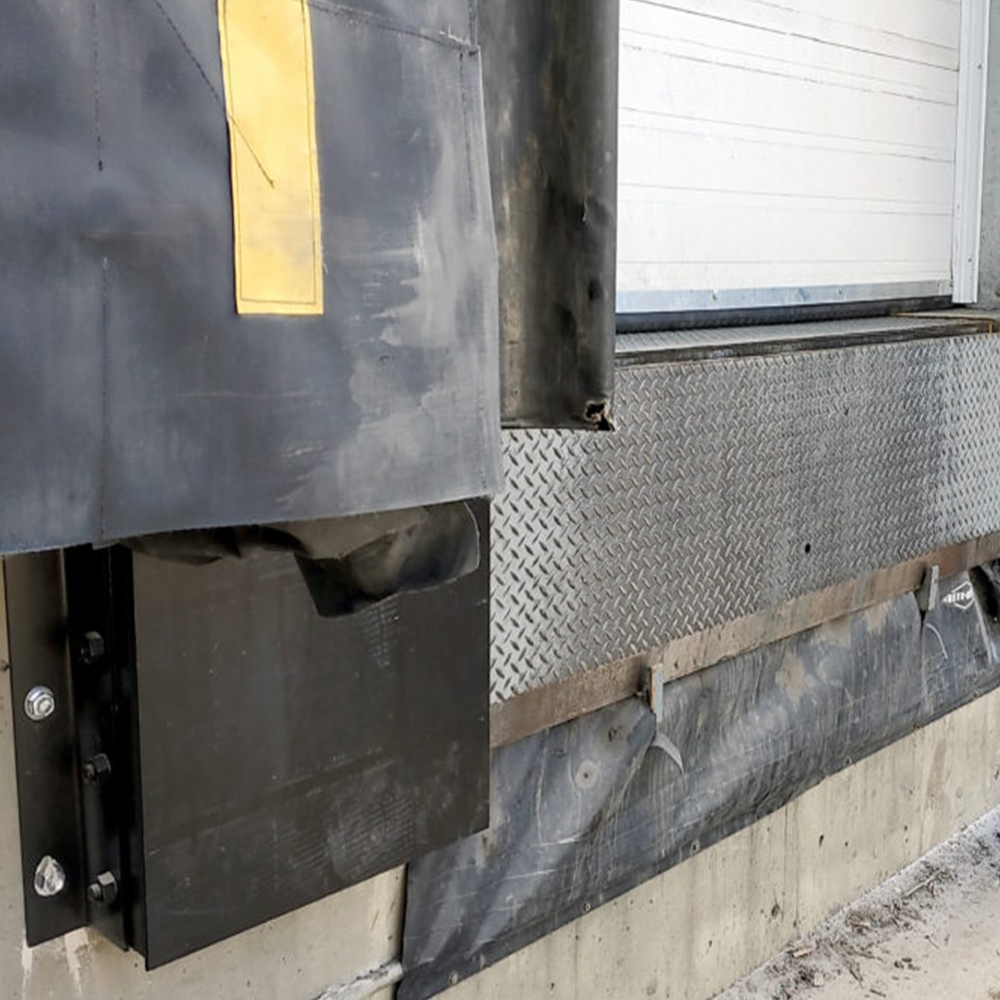 Is Your Dock Bumper Costing You in Hidden Downtime? How a Steel Face Dock Bumper Keeps Operations Running
 Why Do Air-Ride Trailers Destroy Plain Rubber Pads? Should You Switch to a Steel Face Dock Bumper?