Nine contract lines every bridge bearing pad RFQ needs to prevent material substitution, weak bond, missing batch tests, and unmarked pads. Written for infrastructure buyers and EPC procurement teams.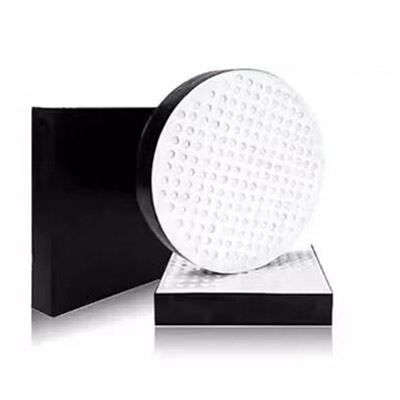
The RFQ Is Where the Bearing Is Won or Lost
A bridge bearing pad fails in one of two places: at the factory or in the field. The factory failures — wrong rubber, thin shims, weak bond, skipped tests — are almost always traceable to an RFQ that left too much room for interpretation.
Suppliers quote what you write. If the RFQ says “neoprene bearing pad, 400×500×50,” you will get the cheapest thing that fits those numbers. If it says “chloroprene, Grade 3, per ASTM D4014-23, batch-tested, galvanized shims after cutting,” the supplier either meets it or walks away.
Here are nine lines that belong in every bridge bearing RFQ. They cost nothing to write and save the cost of a jacking operation.
Line 1: Name the Standard With Its Year
“Steel-laminated elastomeric bearing pads per ASTM D4014-23 and AASHTO M251, latest edition.”
Do not write “per industry standards.” Do not write “per manufacturer’s recommendations.” A standard without a year is a negotiation. A standard with a year is a contract.
Line 2: Name the Rubber So It Cannot Be Swapped
“Elastomer shall be chloroprene (neoprene), Grade 3 per ASTM D4014, Shore A hardness 60±5.”
The word “neoprene” alone is not enough. Some suppliers quote “neoprene-type” or “neoprene blend” and ship SBR or reclaimed rubber. Chloroprene is a specific polymer. Grade 3 is a specific low-temperature class. Shore A 60±5 is a specific hardness window. All three must appear in the same sentence.
Line 3: Define the Steel Shim Finish
“Internal steel shims: ASTM A36 or A1011, minimum 1.9 mm thickness, hot-dip galvanized per ASTM A123 after cutting. External shims: minimum 2.6 mm, same material and finish.”
If the shims are galvanized before cutting, the cut edges are bare steel inside the pad. Moisture finds them eventually. Galvanizing after cutting protects the edges that matter.
Line 4: Require Batch-Level Test Reports, Not “Typical Values”
“Each production lot shall be accompanied by test reports for: tensile strength, elongation at break, compression set, Shore A hardness, peel bond strength (min 10 kN/m), and ozone chamber test per ASTM D1149.”
A “typical values” sheet is a marketing document. A batch test report has a date, a batch number, and a signature. If the supplier cannot produce one for the lot you are buying, you are buying unverified material.
Line 5: Make the Shape Factor a Submittal
“Supplier shall submit shape factor calculation for each pad configuration, verified by the Engineer of Record. Minimum shape factor S = 6 for highway girder applications.”
This one line prevents the most common design error in elastomeric bearings: thick rubber layers chosen for cheapness or convenience, producing a pad that bulges and creeps under load.
Line 6: Demand Permanent Marking
“Each pad shall be permanently marked with: rubber type, grade, batch number, manufacturer name, and date of manufacture.”
Unmarked pads are untraceable pads. If a failure occurs in year six, the marking is the only way to identify the batch and the compound. No marking, no acceptance.
Line 7: Keep a Reference Sample
“Supplier shall provide one additional pad from the same production lot as a reference sample. Buyer shall retain this sample for a minimum of 10 years.”
This is the cheapest insurance in the entire procurement. One pad costs a few hundred dollars. It settles disputes that would otherwise cost tens of thousands in arbitration.
Line 8: State the Installation Temperature Condition
“Installation shall account for ambient temperature at the time of placement. Shim offset shall be set for the mean design temperature. Installation temperature range shall be stated in the contract documents.”
A pad installed at -5°C and never adjusted will be in the wrong position when the deck expands at +35°C. This line puts the responsibility on the installer, not the factory.
Line 9: Reserve the Right to Inspect
“Buyer or third-party inspector shall have access to the factory during production for dimensional, material, and bond verification. Inspection at the factory shall not substitute for inspection at the jobsite.”
This line does two things. It tells the supplier you are not buying on trust. And it gives you a legal basis to reject material that does not match the approved sample.
What These Nine Lines Do That a Warranty Cannot
A warranty pays you back after the failure. These nine lines prevent the failure from happening in the first place.
- Line 1 stops the standard from being negotiated away.
- Line 2 stops the rubber from being substituted.
- Line 3 stops the shims from rusting from the inside.
- Line 4 stops the test reports from being fiction.
- Line 5 stops the geometry from being wrong.
- Line 6 stops the batch from being untraceable.
- Line 7 stops the dispute from being unwinnable.
- Line 8 stops the installation from being wrong.
- Line 9 stops the factory from being a black box.
What to SpecA
bridge bearing pad RFQ does not need to be long. It needs to be precise. Nine lines, each naming a standard, a material, a test, or a condition. No vague phrases, no “supplier to advise,” no “best practice.” The suppliers who can meet these lines are the ones you want. The ones who push back are the ones you were about to have problems with.

 Rubber Laminated Loading Dock Bumper with Steel Angle: 5 Field Failure Signs That Point Back to the RFQ
 Bridge Bearing Pad Field Failure: 5 Visual Signs Before It Retires (And What Caused It)
 Laminated Rubber Bearing: Maintenance and Inspection Protocols
 Elastomeric Bearing Pad: NR vs. CR Material Selection Guide