Steel-Faced Laminated Rubber Bumper: 5 Field Problems Buyers Keep Finding After Installation

Views : 6
Update time : 2026-09-29 14:40:59
Real-world failure signs for steel-faced laminated rubber bumpers: face plate bulge, bond separation, plate edge shear, anchor pull-out, wrong compound. What procurement should spec to avoid them.
The bumper looks fine in the photo. Six months later it's not.
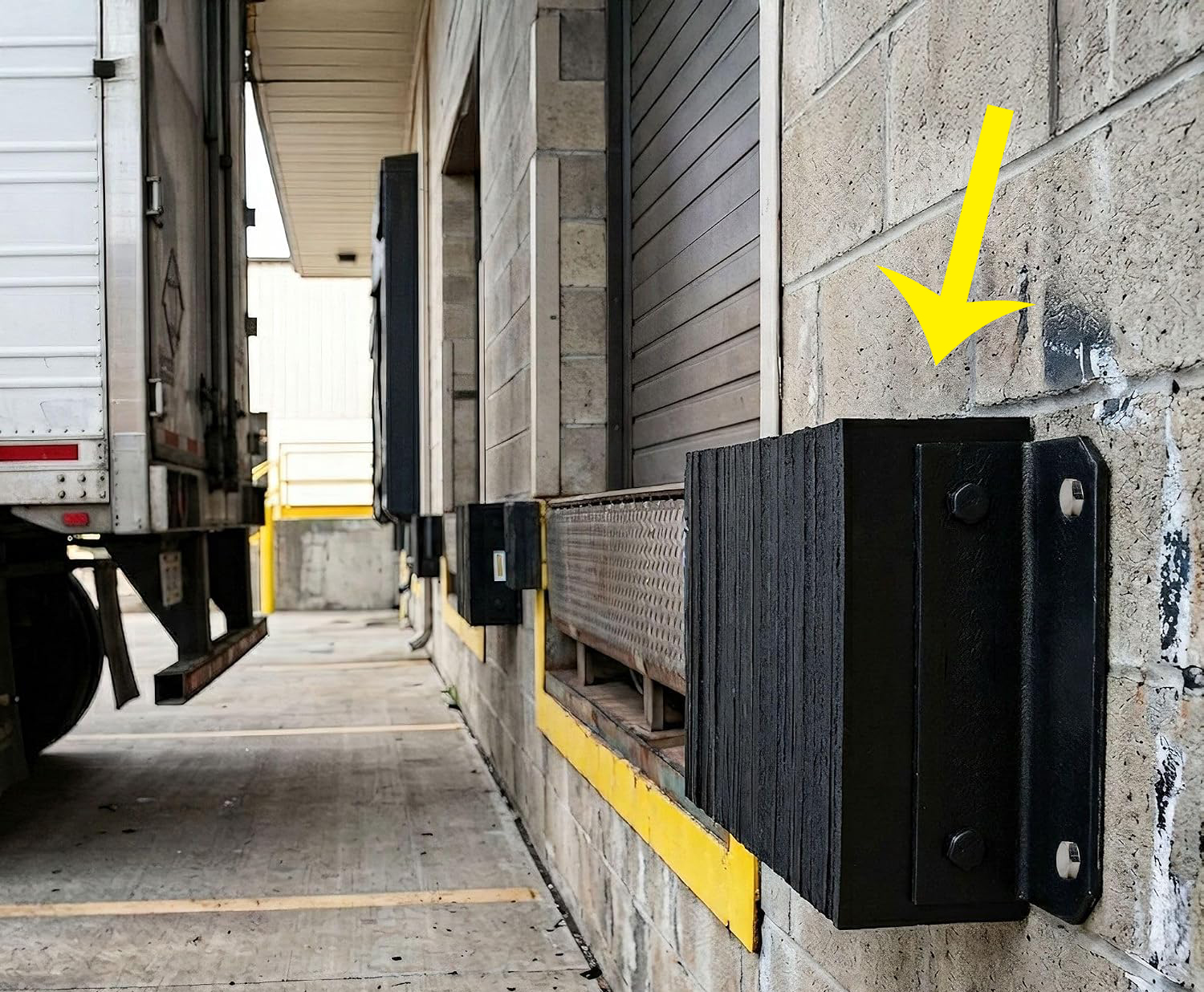
That's the pattern. A Steel-Faced Laminated Rubber Bumper​ ships looking solid: steel faceplate square, laminate edges clean, bolts in the box. Then the trailer traffic starts. Air-ride trailers scrub up and down, angled backing hits the corner, meltwater runs behind the face plate. By the second inspection, the rubber is flush with the steel face and the wall is taking the hit.
This article is for the person who has to explain to the plant manager why the "heavy duty" bumpers didn't last. Five field problems, the root cause behind each, and the RFQ language that stops it next time.
1. Rubber sits flush with the steel face plate
On a healthy steel-faced bumper, the rubber face projects past the steel face plate. That projection is what contacts the trailer first. When the rubber wears back until it's level with the steel, the trailer can bridge the rubber and load the steel — and behind the steel, the concrete.
Root cause:
  • Projection was too small for the trailer mix
  • Bumper chosen by price, not by impact cycles
  • Laminate compressed permanently because the rubber compound had high compression set
    Field rule:​ if the rubber no longer stands proud of the steel face plate, the bumper is done. Don't "flip it" and don't add a steel plate in front of it. Measure original projection from the order, then measure what's left. Past ~30% loss of projection = replace.

    2. Steel face plate bent, torn, or twisted
    The steel face plate is the armor. It's not supposed to look like a trailer backed into a Coke machine.
    Root cause:
    • Face plate thickness too thin for the trailer fleet
    • Welded to thin cladding or hollow wall instead of structural steel
    • Mounted only with concrete anchors, no weld to structural backing
    • Trailer misalignment every day, same corner taking the hit
      A bumper mounted only with concrete anchors will eventually work those anchors loose under repeated impact — the bumper starts moving, and then it gets worse with every trailer. Correct installs weld the mounting flange to embedded structural steel; the lower anchor just stabilizes.
      Field rule:​ bent face plate = structural mounting problem, not a rubber problem. Fix the substrate before swapping the bumper.

      3. Rubber separating from the steel face plate
      You see a dark line opening between the laminate and the steel. Sometimes you can slide a screwdriver in. That's bond failure, not surface wear.
      Root cause:
      • Adhesive system wrong for the rubber compound
      • Steel face plate not blast-cleaned before bonding
      • Water got in through a face crack and reached the bond line
      • Reclaimed rubber used in the laminate — bond consistency drops
        Field rule:​ bond-line opening is a retirement condition. One bumper like that means check the whole batch by batch number. If the supplier can't show a peel/bond test for that lot, you've found why.

        4. Anchor bolts loose, spinning, or pulling concrete
        The rubber looks okay. The steel looks okay. But the whole unit rocks when you push it.
        Root cause:
        • Weak or repaired concrete
        • Anchor embedment too shallow
        • Bumper sized too small, so impact force concentrates on few bolts
        No weld to structural steel, so all reaction goes through the anchors
        Field rule:​ tighten test first. If the bolt spins or the concrete moves, don't torque harder. Core-drill new holes at least 3.5 in from the old ones, or weld to structural steel. Otherwise you're bolting a bumper to dust.

        5. Wrong rubber for the site — shows up late
        Cold storage, outdoor yard, coastal salt air, food plant washdown. The bumper may survive summer and then start checking, hardening, or chunking.
        Root cause:
        • Standard NR/SBR blend specified for every site
        • No low-temp compound for freezers (neoprene/EPDM blend required)
        • No galvanized or stainless hardware for salt/chemical exposure
        UV and ozone ignored for outdoor docks
        Field rule:​ if the bumper is installed outdoors or in a freezer and nobody asked about compound grade, the spec was incomplete. Steel face protects the surface; the compound protects the life.

        What to put in the RFQ so these don't come back
        "Steel face plate: min thickness stated by load, hot-dip galvanized after forming."
        "Face plate prep: blast-cleaned before bonding, edges radiused, no torch-cut burrs."
        "Rubber compound: specify neoprene / EPDM / NR blend by site — freezer, outdoor, coastal, washdown."
        "Laminate bond: peel/bond test per lot (min 10 kN/m); no reclaimed rubber without approval."
        "Anchor pattern: continuous bolt spacing per load chart; oversize holes not permitted; washer/nut spec included."
        "Projection: stated in mm/inch from dock face to rubber contact face, matched to trailer bed-height range."
        "Hardware: galvanized or stainless per environment; zinc-plated only for indoor dry."
        "Marking: model, compound, batch number, date, manufacturer on the face plate."
        "Reference sample: one unit from the production lot retained by buyer for dispute resolution."

        What buyers should remember
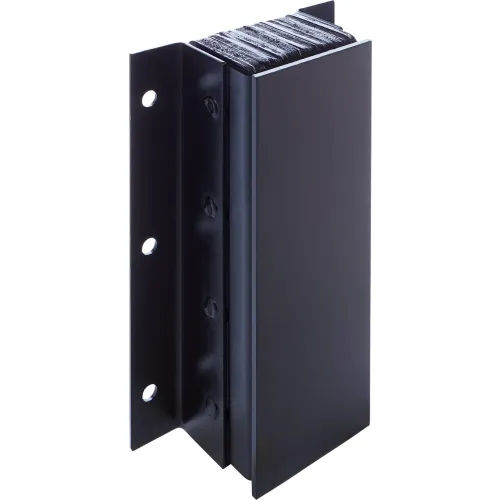
        A Steel-Faced Laminated Rubber Bumper​ is not "a rubber block with a plate." It's a small structural assembly: rubber that absorbs, steel that takes scrub, anchors/welds that decide whether it stays on the wall.
        Most premature failures aren't rubber quality alone. They're:
        • wrong projection
        • wrong compound
        • wrong mounting
        • wrong RFQ

          Fix those four, and the bumpers stop being a quarterly replacement item.

Related News
Read More >>
Rubber Laminated Loading Dock Bumper with Steel Angle: 5 Field Failure Signs That Point Back to the RFQ Rubber Laminated Loading Dock Bumper with Steel Angle: 5 Field Failure Signs That Point Back to the RFQ
Sep .29.2026
Field failure signs for rubber laminated loading dock bumpers with steel angle: bent angle, bond-line opening, flange-edge tearing, anchor pull-out, wrong compound. RFQ lines that stop substitution.
Bridge Bearing Pad Field Failure: 5 Visual Signs Before It Retires (And What Caused It) Bridge Bearing Pad Field Failure: 5 Visual Signs Before It Retires (And What Caused It)
Sep .28.2026
Field guide for bridge bearing pad inspection: visual signs of bulging, shear, delamination, and ozone cracking. Root causes and exact acceptance actions for engineers.
Bridge Bearing Pad RFQ Checklist: 9 Lines That Stop Suppliers From Subbing the Rubber Bridge Bearing Pad RFQ Checklist: 9 Lines That Stop Suppliers From Subbing the Rubber
Sep .28.2026
Nine contract lines every Bridge Bearing Pad RFQ needs to prevent material substitution, weak bond, missing batch tests, and unmarked pads. Written for infrastructure buyers and EPC procurement teams.
Laminated Rubber Bearing: Maintenance and Inspection Protocols Laminated Rubber Bearing: Maintenance and Inspection Protocols
Sep .20.2026
A practical maintenance and inspection protocol for laminated rubber bearings, covering inspection intervals, warning signs, record keeping and the point at which a bearing should be replaced rather than monitored.