A Water-Filled Rubber Dam looks passive. It just lies there, fills with river water, holds a head, overflows gently. Then one morning the bag is half-down, the anchor line weeps, and nobody touched the control system.
Most rubber dam failures do not start as a dramatic burst. They start as small seepage, a vibrating crest during overflow, a folded crease at the end dam that never recovers. The bag gets blamed. Usually the RFQ, the anchoring detail, or the operation manual left too much to chance.Here are five field signs that repeat across irrigation canals, urban landscape weirs, and flood-control dams — and what each one really means.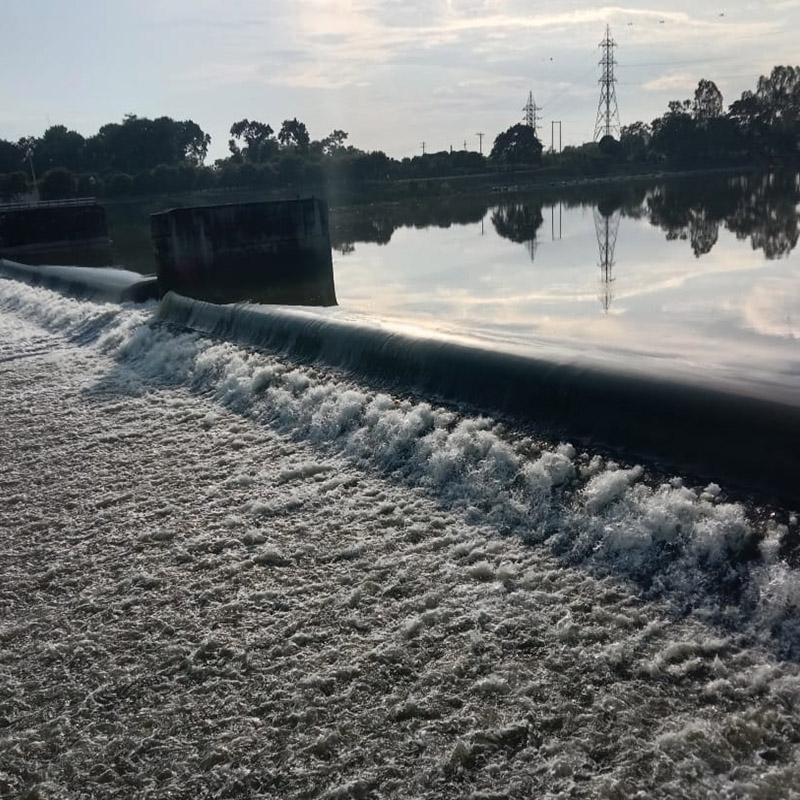
1. Anchor line weeps after every cycle
You tighten bolts in spring. By midsummer, water threads out from under the clamping plate. The bag hasn't moved, but the seal has.
Root cause:
- Bottom gasket (3–5 mm pure rubber) damaged during install, or pierced by grit carried in during filling
- Anchor bolts corroded in the wet zone; clamp pressure becomes uneven
- End-dam and sidewall junction not re-torqued after first inflation cycle
- Concrete anchor groove has micro-honeycomb, no full contact under the plate
Field rule: seepage at the anchor is rarely “just a gasket.” Drop the bag, clean the groove, check bolt torque symmetrically, replace the bottom gasket in sections — do not wait for a full tear. ARIA case data shows anchor-zone adhesion loss plus flow oscillation is what turns a small leak into a 1 m tear.
2. Bag self-deflates overnight with no visible hole
No bubble, no jet. Pressure slowly drops, the crest sags by morning.
Root cause:
- Check valve / limit valve not fully closing; grit from the intake lodged in the seat
- Return flow through the fill line bleeds media back to the pump house
- Hidden needle leak at the end-dam seam or the bottom gasket overlap
- Control system drift: level sensor offset keeps a bleed valve cracked
Field rule: self-fall is a system problem, not a rubber problem. Before patching the bag, isolate the piping: close the line, watch 12 hours. If pressure holds, the bag is fine — the valve train is the leak.
3. Crest vibrates and “slaps” during overflow
At low overflow the bag is quiet. Push the flow a little higher and the crest starts fluttering, then slapping the sill.
Root cause:
- Operating head above the design inner-pressure ratio (over-topping too high)
- Single-anchor layout on a long span — double-anchor or inclined profile damps better
- Downstream tailwater creating a roller that pulses the bag
- Span too long for the fill height; resonance with flow pulsation
Field rule: vibration is not “normal for rubber.” It is fatigue in progress. Lower the operating head, stagger spans, or move to a double-anchor profile. Long-term flutter shreds the outer ply and opens seams.
4. Fold crease at the end dam never springs back
Where the bag folds against the abutment when deflated, a hard crease forms. After re-inflation it stays white, then cracks.
Root cause:
- Winter operation: rubber stiffens, fold radius too tight
- Debris (gravel, ice) trapped in the fold during drawdown
- Bag laid on abrasive silt instead of cleaned sill
- Outer compound not low-temperature / ozone graded
Field rule: a crease that stays after inflation is a future tear line. In cold regions, specify low-temp compound (brittleness ≤ -30 °C), clear the sill before every drawdown, and avoid sharp-fold geometry at the end dam.
5. Seam line shows a wet streak, then delamination
Along the vulcanized seam you see a damp band. Later, a blister. Later, the fabric shows.
Root cause:
- Localized adhesion defect between outer rubber and central textile ply (manufacturing)
- Repeated flexing at the seam because the profile curvature is wrong
- Ozone/UV checking on the seam cover, water enters, ply separation
- Repair was done cold without proper primer; edge lifted
Field rule: seam leaks are retirement warnings. A 1 m seam-open case in France (Meuse dam) traced back to 80 cm adhesion gap + 18 months turbulent-flow fatigue. Ask for seam peel/adhesion cert per production batch, not just a “burst test passed” PDF.
What to put in the RFQ so the bag survives 20+ years
“Construction: 1×2, 2×3, or 3×4 ply (cloth/rubber) by height; nylon/polyester high-tenacity fabric, outer/inner rubber compound stated separately.”
“Outer ply: tensile ≥14 MPa, elongation ≥400%, ozone 10,000 pphm no crack, abrasion-rated, UV-stabilized, low-temp ≤ -30 °C.”
“Inner ply: tensile ≥12 MPa; inner water-contact layer ≥6 MPa, non-permeable, algae/silt resistant.”
“Seam: vulcanized continuous splice; peel/adhesion test per batch; no cold-patch-only seams on primary joints.”
“Anchor system: bolt or wedge type; bottom gasket 3–5 mm pure rubber, replaceable in sections; clamp plate stainless or hot-dip galvanized.”
“Operating pressure ratio (k) stated for height; safety factor >8; over-pressure relief valve in control system.”
“End dam & fold geometry: min fold radius stated; cold-climate version with low-temp compound.”
“Intake filtration: ≤5 mm screen, settling forebay, to keep grit out of the bag and valves.”
“Marking & traceability: height, batch No., mfg date, ply class, inner-pressure ratio on the bag end.”
“Acceptance test: inflate to working pressure, hold, inspect seam/anchor/end-dam; soap-film or fluorescent trace for micro-leak.”
What operators should remember
A Water-Filled Rubber Dam is a composite membrane system: rubber protects, fabric carries load, anchor holds it down, water inside is the working fluid. It does not fail because “rubber wore out.” It fails because:
- grit got into the gasket
- the valve train bled pressure
- the crest resonated and nobody lowered the head
- the seam was never peel-tested
- the RFQ said “rubber dam as per supplier standard”
Fix those five, and the bag runs its 20–30 year design life. Skip them, and you get a mid-season emergency drawdown when the river is already rising.

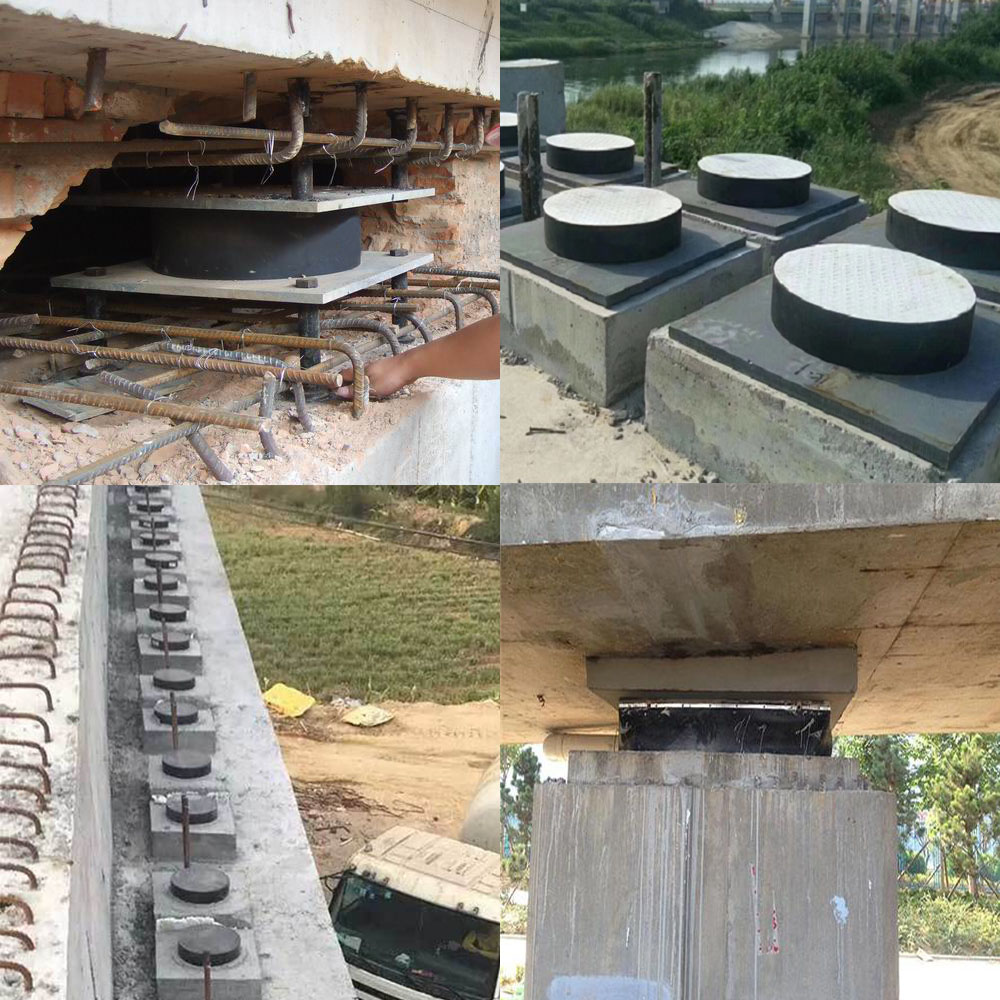 Bridge Bearing Pad Design for Bridge Construction: Load Transfer, Movement and Reliable Service
 Bridge Bearing Pad Inspection and Maintenance: A Field Guide for Safer Bridge Construction
 Bridge Bearing Pad Design: Load Transfer, Movement and Service Reliability
