Spiral wire hydraulic hose field failures: bend-radius kink, impulse fatigue, crimp mismatch, fluid incompatibility, outer cover wear. What buyers should spec for SAE 100R12 / R13 / R15 hose.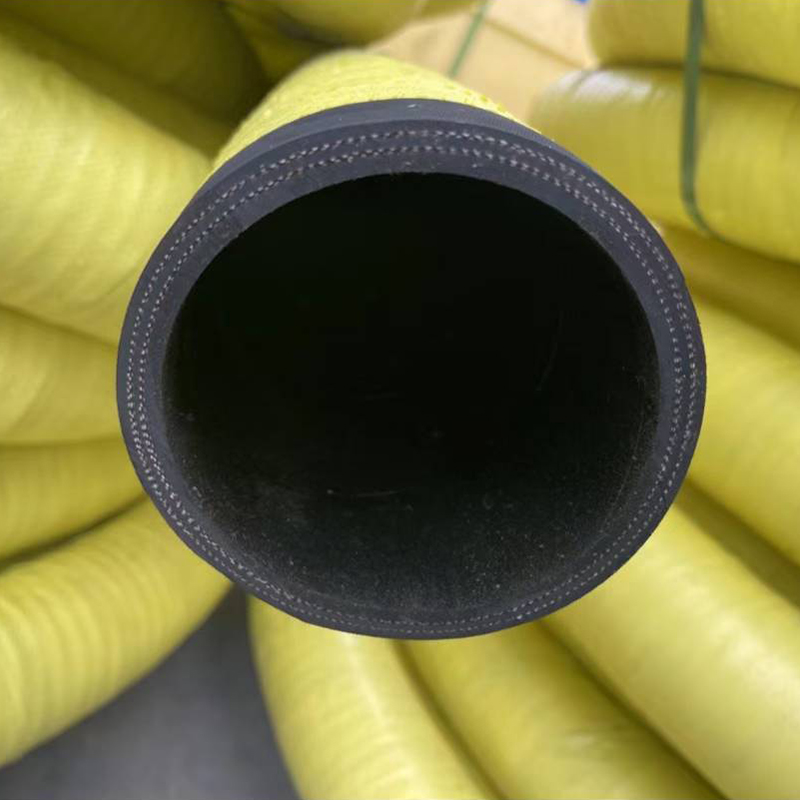
A spiral wire hydraulic hose is bought because someone finally listened: “braided hose keeps bursting on the breaker circuit, switch to spiral.” Then the spiral hose also bursts. Not because spiral is wrong — because the RFQ only changed the reinforcement words and left everything else vague.
Spiral construction (SAE 100R12, R13, R15; EN 856 4SP/4SH) handles high pressure and high impulse better than braid because the wires run in alternating helical layers and do not rub across each other the way braided wires do. But a spiral hose forced into a braided-hose routing will fail faster than people expect. Here are five field failures that point back to the purchase document.
1. Kink at the bend — “spirals don’t bend like braids”
The hose looks fine on the bench. Install it in the same tight rack where the 2SN used to live, and a few weeks later there is a hard kink at the first elbow. Cut it open: the spiral wires are flattened on one side.
Root cause:
- Minimum bend radius ignored — spiral hose needs a larger radius than braid of the same bore
- Routing copied from a 2SN drawing
- No bend-restrictor or guide clamp at the moving joint
Field rule: spiral hose is not “stronger braid.” It is stiffer. Route for the spiral’s radius, not the braid’s. If the drawing says 180 mm radius and the hose is 4SH, you have already started the failure.
2. Impulse fatigue at the crimp — pressure was fine, cycles killed it
The gauge never exceeded 350 bar. Still, the hose weeps at the fitting after 90,000 impulses. Lab says spiral hose should do 200,000+.
Root cause:
- System peak spikes 30–100% over working pressure during valve closure / end-of-stroke
- Hose rated to “working pressure” but not to the impulse curve of the actual machine
- Fitting/crimp standard not matched to hose standard (SAE body + EN ferrule = underswage)
- Assembly made on a generic crimper with no skive/crimp chart
Field rule: for hammers, presses, boom cylinders — specify impulse life, not just working pressure. Ask for ISO 6803 impulse test data at the system’s peak temperature and spike pressure. A spiral hose with the wrong crimp is just expensive braid.
3. Outer cover shredded, spiral wire rusting
Mining loader, crusher, demolition attachment. The cover looks sandblasted after one season. Then you see bright steel. Then weeping. Then burst.
Root cause:
- Standard black cover specified for an abrasive site
- No MSHA / anti-abrasion outer cover (e.g. T/TC-type cover)
- Hose routed against tracks, rock box, or steel structure with no guard
- Salt/fertilizer/cement slurry attacking unprotected wire
Field rule: spiral hose is the right choice for the pressure — wrong choice if the cover can’t survive the site. For abrasion, ask for a pin-pricked, MSHA-approved, abrasion-rated cover. For chemical/coastal, ask for synthetic rubber compound options and galvanized/zinc-nickel fittings.
4. Inner tube swells, hose gets stiff, system eats itself
Someone switched to biodegradable fluid or phosphate ester to meet environmental rules. The spiral hose stayed “hydraulic hose.” Six months later the inner tube is soft, the oil is full of rubber fines.
Root cause:
- NBR inner tube incompatible with the new fluid
- RFQ said “petroleum-based hydraulic fluid service” but the site changed fluid
- Nobody checked fluid compatibility chart before the fluid change
Field rule: spiral vs braid is not the only compatibility question. Inner tube compound is. Water-glycol, phosphate ester, HFD, bio-oil — each changes the acceptable tube material (NBR vs EPDM vs FKM/PTFE-lined). Put the fluid name in the RFQ, not just “hydraulic oil.”
5. “R12” on the roll, but no test cert and no batch number
The cheapest spiral quote arrives fast. The roll says 100R12. You install 40 assemblies. One bursts in month 4. You ask for the batch test — supplier sends a PDF with “typical values.”
Root cause:
- “SAE 100R12” printed on the cover, no EN 856 cross-reference
- No burst test, no impulse test, no batch ID
- Crimp chart “available on request” = not controlled
- Recycled rubber or off-spec wire in the spiral layers
Field rule: a spiral hose without a batch number and a test certificate is a braid hose with ambition. Require: SAE + EN/ISO reference, batch ID on the layline, burst pressure ≥ 4× working pressure, impulse test report, and crimp chart for the exact fitting series.
RFQ lines that stop “spiral hose” from becoming a liability
- “Reinforcement: 4/6 spiral high-tensile steel wire, alternating lay direction, per SAE J517 100R12/R13/R15 and EN 856 4SP/4SH.”
- “Working pressure and burst pressure stated by bore; burst ≥ 4× working pressure.”
- “Impulse test: ISO 6803, min 200,000 cycles at system peak pressure and max fluid temperature; report supplied per batch.”
- “Inner tube compound specified for fluid chemistry (NBR / EPDM / FKM / PTFE-lined), not just ‘hydraulic oil’.”
- “Outer cover: abrasion-rated, MSHA-approved where applicable; pin-pricked for subsea/mining service.”
- “Min bend radius per bore stated; routing drawing attached; no install below min radius.”
- “Fitting and ferrule standard matched to hose standard (SAE vs EN not mixed).”
- “Crimp chart supplied for each fitting series; skive/no-skive stated.”
- “Layline to show SAE + EN number, batch No., manufacturer, temp range, and quarter/year of manufacture.”
“Batch test package: dimensional, burst, impulse, adhesion, ozone/UV cover test.”
What buyers should remember
A spiral wire hydraulic hose is not “the expensive hose that never fails.” It is the hose that survives high pressure and high impulse if the cover, tube, bend radius, crimp, and fluid are all specified.
Most spiral-hose complaints are not spiral-vs-braid mistakes. They are:
- braid routing with spiral stiffness
- braid RFQ with spiral label
- petroleum-spec hose with bio-fluid
- generic crimp on a high-impulse line
- “R12” print with no test cert
Fix those five, and spiral hose does what it was bought to do: outlive the machine’s worst day.

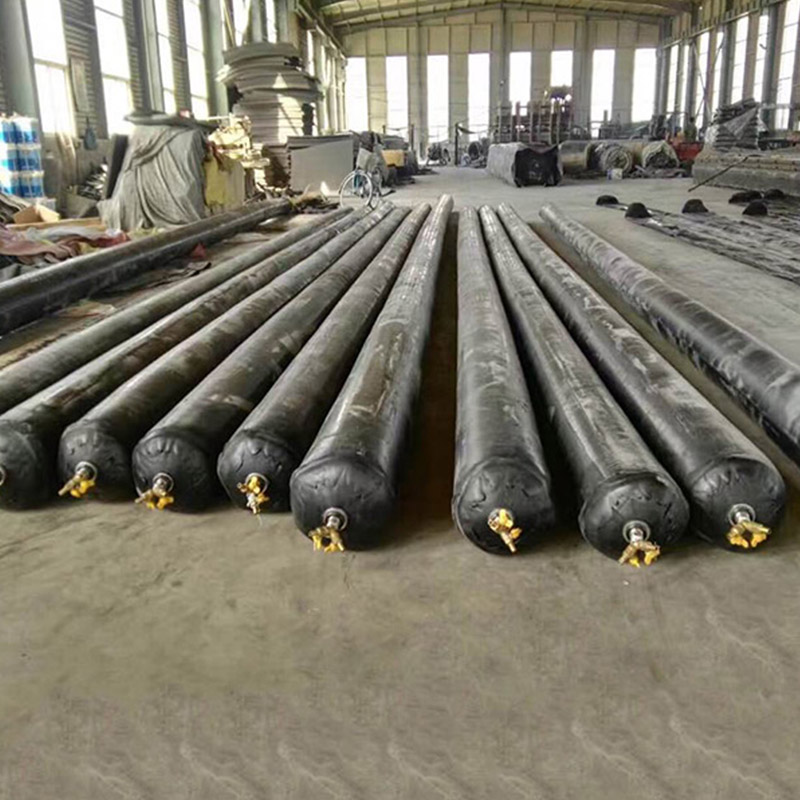 Rubber Inflatable Mandrel vs Steel / Wooden Core Form: When the Bag Actually Saves Money
 Rubber Inflatable Concrete Formwork: 5 Site Problems That Show Up After Demolding
 Successful Participation in WindEnergy Hamburg 2026
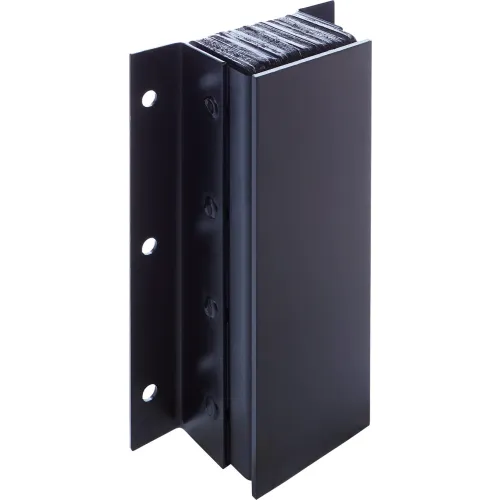 Steel-Faced Laminated Rubber Bumper: 5 Field Problems Buyers Keep Finding After Installation
