Learn why a
Laminated Rubber Dock Bumper with steel corners outperforms solid rubber in impact absorption, tear resistance, and service life. Ideal for high-traffic loading docks and warehouses.
 The Science of Layered Protection: Why Laminated Rubber Dock Bumpers Outperform Solid Blocks
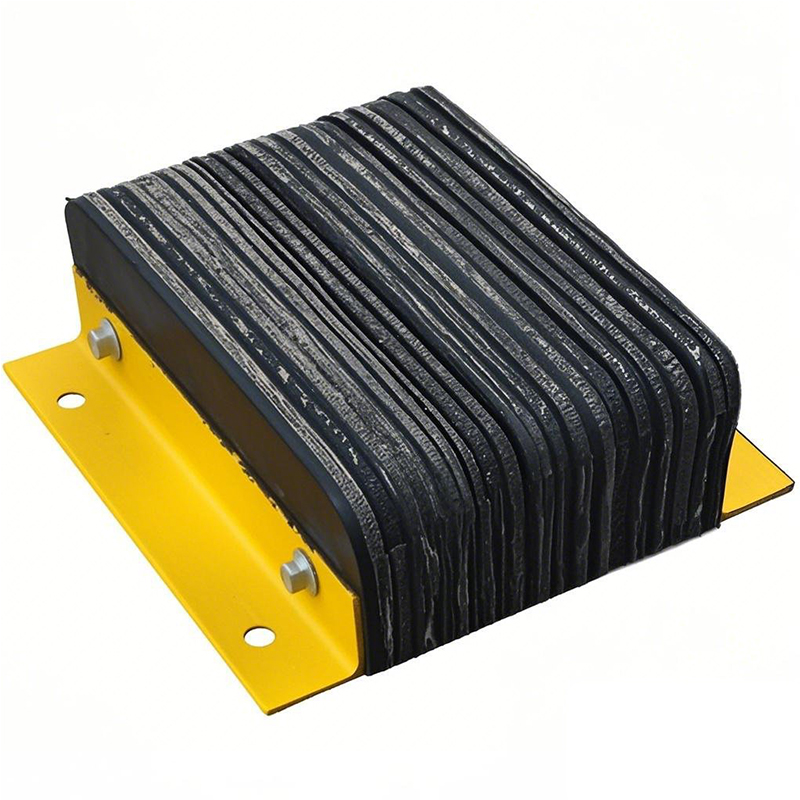
For decades, the standard dock bumper was a simple solid rubber block. It worked adequately for light-duty applications, but as trailer sizes grew and dock throughput increased, the limitations became obvious. Solid rubber bumpers compress unevenly, transfer excessive shock to the building structure, and fail catastrophically at the corners under angled impacts. The Laminated Rubber Dock Bumper with steel corner reinforcement was developed specifically to solve these shortcomings through intelligent material engineering.
How Laminated Construction Changes the Game
A laminated bumper is not a single molded piece. It is constructed by stacking multiple layers of high-quality rubber sheet, each separated by fabric reinforcement, and then bonding them under heat and pressure. This layered architecture delivers three distinct mechanical advantages:
Controlled Compression: Each rubber layer compresses independently, allowing the bumper to absorb energy progressively rather than bottoming out. This reduces peak impact forces transmitted to the dock wall by up to 35% compared to solid rubber of equal dimensions.
Fracture Containment: If a sharp object gouges the bumper surface, the damage is contained within that single layer. The underlying laminates remain intact and functional, preventing catastrophic failure.
Shape Retention: The fabric interlayers resist lateral spreading under load, meaning the bumper maintains its original profile even after thousands of impacts. Solid rubber blocks tend to mushroom and deform over time, losing their protective geometry.
The Critical Role of Steel Corner Reinforcement
Even the best laminated rubber has a vulnerability: the exposed 90-degree corner edge. In real-world dock operations, trailers rarely approach at a perfect 90-degree angle. Angled backing creates shearing forces that grab the bumper corner and peel it away from the mounting surface. This is the single most common failure mode for all-rubber bumpers.
The steel corner plates on a quality Laminated Rubber Dock Bumper solve this problem through three mechanisms:
Deflection: The steel plate redirects glancing impacts away from the rubber edge, preventing the initial tear.
Load Spreading: The rigid plate distributes point loads across multiple rubber laminates, preventing localized crushing.
Mechanical Locking: Through-bolts pass through both steel and rubber layers, creating a unified assembly that resists separation from the mounting structure.
Field Performance Data: What Facility Managers Report
Data collected from logistics centers and manufacturing plants over a three-year period reveals consistent performance patterns:
Service Life Extension: Facilities using laminated bumpers with steel corners report 3 to 4 times longer service life compared to solid rubber bumpers in identical positions.
Structural Damage Reduction: Buildings equipped with laminated bumpers show fewer cracks in concrete dock faces and less misalignment of overhead doors, attributed to the superior energy absorption characteristics.
Maintenance Intervals: Preventive maintenance teams report that laminated bumpers require inspection only twice per year versus monthly checks for solid rubber units that show visible wear sooner.
Application-Specific Recommendations
Different facility layouts create different impact profiles. Here is how to match the bumper to the threat:
| Impact Type |
Recommended Configuration |
Why It Works |
| Direct head-on backing |
Thick laminated core, standard steel corners |
Progressive compression absorbs full impact |
| Angled/side-swipe contact |
Full steel corner wrap on all four edges |
Steel deflects shearing forces before they reach rubber |
| Mixed trailer fleet (different bed heights) |
Taller laminated bumper with multiple steel gussets |
Even load distribution across varying contact points |
| Freezer/cooler environments |
Low-temperature rubber compound + galvanized steel |
Prevents brittle cracking and corrosion |
Quality Indicators for Informed Purchasing
When evaluating suppliers of Laminated Rubber Dock Bumpers, examine these engineering details:
Laminate Bond Strength: The adhesive bond between layers should withstand peel testing without separation. Inferior bonding leads to delamination within the first year.
Steel Thickness and Finish: Corner plates should be minimum 10-gauge steel with hot-dip galvanized or powder-coated finish for corrosion resistance in wet or outdoor installations.
Mounting Redundancy: Each bumper should have at least four bolt holes passing through both steel and rubber, with hardened steel washers to prevent pull-through under extreme loads.
Rubber Compound Certification: Request documentation showing the rubber meets ASTM D2000 specifications for the intended temperature range and oil resistance requirements of your facility.
Installation Guidelines for Maximum Performance
Proper installation is as important as product quality. Follow these rules:
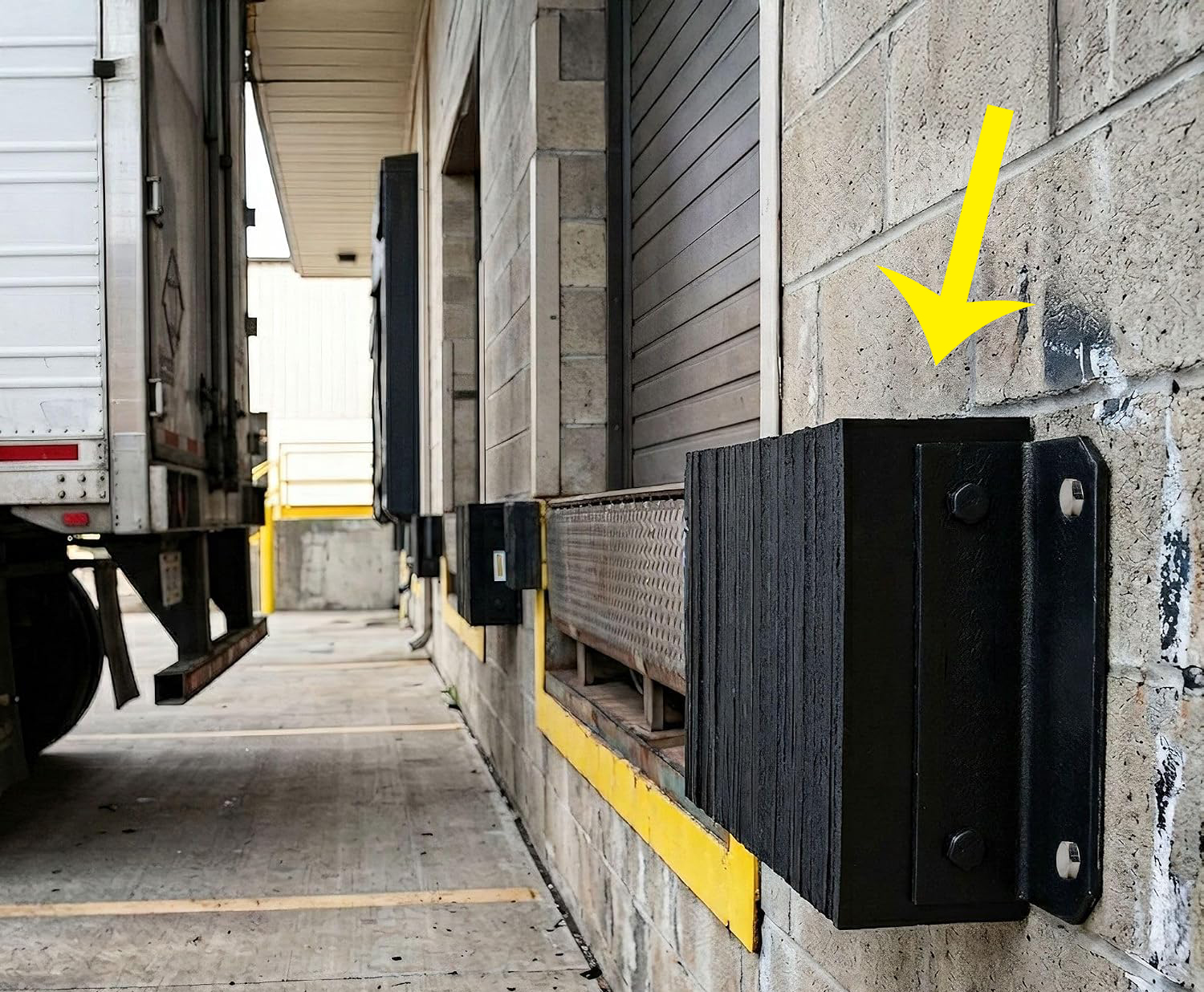
Mount to Rigid Structure Only: The bumper must be bolted to concrete, steel beam, or reinforced masonry. Hollow walls or thin metal panels will flex and defeat the bumper's purpose.
Use Appropriate Anchors: For concrete, use wedge anchors with minimum embedment depth of 2.5 inches. For steel, use grade 8 bolts with lock washers.
Maintain Consistent Gap: Leave no gap between the bumper back and the mounting surface. Any gap allows the bumper to move under impact, increasing stress on bolts and accelerating wear.
Orient Steel Corners Correctly: The steel plates should face the direction of incoming traffic. On corner columns, install bumpers on both exposed faces.
Conclusion
The Laminated Rubber Dock Bumper with steel corner reinforcement represents a genuine advancement in dock protection technology. Its layered construction absorbs impact more effectively than solid rubber, while the steel armor eliminates the most common failure point. For facility managers seeking to reduce maintenance frequency, extend equipment life, and protect building infrastructure, this hybrid design delivers measurable, repeatable results. When evaluating your next bumper purchase, consider not just the upfront specification but the total lifecycle performance — and choose the engineering that keeps your dock protected shift after shift.
 The Science of Layered Protection: Why Laminated Rubber Dock Bumpers Outperform Solid Blocks
 Rubber Laminated Loading Dock Bumper with Steel Angle: 5 Field Failure Signs That Point Back to the RFQ
 Bridge Bearing Pad Field Failure: 5 Visual Signs Before It Retires (And What Caused It)
 Bridge Bearing Pad RFQ Checklist: 9 Lines That Stop Suppliers From Subbing the Rubber
 Laminated Rubber Bearing: Maintenance and Inspection Protocols