
Rubber plugs, unassuming yet indispensable components in various industrial and everyday applications, play a crucial role in sealing, insulating, and protecting systems from fluid ingress, pressure fluctuations, and environmental contaminants. One particular aspect of their utility lies in their compression set properties, which determine how well they retain their shape and sealing capabilities after being subjected to prolonged compressive forces. Understanding the science behind rubber plug compression set involves delving into the materials science, polymer chemistry, and mechanical behavior of elastomers—the family of materials to which most rubbers belong.
The Fundamentals of Elastomers
Elastomers are polymers—large molecules composed of repeating units called monomers—that exhibit rubber-like elasticity. Unlike plastics, which are typically rigid or semi-rigid, elastomers can undergo substantial deformation and recover their original shape upon removal of the applied force. This unique property is attributed to the cross-linking of polymer chains, a process that creates a three-dimensional network structure, providing both flexibility and strength.
The cross-links can be formed through chemical reactions (vulcanization) or physical means (such as entanglements or crystalline domains). Vulcanization, in particular, involves the addition of sulfur or other cross-linking agents to raw rubber, followed by heating, resulting in a more durable and resilient material. The degree of cross-linking significantly influences the mechanical properties of the elastomer, including its compression set.
Compression Set: Definition and Importance
Compression set is a measure of the permanent deformation that an elastomer undergoes after being compressed for a specified period under a defined load and temperature. It is expressed as a percentage of the original thickness that the material fails to recover after the compressive force is removed. Low compression set values indicate better shape recovery and sealing integrity, which are essential for applications where maintaining a tight seal over time is critical, such as in automotive gaskets, hydraulic seals, or medical device components.
Factors Affecting Compression Set
Several factors contribute to the compression set of a rubber plug:
Material Composition: The type of elastomer used significantly impacts compression set. For instance, natural rubber (NR) and styrene-butadiene rubber (SBR) tend to have lower compression sets compared to some synthetic elastomers like nitrile rubber (NBR) or ethylene-propylene-diene monomer rubber (EPDM), although this can vary based on formulation and processing.
Cross-Link Density: A higher cross-link density generally leads to improved resistance to compression set because it enhances the material's ability to resist permanent deformation. However, excessively high cross-link density can make the material brittle and less flexible.
Temperature and Time: Elevated temperatures accelerate the relaxation of polymer chains, increasing the likelihood of permanent deformation. Similarly, prolonged exposure to compressive loads exacerbates compression set. Therefore, specifying the test conditions (temperature and duration) is crucial when evaluating compression set.
Filler Content and Type: Fillers, such as carbon black or silica, are often added to elastomers to enhance their mechanical properties. The type and amount of filler can influence compression set by affecting the material's stiffness and reinforcing the polymer network.
Processing Conditions: The way the rubber is mixed, molded, and cured can also affect its compression set properties. Proper processing ensures uniform cross-linking and minimizes defects that could weaken the material.
Testing and Evaluation
To assess the compression set of a rubber plug, standardized tests are conducted according to specifications like ASTM D395 or ISO 815. These tests involve compressing a sample of the elastomer to a predetermined percentage of its original thickness, maintaining this compression under specified conditions of temperature and time, and then measuring the residual deformation after releasing the load.
The results from these tests provide valuable data for material selection and design optimization. Engineers can compare different elastomers or formulations to choose the one that best meets the application's requirements in terms of compression set resistance, along with other performance criteria such as tensile strength, elongation, and chemical resistance.
Applications and Implications
The importance of understanding and controlling compression set cannot be overstated in industries where rubber plugs and seals are critical. In automotive engines, for example, gaskets with high compression set can lead to oil leaks, reducing engine efficiency and lifespan. In hydraulic systems, seals with poor compression set properties may fail to maintain pressure, causing system malfunctions.
In the medical field, rubber components used in devices such as syringes, catheters, and implantables must retain their shape and sealing capabilities to ensure patient safety and device efficacy. Similarly, in aerospace applications, where components are subjected to extreme temperatures and pressures, the choice of elastomer with appropriate compression set characteristics is vital.
Innovations and Future Trends
Ongoing research in polymer science and materials engineering is focused on developing new elastomers and improving existing ones to achieve better compression set resistance, along with other enhanced properties. This includes the exploration of bio-based and recyclable elastomers to address environmental concerns, as well as the use of nanofillers to improve mechanical performance without compromising processability.
Furthermore, advances in computational materials science are enabling the prediction of compression set and other mechanical properties through simulation, reducing the need for extensive experimental testing and accelerating the development of new materials.
In conclusion, the science behind rubber plug compression set is a multidisciplinary field that bridges materials science, polymer chemistry, and mechanical engineering. Understanding the factors that influence compression set and how to test for it is essential for designing and selecting elastomers that can withstand the rigors of their intended applications, ensuring reliability, safety, and efficiency across a wide range of industries. As technology progresses, continued innovation in elastomer materials and processing techniques will further enhance the performance and sustainability of rubber components, meeting the evolving needs of modern engineering.
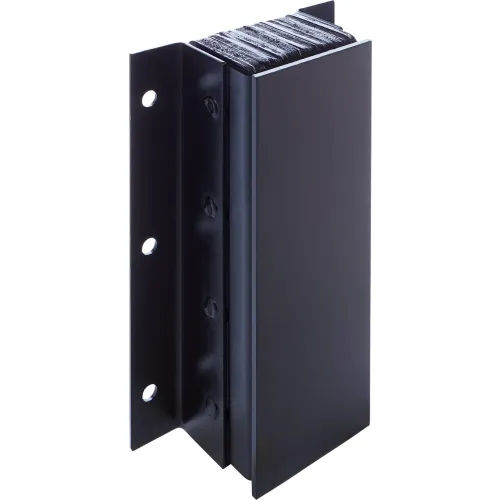 Steel-Faced Laminated Rubber Bumper: 5 Field Problems Buyers Keep Finding After Installation
 Rubber Laminated Loading Dock Bumper with Steel Angle: 5 Field Failure Signs That Point Back to the RFQ
 Bridge Bearing Pad Field Failure: 5 Visual Signs Before It Retires (And What Caused It)
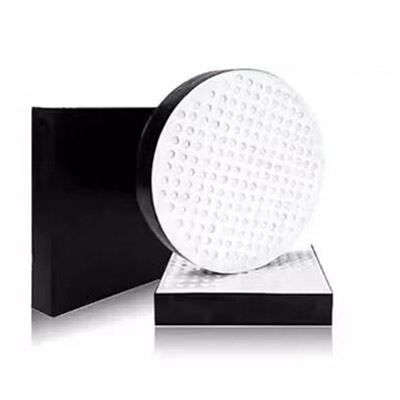 Bridge Bearing Pad RFQ Checklist: 9 Lines That Stop Suppliers From Subbing the Rubber